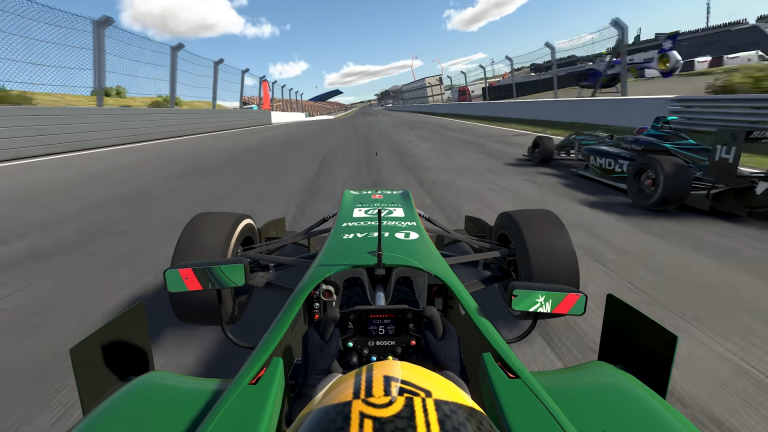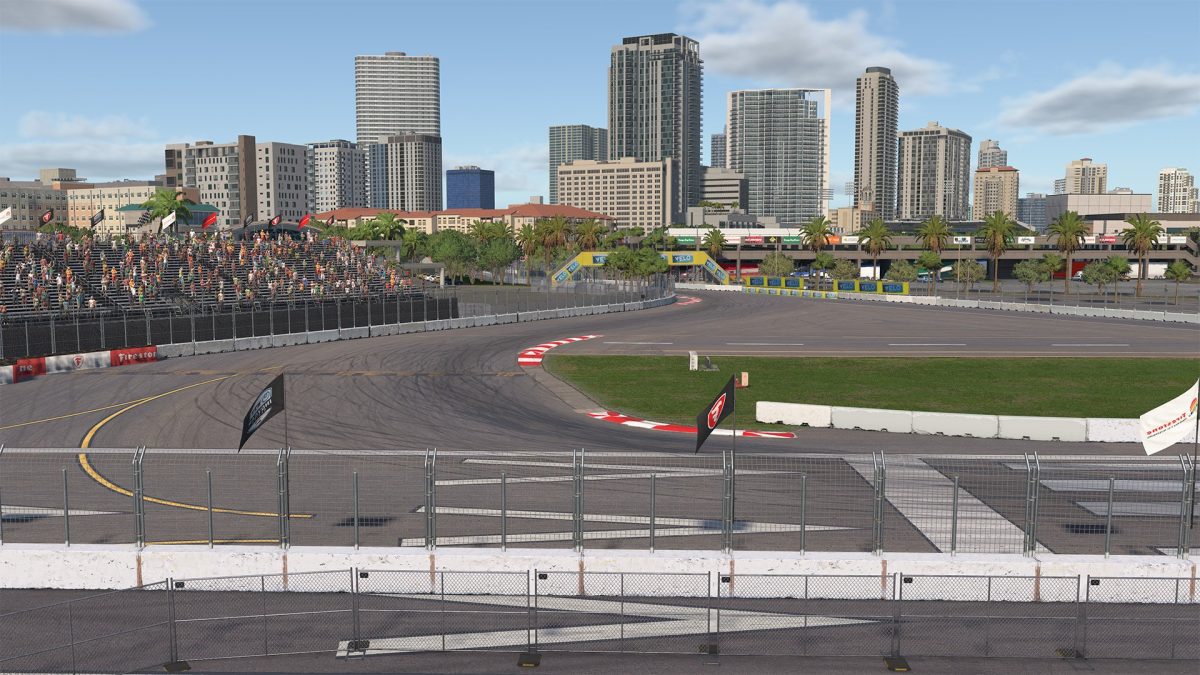
The fastest way to learn a new track in iRacing is not more laps. It is the right method from lap one. Most drivers waste their early sessions because the instinct is to push immediately. The sim gives you enough tools to compress your learning curve, and this guide covers how to use them.
What separates drivers who pick up a new circuit quickly from those who struggle for weeks is method, not raw talent. These approaches work at any iRacing circuit, from preparation before you drive to practice habits that build consistent pace.
How to Learn a New Track in iRacing
Start With a Reference Lap
Before you turn a lap of your own, watch a clean reference lap from a fast driver in the same car at the same track. A single lap from a top-level Virtual Racing School or Coach Dave Academy driver shows you every braking point, every turn-in, and every apex before you build in any bad habits.
Pay attention to where they brake, not just when. Look at how early or late they apex each corner. Note where they pick up throttle on exit. You can learn a track layout in a few laps on your own, but a reference lap shows you the correct shape of the track. That saves a lot of time unlearning the wrong line later.
Drivers who learn new tracks fastest tend to spend time with a track map before they touch the wheel. Studying the layout before you drive means your first laps are confirmation, not discovery.
Pull up a track map and work through it corner by corner. Note which corners lead onto long straights, because those are where braking consistency matters most. Look for hairpins, chicanes, and sequences where you need to plan the next corner before you finish the current one. iRacing’s UI shows the track map during sessions, but studying it before you get in the car builds a mental picture from lap one.
Watch onboard footage if you can find it. iRacing broadcasts, YouTube clips, and community streams carry onboard laps for most circuits on the service. Even a handful of laps gives you a sense of rhythm, approximate braking zones, and which corners run flat or near flat.
Your First Laps Should Be Slower Than You Think
Your first practice laps at a new circuit should be slower than feels productive. This is the step most drivers skip. The instinct is to push immediately because you want to build pace quickly. However, what you need in the first few laps is observation.
Drive at around 70 to 75 percent of what feels like your limit. At that pace, you have time to look at apex kerbs, marshal posts, distance boards, and surface changes. You can identify where the grip is and where the car moves unexpectedly. You also start building the visual map you need to place braking points consistently once you push harder.
Rushing past this phase means you are setting reference points while the car behaves differently each lap. Because your references are inconsistent, you spend the rest of the session correcting the same errors instead of building on a solid foundation.
Building Reference Points That Hold Under Pressure
Consistent lap times come from consistent reference points. A reference point is anything fixed trackside that tells you when to brake, when to turn in, and where to aim for the apex.
Braking references matter more than most drivers realize. A marker is only useful if it sits in the same place every lap and is visible at race speed. Distance boards, advertising hoardings, track surface markings, and distinctive pieces of barrier are all reliable options. Avoid anything that can move or that changes appearance in different lighting.
Apex references anchor the middle of your cornering line. The inside kerb is the obvious tool, but the specific part of the kerb matters. The leading edge, the centre, or the trailing edge produce different lines. Find which one gives the best exit and commit to it.
Exit references help you judge when to open the steering and get back on the throttle. These are often less precise than braking references, but having a visual cue that signals the car is ready for power removes a decision that would otherwise be made by instinct alone.
Using Replay and Telemetry
iRacing’s replay system is one of the most underused tools for learning a new track. After a practice session, watch your onboard replay for corners where you lost time or made errors. Seeing a corner from the driver’s seat at full speed is different from what you registered while you were in it.
Pay attention to where your hands are turning in, where you are looking, and when you apply the throttle. If you can compare your replay to a faster driver at the same circuit, the differences are usually instructive. Where they brake, how much steering they use, and when they get on power are the things that produce the gap.
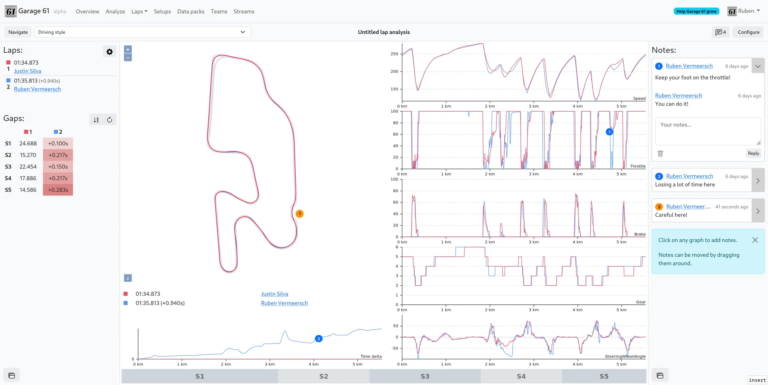
Telemetry tools like VRS and MoTeC show throttle, brake, and steering traces side by side. Even without external apps, iRacing’s built-in replay data shows speed and pedal inputs. Use it to find where your brake application differs from what you intended, or where the throttle opens while the brake is still applied.
AI Races and High-Mileage Practice
AI races are one of the most effective ways to learn a new track in iRacing without the pressure of online racing. Set the AI to a lower difficulty level, focus on your own pace, and accumulate race-length mileage without worrying about incidents or rating.
Longer stints tend to produce faster improvement than short practice bursts. The first 10 laps at a new circuit are always the most difficult. However, laps 20 through 50 are where the real learning happens. If you are ending sessions before reaching that range, you are repeatedly starting the process over.
Some iRacers have found that running a 30-minute AI race at a new circuit before going online is the single most effective way to arrive at a comfortable baseline. The race situation forces you to manage the full stint, including traffic and restarts, rather than just turning solo laps.
Drive Clean Before You Drive Fast
Speed comes from consistency, not from chasing the limit on every lap. Until you can complete the track with no corner cuts, no heavy kerb abuse, and no lock-ups, adding pace is not useful. You will just be going faster in the wrong direction.
Drive five clean laps at ninety percent. If they feel identical, add a little pace. If they feel different from each other, you are not consistent enough yet. A track is learned when you stop thinking about where you are and start thinking about how you are driving it.
When to Push for Pace
Once your lap times plateau and your references feel consistent, it is time to explore the limit. In iRacing, the limit at most circuits involves trail braking deeper into corners, carrying more mid-corner speed, and getting on power earlier at the exit.
Push one corner at a time rather than the whole lap at once. Pick the corner where you feel most confident and see what happens when you carry a few extra km/h into the entry. Note what changes and whether the car responds predictably. Then move to the next corner.
Some iRacers have noted that the biggest pace gains at a new track often come from a single key corner. Once that corner is consistent, the rest of the lap tends to improve with it. Finding that corner early is worth more than chasing time everywhere at once. Use these methods every time you learn a new track in iRacing and the results compound quickly.
Know When to Stop Practicing
There is a point in every practice session where you stop improving and start reinforcing errors. You know you have hit it when your lap times stop dropping and you start feeling frustrated. That is the moment to stop.
Ten laps done properly teach more than fifty laps driven tired. Come back fresh and the track will have settled in your memory more than you expect. Sim racing builds muscle memory the same way any other skill does, and rest is part of that process.
The goal is not to know the track perfectly before your first race. The goal is to know it well enough to drive it cleanly. Everything else builds from there.