Reaching 5,400 iRating in iRacing is a genuine benchmark. Most drivers never get there. These iRacing iRating tips address what actually changes in the 5.4K range, because getting to 6K requires a different approach than what built your rating to this point. The habits you developed to survive races at lower iRating levels will actively work against you here. The margin for error gets smaller, and the competition executes the fundamentals more consistently.
Stop Overdriving the Car
iRacing punishes overdriving more aggressively than most drivers realize. The tire model tracks surface temperatures closely, and once you push past the operating window, grip degrades fast. One corner where you braked too late becomes two. The car handles worse, so you push harder to compensate, and the tires get hotter still. The community calls this a doom loop, and it is an accurate description.
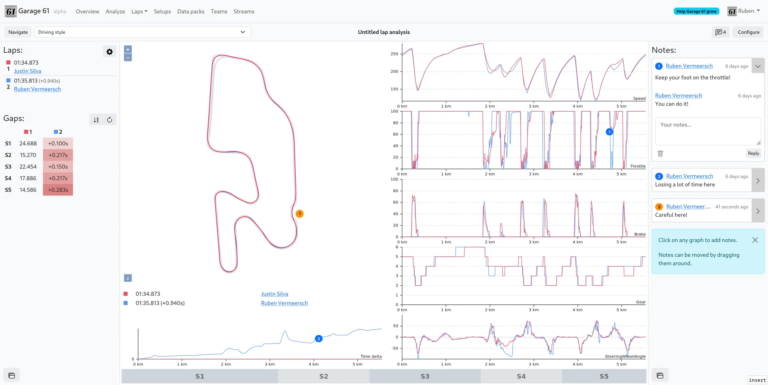
The fix is to brake earlier and apply less peak force. Experienced iRacers at this level talk about the difference between a 90% brake spike and a plateau at around 70%. The spike gets you into the corner fast, but the plateau keeps more load off the front tires through the braking zone. As a result, temperatures stay manageable and grip holds through the final laps. You will be a fraction slower into corners. You will be meaningfully faster through and out of them, because your tires are still working when everyone else is sliding.
This is also a mental adjustment. Many drivers at the 5K level have built their pace around late, hard braking. It works in qualifying. It does not work over a race distance at higher competition levels, where tire management separates the finishers from the crashers.
Treat Your FFB Settings as a Development Tool
Most iRacers set up a force feedback profile early in their career, confirm it feels reasonable, and leave it alone. At the 5.4K level, that approach leaves real information on the table.
One approach that has worked for drivers making this jump is creating a duplicate FFB profile and deliberately changing settings one at a time. Not randomly, but systematically. Adjust friction, damping, or minimum force in one direction, then drive with the result. You will sometimes discover that a setting you tuned toward comfort was masking feedback you actually need.
One iRacer described it this way: “I learned that a higher friction setting gave me a better limit feel for turn-in and mid corner. I still routinely throw my comfort zone off to see what’s to learn.” That willingness to stay uncomfortable with the setup, even when it already feels acceptable, is part of what separates drivers who keep developing from those who plateau.
Your current FFB profile may be optimal. It may also be a compromise from your first season that you never revisited. Until you test it against alternatives, you cannot know either way.
Decide What You Want From the Hobby
This point sounds simple. In practice, it is one of the harder shifts to make.
Anxiety about race outcomes holds back a lot of drivers in the 4K to 5K range. When every race feels high stakes, you start protecting your iRating instead of racing to improve. You avoid difficult sessions. You get tense in close situations and make mistakes you would not make in practice. The focus on the number replaces the focus on the actual racing.
Drivers who push through to 6K tend to describe a clear shift in how they approach each session. Instead of tracking results, they track improvement. Instead of protecting iRating, they study what it takes to run at the top of the field in a given series and work toward that standard. The iRating becomes a byproduct rather than the objective.
This does not mean you stop caring about results. It means you reframe what counts as a good session. A race where you improved your late-braking execution under pressure is a success, even if you finished eighth. That mindset also reduces the emotional cost of bad races, because a race that went badly still has value when improvement is the goal.
What Changes at This Level
The competition at 5,400 is more consistent. The margin for overdriving, for soft tire management, for an FFB setup you have not looked at in two seasons, gets smaller. Everything that was survivable below 5K starts costing you more.
The drivers making progress here are not necessarily the fastest in qualifying. They are the ones who execute the fundamentals better across a full race distance. They brake slightly earlier and manage tires better in the final third. They keep their equipment in the window. They race with purpose rather than anxiety.
That combination of driving cleaner under pressure, working the setup actively, and staying focused on improvement is the path through this stretch. iRating follows when you get those right.
Source: r/iRacing community discussion. No usernames referenced.