Rain in iRacing doesn’t just make the track look different—it transforms the entire driving experience. The familiar lines that work in the dry become treacherous, braking zones shift dramatically, and throttle control becomes the difference between a clean lap and a spin into the barriers. For anyone preparing to take on wet conditions, understanding how to adapt is critical.
This guide breaks down the key principles of racing in the rain, from choosing the right line to handling tricky corners and anticipating how the track evolves as the session goes on.
1. Redefining the Racing Line in Wet Conditions
In the dry, the racing line is all about minimizing distance while maximizing grip. But in the wet, the rubbered-in dry line becomes slick and unforgiving. The fastest way around is often not the most direct—it’s the line with the most grip.
Braking Adjustments
- On wet surfaces, rubbered-in braking zones lose grip fast. Instead, move slightly off the traditional line where the track surface is less polished and offers more bite.
- Keep the car straighter under braking to reduce the risk of lock-ups. Even minor steering inputs during hard braking can trigger a slide.
Mid-Corner Balance
- Aim to keep the car balanced by being gentle with steering and throttle inputs. If you can, point the car straight earlier and begin rolling into the power sooner.
- Patience is key—rush the throttle and you’ll light up the rears instantly.
Corner Exits
- Exiting corners is often where most time is lost in the wet. Focus on smooth application of throttle, even if it means sacrificing a bit of corner entry speed.
2. Adjusting for V-Shaped Corners
Traditional dry lines often involve sweeping arcs that carry maximum momentum. In the rain, that approach can expose you to longer periods on slick surfaces. Instead, consider a more V-shaped approach:
- Brake earlier and straighter before turning.
- Rotate the car decisively at lower speeds.
- Get back to throttle earlier but with extreme care—progressive inputs are everything.
This method shortens the time spent with lateral load on the tires, reducing the chance of hydroplaning or sliding.
3. General Rain Driving Principles
Beyond just the line, several universal rules apply when the track is soaked:
- Brake Bias: Shift it rearward (sometimes 2–3%) to help prevent front lockups. Be prepared to adjust as grip evolves.
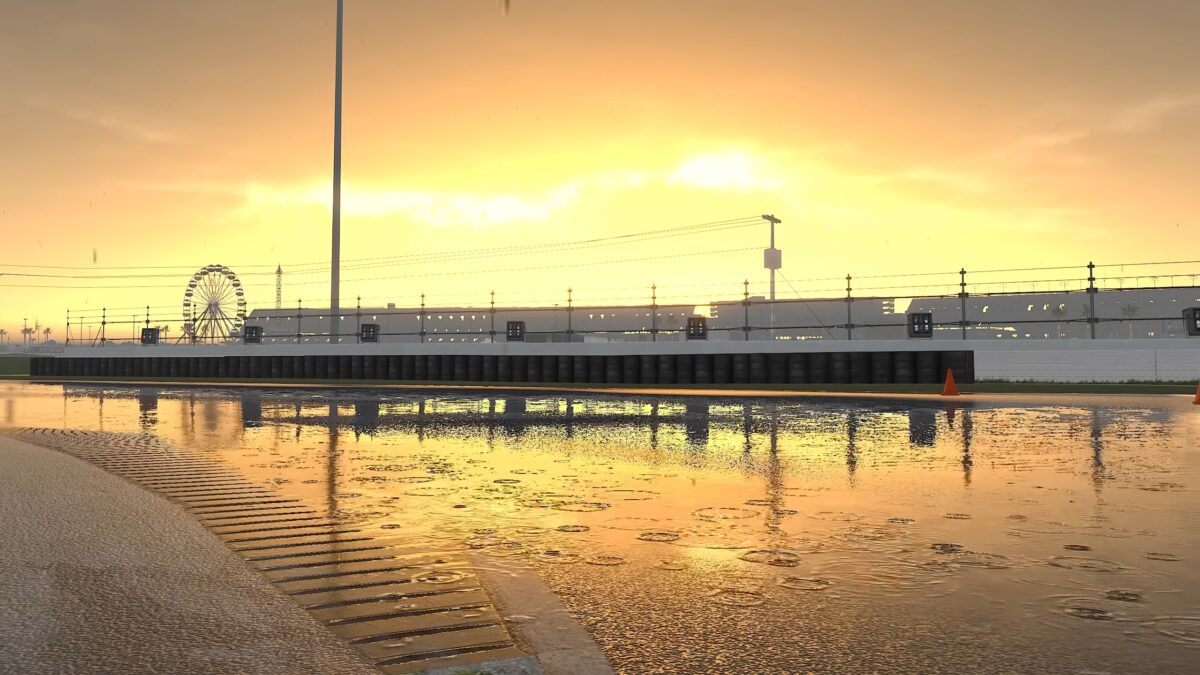
- Puddles and Standing Water: These can be lap-ruiners. If your graphics settings allow, spot them early and alter your line to avoid them completely.
- Grip Levels:
- “Lightly wet” often still allows aggressive driving.
- “Fully wet” requires extreme caution—every input must be smoother.
- Track Evolution: As rain falls, standing water collects in low spots. If the rain eases, a drier line can form, but don’t expect it to mirror the standard dry racing groove.
- Tire Behavior: Expect higher tire temps during transitions when water is clearing. Overheating is just as much a threat as losing grip in puddles.
- Weather Conditions:
- Below ~18°C (65°F), drying is slower.
- Warm track temps accelerate drying and can create mixed-grip situations.
Every track has its own quirks in the wet. What works at Fuji might not translate perfectly to Sebring or Spa. Treat every wet-weather race like a fresh challenge and take the time to learn how grip shifts from corner to corner.
4. Developing Your Wet-Weather Mindset
Perhaps the most important takeaway: wet racing is less about chasing outright pace and more about survival, consistency, and adaptability. Even the quickest drivers in the dry can struggle when rain falls, because raw speed takes a back seat to car control and decision-making.
- Smoothness beats aggression every time.
- Anticipation matters more than reaction—spot puddles, grip changes, and evolving lines early.
- Don’t be afraid to experiment. Sometimes the fastest line is completely unconventional compared to the dry.
Mastering rain in iRacing isn’t about memorizing a single wet line—it’s about learning how to adapt when conditions change lap to lap. The drivers who thrive in the wet are the ones who can quickly assess where the grip is, adjust their inputs, and stay calm under pressure.
Approach wet sessions with the mindset of an explorer rather than a perfectionist. Each lap is data. Each corner teaches you something new about the balance between grip, throttle, and control. And if you can stay composed while others struggle, you’ll often find yourself climbing positions—not through raw speed, but through resilience and consistency.