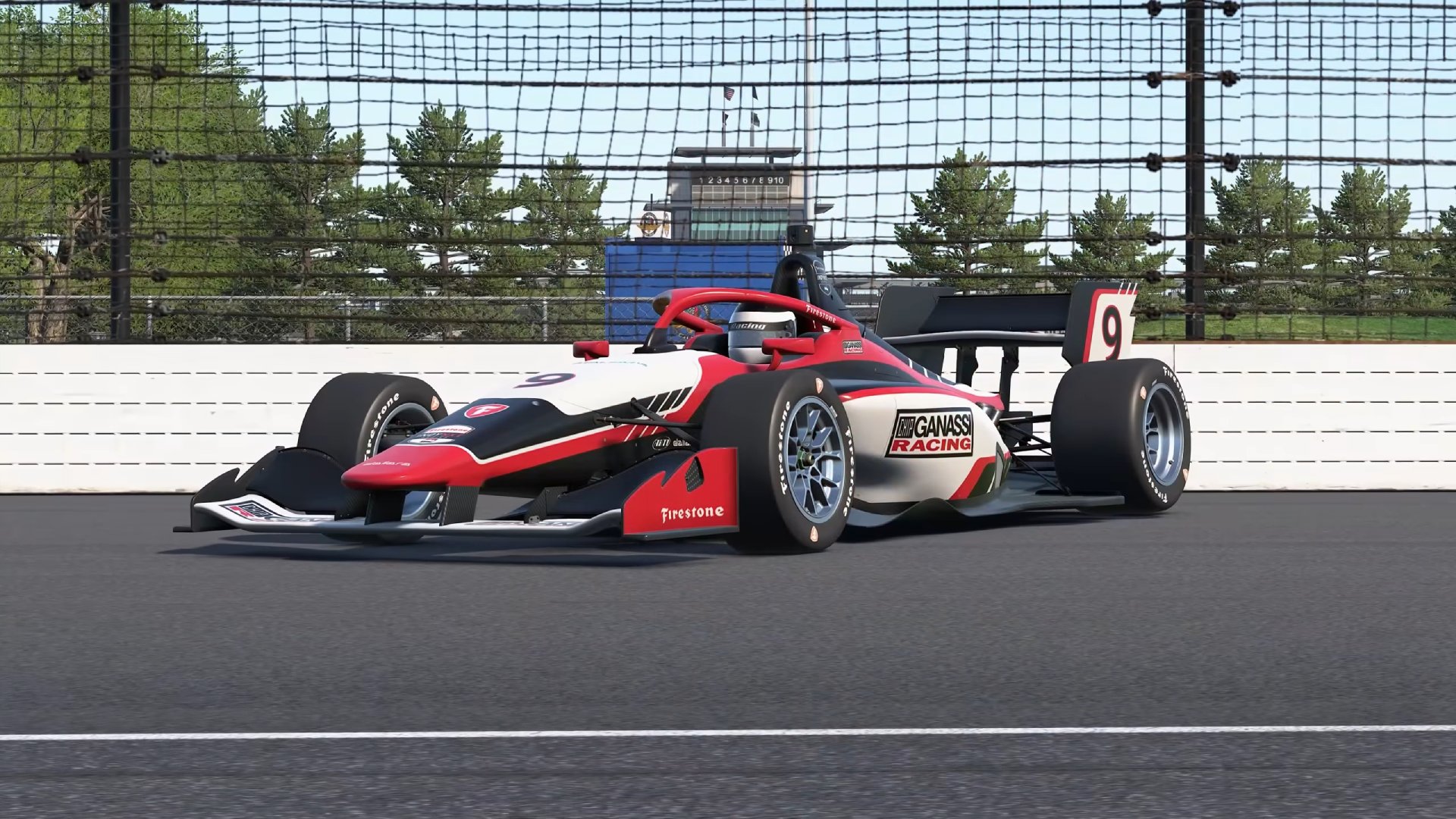
iRacing launched the INDY NXT Series in early 2026 to fix a persistent problem with open wheel racing on the platform. For years, single-seater series have struggled with thin grids. Drivers who have tried the Dallara IL-15 know the feeling of qualifying and finding just two or three other cars in the lobby. The INDY NXT Series restructures competition around that car so that proper, populated racing actually happens.
Also See
➡️ The IL-15’s Place in iRacing’s Open-Wheel Ladder
🏁 iRacing Forums: INDY NXT Series official announcement
The Car
The series runs the Dallara IL-15, the official car of the real-world INDY NXT championship. INDY NXT is IndyCar’s primary feeder series and sits directly below the main championship on the open wheel ladder. In iRacing, the IL-15 produces significant aerodynamic and mechanical grip. That combination makes it fast and demanding in equal measure.
Setup sensitivity is higher than most GT cars. Changes to ride height, spring rates, and anti-roll bars produce noticeable shifts in how the car rotates and how much rear grip is available under throttle. As a result, drivers who invest time in preparation have real gains to find. A community baseline will get you on the grid competitively, but the gap between a refined setup and the default widens as the field improves.
Drivers moving from GT3 or touring cars will need to adjust their habits. Turn-in is faster. The throttle application window on corner exit is narrower. There is less margin for gradual corrections before the rear steps out. These qualities make the IL-15 genuinely satisfying to learn and increasingly rewarding as laps build.
The Format
The core feature of the INDY NXT Series is the limited timeslot model. Instead of running sessions every two hours, races are scheduled at specific times. Everyone who wants to compete in that window races together. iRacing used this same approach for the NASCAR Ignite Series, where it produced noticeably stronger Strength of Field numbers. The reason is straightforward: concentrated timeslots stop drivers from spreading across empty lobbies and actually build a full grid.
Open setups are allowed, which separates this series from iRacing’s fixed-setup categories. Open-setup racing rewards preparation because car tuning is part of the competition. A community-shared baseline will still get you on the grid, but there is room for drivers who want to go deeper on what the IL-15 needs at each venue.
Race lengths run long by iRacing road racing standards. A 40-lap stint at Long Beach takes roughly one hour. That distance brings genuine strategy into play. Tyre management, traffic decisions, and pit timing become meaningful factors rather than elements that barely develop before the flag.
The Schedule
St. Petersburg and Long Beach are confirmed in the initial track rotation. Both circuits suit the IL-15. St. Petersburg is tight and technical, rewarding precision and consistently punishing mistakes across the full stint. Long Beach combines high-speed sections where setup work pays off with a clear overtaking opportunity at the slow hairpin late in the lap.
All timeslots currently land on Saturdays. This has drawn community criticism: the timing is difficult for Americans who cannot race Saturdays, harder still for European drivers, and one slot directly conflicts with an existing iRacing broadcast. The concept has near-universal community support, however. The timeslot placement is the main point of feedback from the thread.
Should You Race It?
If you want to race open wheel in iRacing and you have been held back by thin grids, this series is built for you. The limited timeslot model is the same mechanism that made the Ignite Series work, and the IL-15 is a well-regarded car with a legitimate skill ceiling. Open setups add a layer of competition that makes qualifying preparation matter.
The Saturday-only schedule is the real filter. If you can race on Saturdays, the INDY NXT Series gives you something that open wheel racing in iRacing has rarely delivered: a grid worth showing up for.