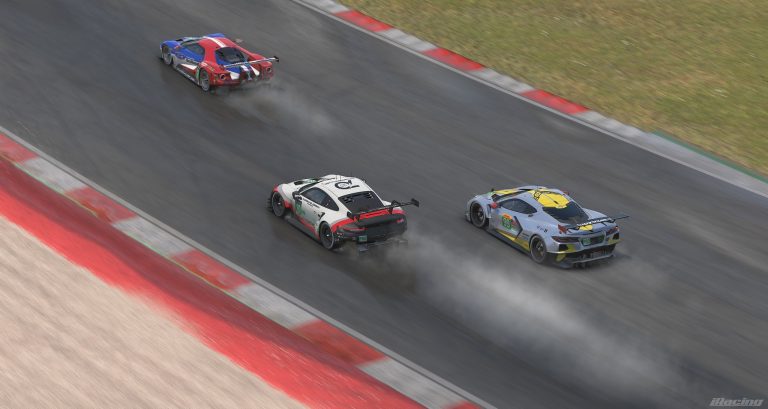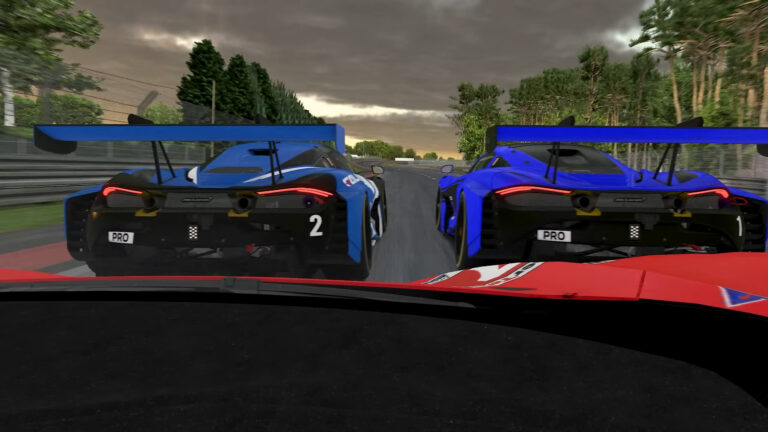
The Corvette C8.R iRacing rumors represented the single most significant shift in American sports car history on the service. For decades, Corvette racing was defined by the long-hood, front-engine silhouette of the C5.R through the C7.R. However, when Chevrolet unveiled the mid-engine C8.R to the world, the iRacing community immediately began speculating on when the “American Supercar” would make its digital debut. Leaks from North American testing sessions and cryptic social media posts from Corvette Racing drivers suggested that iRacing was already deep into the development of the most advanced GTE car ever built.
Breaking the Front-Engine Tradition
The Corvette C8.R iRacing speculation wasn’t just about a new model; it was about a fundamental change in physics. Sim racers were eager to see how the move to a mid-engine platform would solve the “nose-heavy” characteristics of the previous C7.R. Rumors from the iRacing forums suggested that the C8.R would feature a much more aggressive aerodynamic package, utilizing the space vacated by the engine to create a massive front diffuser system. This move was expected to place the Corvette on equal footing with the nimble Ferrari 488 and Porsche RSR, finally giving Chevy fans a car that could carve through technical sectors with surgical precision.
The “Stingray” Hype
Anticipation for the Corvette C8.R iRacing launch reached a fever pitch during the early months of 2020. With the real-world car dominating the IMSA GTLM class, the pressure was on iRacing to deliver a pixel-perfect recreation. Fans analyzed every frame of real-world onboard footage, comparing the engine note—a flat-plane crank V8 howl—to the traditional cross-plane rumble of old. The promise of an American-made, mid-engine GTE that could rev to the moon was a dream for the community. The C8.R wasn’t just a car; it was the start of a new era for Corvette Racing in the digital world.