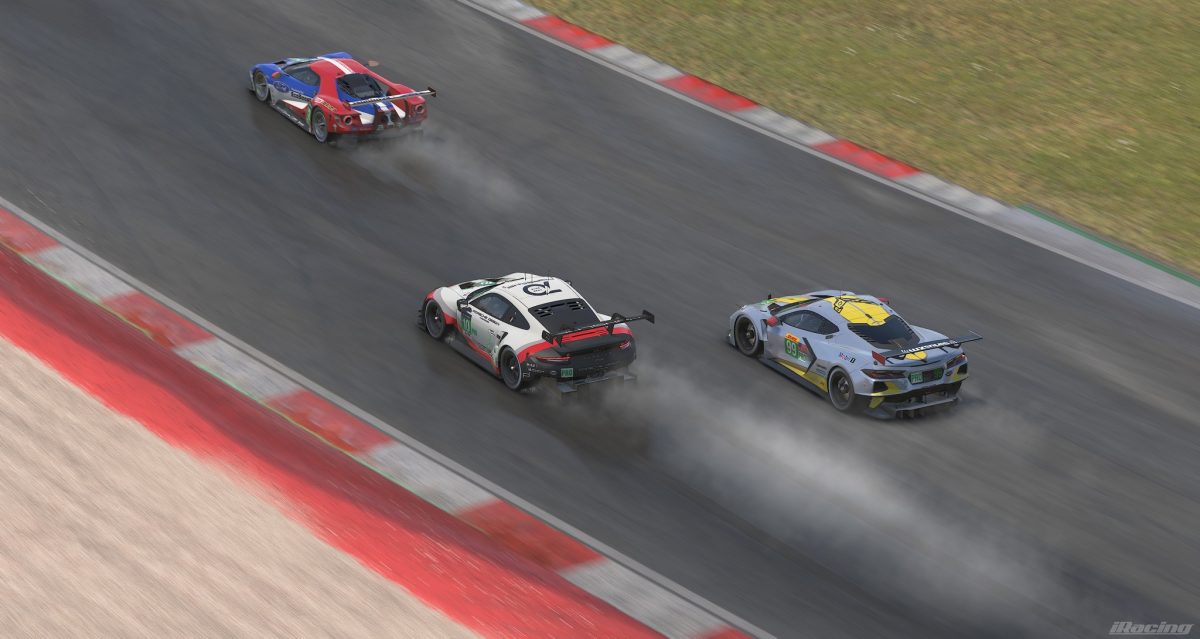
GTE cars can now race in the rain. iRacing’s Season 2 2026 update gave the entire GTE class wet weather capability for the first time. The update also overhauled the iRacing GTE rain setup parameters, invalidating every existing GTE configuration. If you are running a setup built before this season, your car fails tech before you turn a lap.
This guide covers what changed, why your old setups no longer work, and how to build a starting point for wet GTE racing.
What Changed for GTE in Season 2 2026
Season 2 2026 brought full wet weather capability to all GTE class cars. Previously, no GTE car could run in the rain at all. Now they all can, on any track that supports wet conditions in iRacing.
At the same time, iRacing revised the GTE physics and setup parameters across the board. The most immediate change is the ride height minimum. The new floor is 50mm across all four corners. As a result, any setup built before Season 2 now falls below that floor and fails tech. The community’s existing library of GTE setups is no longer usable.
Very little published setup guidance exists for wet GTE racing because the combination is new. Currently, most knowledge comes from community members experimenting in real time. That creates a situation where drivers who dial in the basics early have a real advantage.
Why Your Old GTE Setup Fails Tech
Most pre-Season 2 GTE setups were built with low ride heights. That approach reduced drag and improved aerodynamic balance under the old regulations. However, those ride height values now sit below the 50mm floor.
When you load a pre-Season 2 setup in the garage, iRacing flags it immediately. The car fails technical inspection and cannot enter qualifying or race. Therefore, trying to patch the old setup by adjusting individual values is slower than starting fresh.
Pull the default or stock setup for your car instead. Confirm all four corners meet the 50mm minimum. Use that as your baseline, and from there you can start making adjustments for wet conditions.
Building Your iRacing GTE Rain Setup Baseline
Wet setups in iRacing follow consistent principles across car classes. GTE applies the same logic, adjusted for its aerodynamic and suspension characteristics.
Raise ride height above the 50mm floor. The legal minimum is 50mm. In practice, going slightly higher in wet conditions improves how the car handles standing water and surface changes. A conservative starting point is 52-55mm across all four corners.
Reduce wing angles slightly compared to a dry setup. In wet conditions, maximum downforce can overload the front tires and make the car nervous under braking. A more neutral aerodynamic balance is therefore easier to manage on a wet surface.
Soften the suspension. Wet tracks reward compliance over stiffness. As a result, softer springs keep the tires in contact with the surface longer through direction changes and over kerbs. Start with medium spring rates and adjust from there based on feel.
Ease the differential toward open. A locked or tight diff in wet conditions makes power application out of slow corners difficult. More openness helps the car rotate cleanly and also reduces snap oversteer on exit.
Adjust tire pressures down slightly. Rain keeps surface temperatures lower than dry conditions. Because of this, your dry setup pressures will run higher in wet practice sessions than intended. Start 1-2 PSI lower than your dry baseline and monitor through the session.
Shift brake bias slightly toward the rear. A small move rearward, around 1-2%, helps balance the car under braking. This also reduces the chance of front locking in the wet.
How to Drive GTE in the Rain
Setup is half the work. Adapting your driving technique completes the other half.
Braking zones are longer in the wet. Your dry reference points will consistently arrive too late. Therefore, move your markers back and plan to carry the braking point through a few sessions until it holds consistently.
Complete most of your braking before turn-in. Trail braking in the wet is riskier because the grip margin for combining longitudinal and lateral forces is much smaller. Getting the car stopped and settled before you start rotating it reduces the risk of oversteer at entry.
Throttle application requires patience out of slow corners. GTE cars respond quickly to early throttle when the rear tires are warm and loaded. However, wait until the car is tracking toward the exit before feeding power in progressively. Snapping the throttle open when the car is still rotating will break traction.
Mid-corner speed is more stable than high entry speed. Arriving at a corner with slightly less speed than your dry baseline and carrying smooth momentum through the middle often produces faster lap times than pushing the entry hard.
What the Community Has Found So Far
Wet GTE racing in iRacing is new, and the community is still building the setup and technique library. Currently, most knowledge is coming from drivers sharing results across Discord servers and the iRacing forums.
General consensus so far is that the 50mm ride height floor changes GTE handling in ways beyond just compliance. Some iRacers have noted that cars which previously understeered heavily in dry conditions become more balanced at the new ride heights. The aerodynamic characteristics shift when the car sits higher, and as a result some drivers are finding better overall balance.
The meta for wet GTE racing is still forming. Although the season is new, early work on setup and technique in this window will hold value for some time.