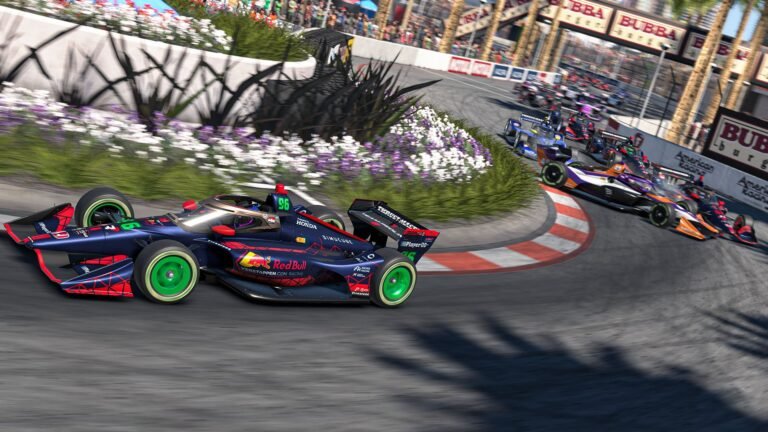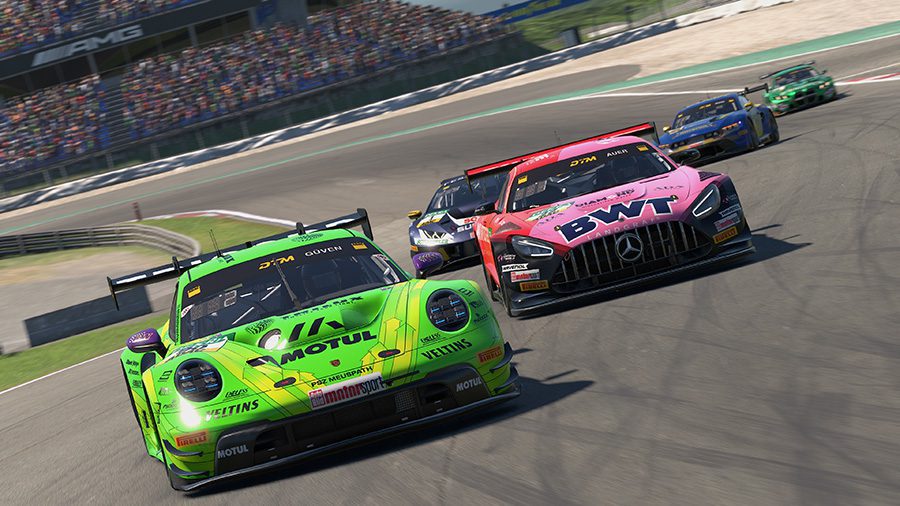
Every iRacing driver eventually faces the same question about iRating progression: should you specialize in one car and one series, or jump around between GT4, GT3, GTE, PCup, F4, and dirt and oval? Specializing usually means faster iRating growth and more consistent results. Variety is more fun but harder to master. The question is whether series hopping actually costs you iRating, or whether that is something specialists tell themselves to feel better about their setup sheets.
Also See
➡️ How to Get Out of Rookies in iRacing
How iRating Progression Works in iRacing
iRating goes up when you beat drivers with higher ratings than yours, and it goes down when you lose to drivers with lower ratings. The system uses an expected finish model. If you are expected to finish fifth based on everyone’s iRating, and you finish second, you gain points. If you finish fifth when second was expected, you lose points.
The important detail is that each car class tracks iRating separately. Your road iRating and your oval iRating are different numbers. If you jump between sports cars and oval racing in the same week, you are splitting your results across two separate pools. You are not building a rating anywhere near as fast as someone who runs every race in one place.
There is also a split quality factor. The better the field you beat, the more you gain. Consistent finishes against strong competition in one series compounds faster than average finishes spread across five different ones.
The Case for Staying Put
The drivers who climb iRating the fastest almost always do it by drilling the same combination week after week. When you run the same car and track repeatedly, you know the setup, the braking points, and the traffic patterns cold. That familiarity translates to cleaner race starts, fewer mistakes in tight situations, and stronger qualifying positions that put you ahead of trouble from lap one.
The community makes this clear. One iRacer put it directly: “If you become a better driver overall you could easily get to 3k driving whatever you feel like. But very few people can jump from MX5 to GTP and be at 8k level. It entirely depends on what your goal is. High iRating? Stick to a couple of series.” That gap between 3k and 8k reflects a genuine difference in outcomes between focused and variety-first approaches.
Another iRacer framed it around time: “I only get time to race maybe 2-3 times a week and just about hold down 3k iR, but I only run one combo per week because of this. If you have plenty of time to practice different cars and tracks there is no reason you cannot be a journeyman.” The time factor matters more than most drivers admit.
Why Variety Is Not a Waste of Time
Here is what the specialists rarely say out loud: driving different cars does make you a better driver overall. The iRacer who has competed in GT4, LMP3, and oval picks up new combinations faster than someone who has only ever run one series. Variety forces you to learn car behavior from scratch repeatedly. You develop better feel for when a car is sliding, sharper awareness of traffic dynamics, and more patience in wheel-to-wheel situations.
Some community members who have reached 4,000 or 5,000 iRating through varied driving argue the path was longer but the driving quality was broader. The ability to pick up a new car in a session or two, rather than a week, has real competitive value. Furthermore, the iRacers who adapt fastest to new seasons, new tracks, and new cars tend to be the ones who have raced across the most content.
One iRacer in the thread summed it up well: “iRating isn’t everything. If you are gaining SR, you are gaining skill. If switching between cars helps you learn new cars quicker, you are gaining skill.” That reframe is useful if a fixed number on a leaderboard is not actually your goal.
A Middle Ground That Actually Works
The most practical advice from experienced iRacers comes down to structure. Rather than choosing pure focus or pure variety, the smarter move is to pick a new combination each week and commit to it for the full seven days. Run enough races to actually understand the car and the track, then move on to something different the following week. Over a full season, you still cover a wide range of content. However, within any given week, you are not throwing away laps to car-swap confusion.
A second approach is to split your time by purpose. Run your primary series when you want iRating to move. Treat oval, dirt, or shorter open-wheel classes as practice racing where the number does not matter as much. This keeps variety in your schedule without it bleeding into the sessions that count toward your main goal.
How much track time you have should shape the decision. If you only race two or three times a week, spreading those sessions across five different cars means none of them gets enough reps to build real pace. With limited time, focus is almost always the smarter call. If you race daily, variety becomes viable because the volume compensates for the split attention.
The series hopping debate does not have a clean answer, because the right call depends on what you actually want. If you want iRating above 4,000 this season, the math favors specialization. If you want to be a complete sim racer who can get into anything and be competitive within a few sessions, variety is the longer-term investment. Most iRacers end up splitting the difference, and that is probably fine. Track what works, run what you enjoy, and the iRating progression tends to follow the laps.