Using a pit start in iRacing sounds like smart Safety Rating management. If the opening lap is where incidents happen and SR gets damaged, removing yourself from that lap removes the risk. The car stays clean. The license stays intact. The logic, on the surface, is clean.
In practice, pit starting is one of the most counterproductive habits a driver can build. For drivers trying to improve, it makes things measurably worse over time, not better.
Also See
What a Pit Start Actually Does to Your Race
When you sit in the pit lane at race start, you skip the grid but you do not skip the traffic. The field goes racing without you. When you pull onto the track, you are doing so with cold tires, cold brakes, and no heat in any system, inserting yourself into a race that is already underway.
Merging into racing traffic from the pit exit is not safer than starting from the grid. It is harder. On the grid, everyone starts at the same time from known positions. From the pit lane, you are entering a moving field at a speed disadvantage, with tires that are not ready for the loads of close racing. The other drivers around you have already sorted their positions and are not expecting a slow car pulling out in front of them.
The incidents you were trying to avoid on the opening lap do not disappear. They move to the pit exit, the first full lap, and the early stages of the race when you are fighting through traffic from behind with cold rubber under the car.
Safety Rating Recovers. Race Skills Only Come From Racing.
Safety Rating in iRacing is not a permanent score. It is a rolling measure of your incident rate, and it moves with every race. A bad result drops it. A clean result brings it back. Over any meaningful stretch of races, drivers who race consistently and focus on clean laps will build SR, because the system is designed to reward exactly that.
Race experience does not work the same way. Understanding how traffic moves on the opening lap, knowing when to brake early into Turn 1, learning how to hold your position without creating contact: those skills only develop through repetition. They cannot be developed from the pit lane.
Drivers who pit start regularly often find themselves stuck. Their SR might hold steady, but the next chaotic race looks just as uncertain as the last one, because they never built the habits to handle it. The race start stays a threat every week, because the experience of surviving it cleanly was never accumulated.
When a Pit Start Actually Makes Sense
There is one situation where starting from the pit lane is the correct call: when a license is hours away from dropping, one race away from a real consequence, and the specific race that day carries unusual first-lap risk.
Even then, it is a short-term fix. The license survives, but the next race and the one after it have the same problem. Nothing has improved. The pit start bought one race of breathing room and did nothing to address why SR was in danger in the first place.
If this is where you are, use the time it buys. Drop into a series where the competition better matches your current pace. Build SR and race experience simultaneously, rather than protecting one at the expense of the other. That is the actual path out.
What Actually Builds Safety Rating
The habits that build SR long-term are simple to state and take genuine practice to apply under race pressure.
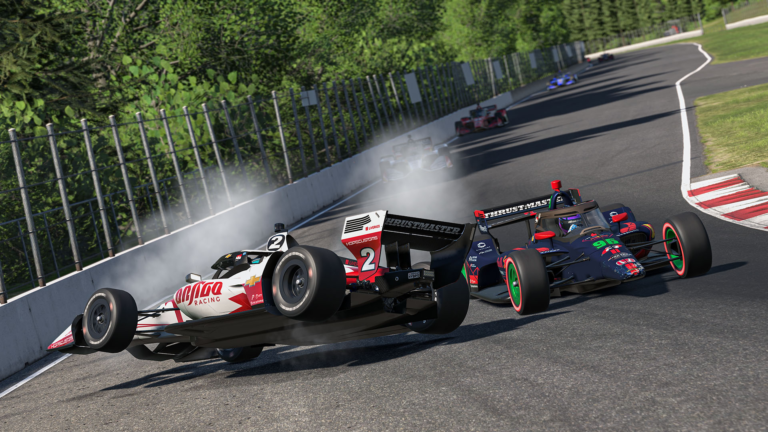
Braking slightly early into the first corner of a chaotic race is almost always the correct call. The instinct is to hold your braking point and protect your position. When that goes wrong, the result is a 4x or 6x incident and a race that may not be recoverable. The driver who brakes slightly early exits Turn 1 with a clean car and a recoverable position. Two places lost at the start is nothing compared to an early retirement.
Giving space in traffic follows the same logic. One position conceded is recoverable over a race distance. One incident in a tight battle often is not. Therefore, the drivers who build SR fastest are the ones who recognize when an overtake attempt carries a high chance of contact, and wait for the next opportunity instead.
Consistent clean laps build SR faster than aggressive driving with occasional clean runs. The system measures your incident rate. As a result, the most direct way to improve that rate is to make fewer decisions that produce incidents in the first place.
Race. Be Safe. Have Fun.
The pit start will always be available as an option. In almost every case, leaving it unused is the better decision.
iRacing improves with experience in the race itself: in traffic, at starts, in the moments where the pressure is highest. None of that comes from sitting in the pit lane watching the field go by.
Race the car. Brake early when the situation is uncertain. Give space in the moments where the risk is too high to justify the reward. The SR comes from those habits. So does everything else.