The tension between iRacing’s realism and casual accessibility is one of the platform’s oldest debates. New racers arrive expecting a racing game and find a platform that grades your racecraft, charges for incidents, and drops you in races against strangers who take it seriously. Some leave frustrated. Others stay and find exactly what they were looking for. The question of whether iRacing is too hard for casual players does not have a single answer. It depends heavily on what casual actually means and which part of the platform you’re engaging with.
Also See
➡️ Your First Month in iRacing: How to Start Strong Without Burning Out
🏁 iRacing Overview and Sim Features
The Case That iRacing Is Too Hard
The argument that iRacing is inaccessible to casual players starts with the incident system. New drivers unfamiliar with close-quarters racing collect incidents quickly, and the safety rating system penalizes every contact and track-limit violation. The learning curve is not just about being fast. It is about being clean, consistent, and predictable in traffic. That combination takes time to develop, and the feedback during that learning period can feel punishing. A driver who loses their D license after a rough race series may not come back.
The subscription model is a second friction point. Other racing games are free-to-play or one-time purchases. iRacing requires a monthly subscription plus car and track purchases. For a casual player who might race once a week for a season and then drift away, the ongoing cost can feel disproportionate to the playtime. The investment required to access the cars and tracks that match your interests adds up before you know if the platform is right for you.
The pace of official races is also genuinely demanding for new drivers. Grid veterans know the tracks, the car limits, and the etiquette. A new driver dropped into a mid-pack start without that context is likely to be involved in incidents not entirely of their making. That only reinforces the frustration. The competitive gap in official series between a driver with six months of experience and one with six years is larger than most games allow.
The Case That Casual Racers Can Find Their Place
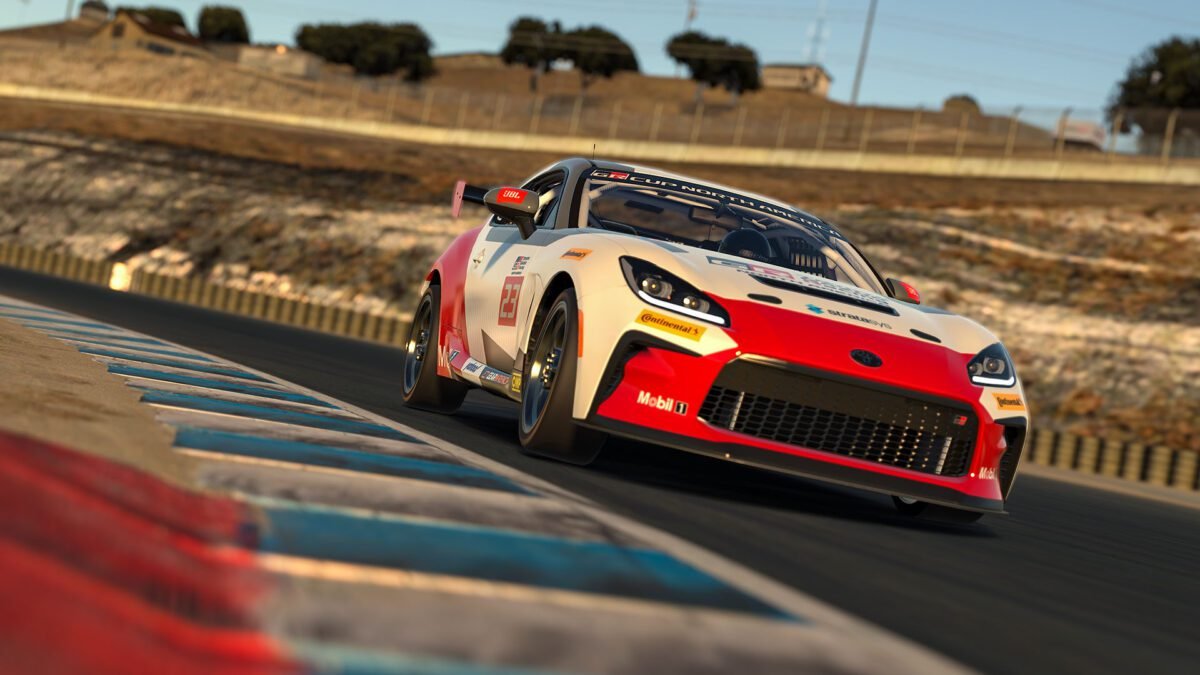
The counterargument is that iRacing has more structure to protect new drivers than most people realize. Rookie-class series exist to keep newer drivers competing against others at a similar stage. The GR86 Cup, the Mazda MX-5 Cup, and the Radical SR8 series at the entry levels are populated by drivers who are also still learning. Staying in those series while you build consistency and safety rating is a legitimate strategy that many experienced iRacers recommend explicitly.
AI Racing also changed the accessibility equation meaningfully. You can now run complete race weekends against AI opponents at any track, in any car, without the safety rating pressure of official sessions. For a casual player who wants the iRacing physics model and track accuracy without the competitive environment, AI Racing is a genuine path that did not exist a few years ago.
Leagues represent a third option that suits casual racing better than most players realize. A league running on a schedule you can commit to, with drivers who share your pace and attitude, is a fundamentally different experience from public official sessions. The competition is calibrated to your group rather than a global field, and the social element replaces the anonymous friction of open-grid racing. Many iRacers who struggled in official series have found their home in a league that matches their pace and availability. iRacing’s official league search lets you find leagues organized by car type, series, or skill level.
What the Platform Does and Doesn’t Reward
iRacing rewards consistency and clean driving above outright pace. The safety rating system means a driver who finishes mid-pack without incidents will progress faster than a driver who chases fast laps and clips walls. That structure favors a patient, cautious driving style. This is more achievable for a casual player than raw speed. The misconception is that iRacing demands pace. At most license levels, it rewards being clean.
What iRacing does not reward is dipping in and out without building a base of experience. The drivers who struggle most are those who race occasionally without developing consistent habits. Racecraft includes knowing when to defend, when to let a car through, and how to position yourself in braking zones. These habits take repetition to build. A casual racer who runs twenty laps a week in practice and one official race will develop those habits more slowly than someone who races three times a week. That is not a design flaw. It is the nature of a skill-dependent platform.
Who Should Try iRacing as a Casual Racer
iRacing suits casual racers who want a realistic driving experience and do not mind a learning period. A free trial lets you test the platform before committing to a subscription. This removes some of the financial risk. If you are willing to spend a few weeks in rookie-class series getting comfortable before expecting competitive results, the platform will reward that patience. If you want instant gratification, accessible onboarding, or a low-commitment drop-in experience, other racing games handle those expectations better.
A few practical habits make the casual experience significantly more manageable. Running practice laps on a track before entering an official race session removes a major source of incidents. Watching how experienced drivers handle the first corner of your current track is freely available on YouTube for almost every circuit in iRacing. Spending twenty minutes studying the start procedure and common incident zones for your specific series reduces the likelihood of collecting contacts in the first lap. None of this requires a hardcore approach. It just requires treating your first session at a new track as a learning run rather than a race.
The honest framing is that iRacing is a hobby, not a game. Treating it like a game you can pick up for an hour without preparation leads to a frustrating experience for you and the other drivers on your grid. Treating it as a hobby, something you improve at gradually through time in practice and learning, opens up a depth of experience that most racing games cannot match. Whether that trade-off works for you as a casual racer depends entirely on which of those two things you are looking for.