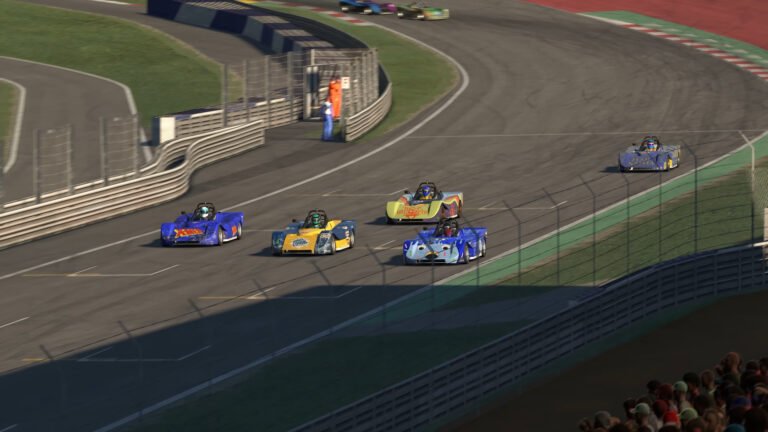
Side drafting is one of the most effective tactics on an iRacing oval. It lets you disrupt a competitor’s rear aerodynamics without making contact, and it works because iRacing models it using actual computational fluid dynamics data. Once you understand what it does to the car and when to use it, it becomes a tool you reach for constantly.
What Side Draft Actually Does
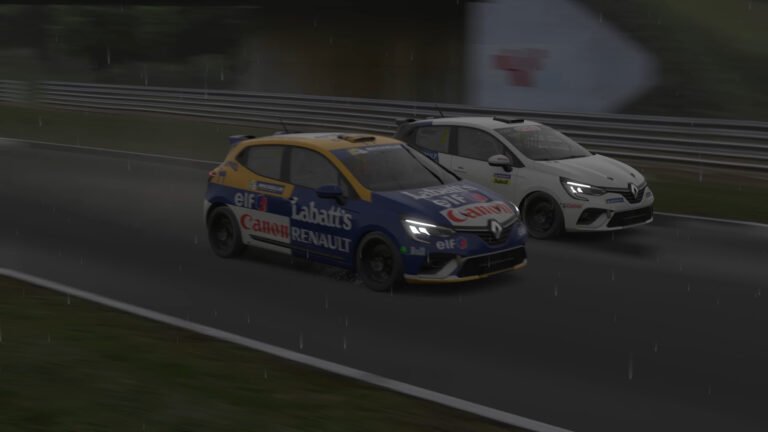
When you pull alongside another car, your body interrupts the airflow reaching their rear quarter panel. Clean air flowing over and around a car generates downforce at the rear, which keeps the tires planted through corners and gives the car stability at speed. When you remove that clean air, the downforce drops. The rear gets lighter, the car gets looser, and the driver fighting for position suddenly has less grip to work with.
This is not a bump or a nudge. It is purely aerodynamic. In real racing, side draft has been a documented tactic in NASCAR and other oval series for years. iRacing models the same physics using CFD data that accounts for how a car’s presence affects airflow around nearby cars.
How iRacing Models the Effect
The iRacing aerodynamic simulation calculates how each car’s body affects the air around nearby cars. As you close alongside a competitor, the simulation registers how your car’s presence changes the airflow they are receiving. Pull far enough alongside and the effect becomes meaningful.
Community testing has confirmed that the side draft is stronger when applied to the right rear of a competitor’s car compared to the left. This reflects the aerodynamic properties of oval cars, which are built asymmetrically for left-turn racing. Targeting the right side when you have the option gives you more disruption.
One thing community testing has also noted: when a car gets side drafted at speed, the rear looseness can feel like the engine bogging. The loss of downforce changes how the car responds to throttle, and the sensation is of the car slowing rather than just going loose. This catches drivers off guard the first time it happens to them.
When to Use Side Draft Offensively
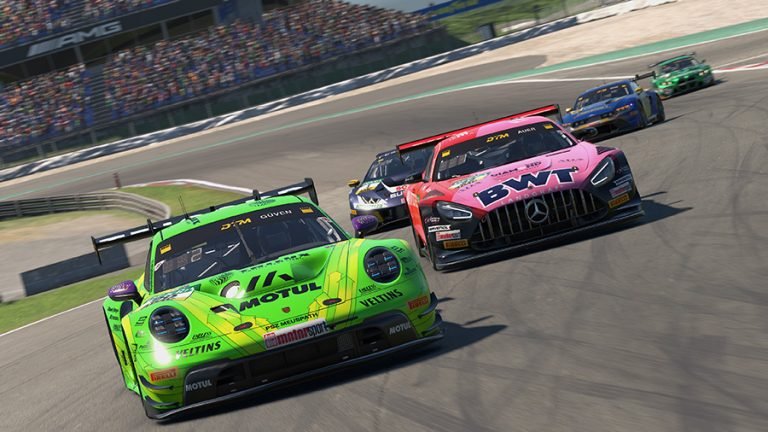
The prime situation for offensive side draft is when you are in the draft and closing on a car you want to pass. As you pull alongside, get your nose to their right rear quarter panel before you complete the pass. Hold that position briefly. The disruption to their rear downforce takes the edge off their straight-line stability just as you are making your move.
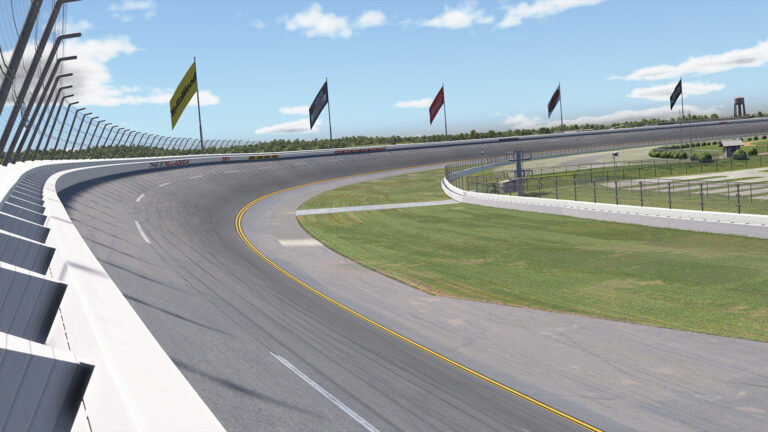
On high-speed ovals, the effect is more pronounced because the cars are generating more downforce at racing speed. Superspeedways and intermediate ovals are where side draft shows up most clearly in lap times and race outcomes. Short tracks are lower-downforce environments, so the aero effects matter less.
Using Side Draft Defensively
When someone is about to drive past you, moving toward them as they come alongside introduces your body into their airflow. This removes the clean air they need to maintain momentum through the pass. It is a legitimate defensive move in oval racing.
The limit is blocking. Moving to defend is one thing. Moving late after a driver has already committed to a lane is a different call entirely and creates contact risk. The most effective defensive use of side draft is moving early, before the passing car has fully committed, and using your presence to disrupt their run.
Side Draft in Tandem Racing
Tandem drafting, where one car pushes another with bumpers touching, is particularly vulnerable to side draft from a third car. If a car runs alongside the lead car in a tandem pair, it pulls the downforce off the lead car’s rear. This causes the lead car to go loose while the pusher is still applying force from behind. That combination can separate a tandem quickly or cause the lead car to get out of shape.
If you are the pusher in a tandem, watch what is running beside your lead car. If someone runs up alongside and the lead car starts moving around, back off slightly to give your partner room to recover before you reapply pressure.
Timing It Right
Side draft is a straightaway tool. The move needs to be complete or abandoned before the braking zone. If you are still running beside a competitor as you approach the corner, one of you is about to have a serious problem.
The approach is to commit on the straight, apply the effect, make your decision, and be in your lane before braking. A half-committed pass that drags through the braking zone is where side draft attempts turn into crashes.