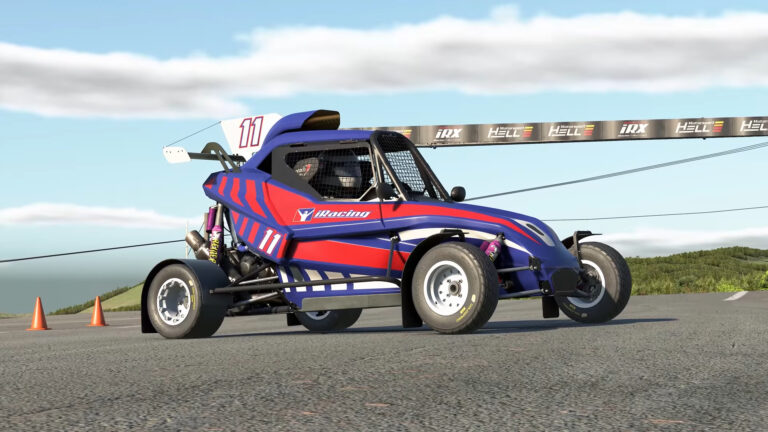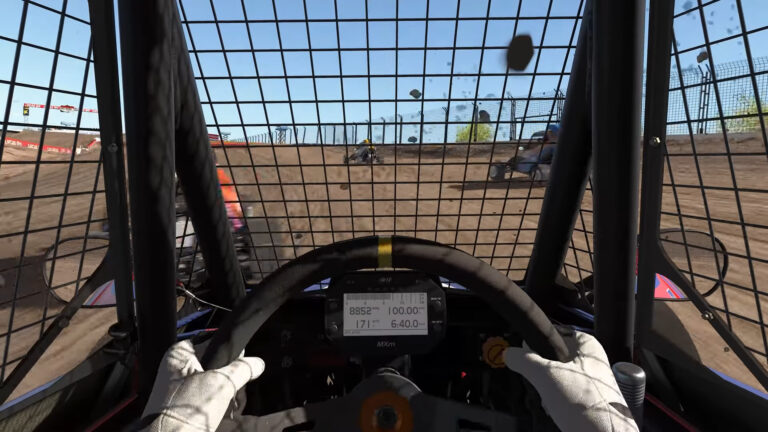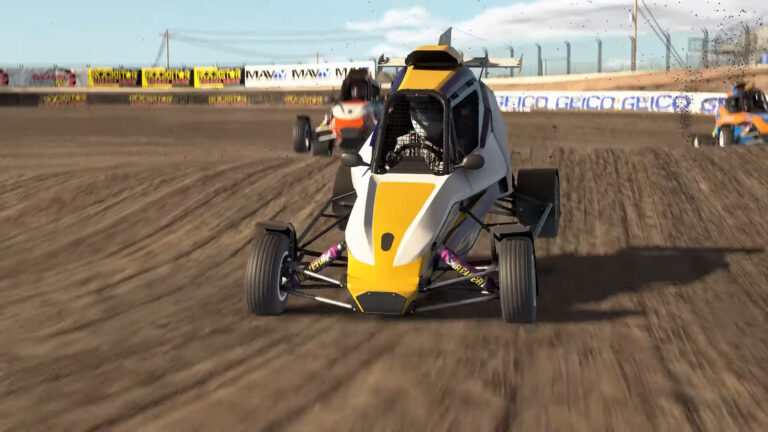
The FIA Cross Car Guide serves as the definitive resource for mastering iRacing’s newest and most versatile dirt road vehicle. Because this agile machine arrived with the 2026 Season 1 update, it has quickly become a favorite for those seeking high-intensity, mixed-surface racing. Whether you are aiming to escape the rookie ranks or simply want to improve your car control, this FIA Cross Car Guide covers everything you need to know about the vehicle’s technical specs and unique handling traits.
FIA Cross Car Guide: Technical Specifications
Underneath the minimalist bodywork of this off-road weapon lies a powertrain designed for raw acceleration and high-revving performance. The vehicle represents the top level of a carefully designed ladder used to train future world rally stars.
- Engine: It utilizes a high-revving 890cc Yamaha MT-09 three-cylinder engine.
- Power Output: The motor produces a healthy 120 brake horsepower (bhp).
- Weight: With a dry weight of only 340 kilograms, the car has a staggering power-to-weight ratio.
- Gearbox: It features a 6-speed sequential transmission that requires lightning-fast shifts.
- Top Speed: On longer straights, the car can reach speeds of approximately 100 mph to 110 mph.
Moreover, the power is delivered exclusively to the rear wheels. Consequently, drivers must learn to manage wheelspin while sliding across low-grip surfaces.

Handling Characteristics: Quick, Nimble, and Slidey
The most prominent feature of the vehicle is its extreme agility. Because the wheelbase is incredibly short (only 2000 mm), the chassis responds instantly to every steering input.
Rotation and Slide Control
The car is naturally “loose” on dirt surfaces. This means the rear end will step out easily under both braking and acceleration. However, this oversteer is intentional. In the world of rallycross, you want the car to rotate quickly to navigate tight hairpins. The FIA Cross Car Guide recommends using the throttle to help steer the car through the mid-corner phase.
Tarmac Precision
When you transition from dirt to tarmac, the handling becomes much more “twitchy.” On high-grip surfaces, the short wheelbase makes the car sensitive to over-correction. Therefore, you must be extremely smooth with your hands to avoid spinning.
Stability Over Jumps
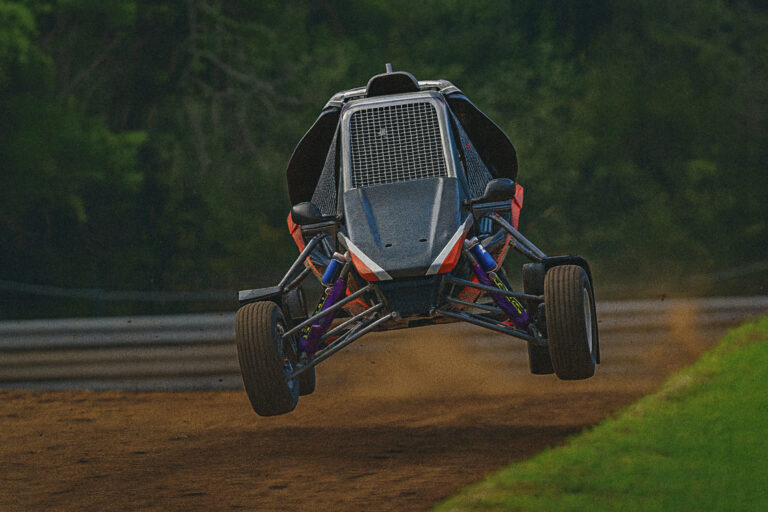
Despite its small size, the car is remarkably stable when launching into the air. The long-travel coilover shocks are designed to soak up heavy landings. As long as you keep the car straight when taking off, the suspension will handle the impact with ease.
Difficulty Level and Rookie Progression
In this FIA Cross Car Guide, we categorize the difficulty as Beginner-to-Intermediate. While the car is easy to drive for fun, extracting professional-level pace is a significant challenge.
The car is very approachable because it is stable over bumps and does not feel top-heavy like a Pro 2 Lite truck. However, the lack of electronic aids like ABS or Traction Control means that the driver is solely responsible for finding grip. Rookies should focus on “pointing and squirting” out of corners. If you try to force the car to turn with the steering wheel alone, you will lose momentum. It is the perfect tool for learning the fundamentals of weight transfer before moving into faster classes.
Real-World Racing: The FIA European Autocross Championship
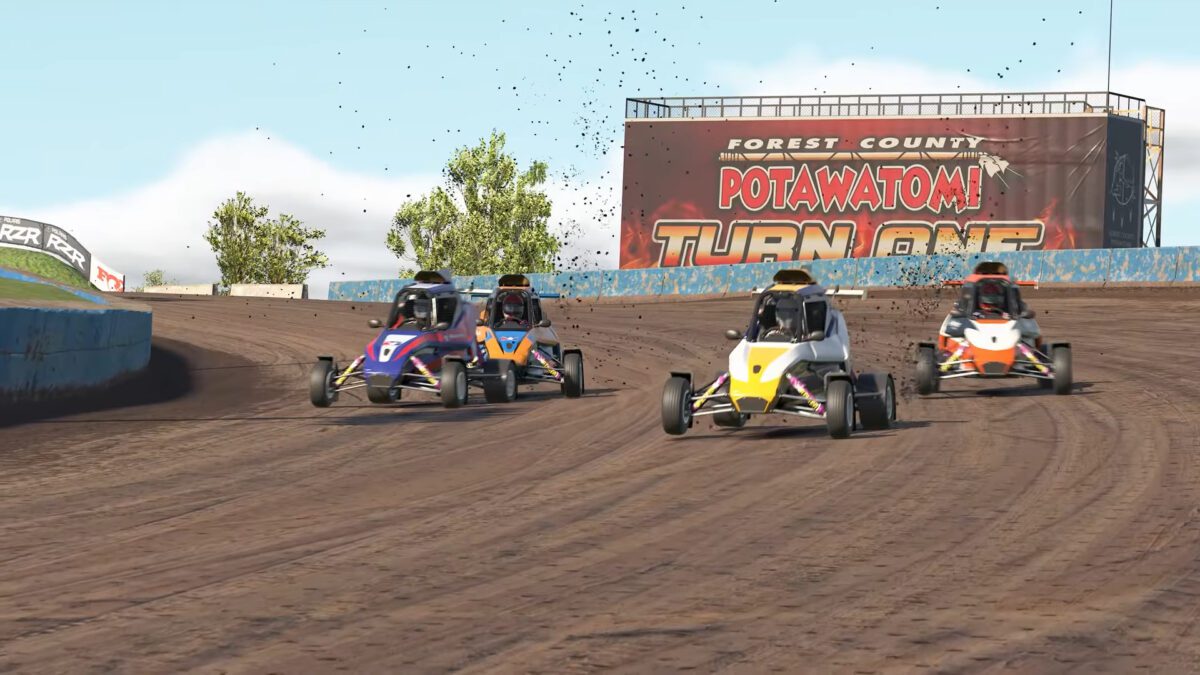
The vehicle is a staple of European motorsport. Specifically, it competes in the FIA European Autocross Championship and the FIA Cross Car Academy Trophy. These series are famous for intense, short-format races on natural terrain circuits.
Real-world drivers often use these cars to stay sharp because the feedback is so raw and unfiltered. In iRacing, the car is the focal point of the new FIA Cross Car Championship. Because it is free base content, the series is always packed with competitors, offering some of the best wheel-to-wheel action in the simulation.