Diamonding is a corner entry technique used in oval racing where you deliberately delay your turn-in and square off the corner, entering late and exiting wide before driving straight down the track. The name comes from the shape the car traces through the corner, which looks more like one side of a diamond than the traditional arc of a circle. Most oval drivers learn about it early, but many are unclear on when it actually helps versus when it costs time or causes contact.
Also See
➡️ Oval Racing Line: Why Circular Corners Are Slower
➡️ The Ultimate SK Modified Guide: Mastery of Minimum Speed
What Diamonding Actually Does
The theory behind diamonding is straightforward. If you can straighten the corner as much as possible, you spend less time under lateral load and more time in a straight line, where all of your power goes toward forward momentum rather than cornering force. On tracks where the racing surface is narrow or the banking is minimal, squaring the corner gives you a longer, straighter acceleration zone out of the exit.
There is also a tire wear element. A driver who diamonds corners consistently generates less lateral load on the right-side tires each lap. Over a long run, this can translate to better grip at the end of a race compared to drivers using a more circular line.
The tradeoff is that late entry typically means entering the corner slower. You give up some entry speed to gain exit speed and a longer acceleration zone. Whether that trade pays off depends on the track, the car, and whether you are racing alone or in traffic.
When Diamonding Helps
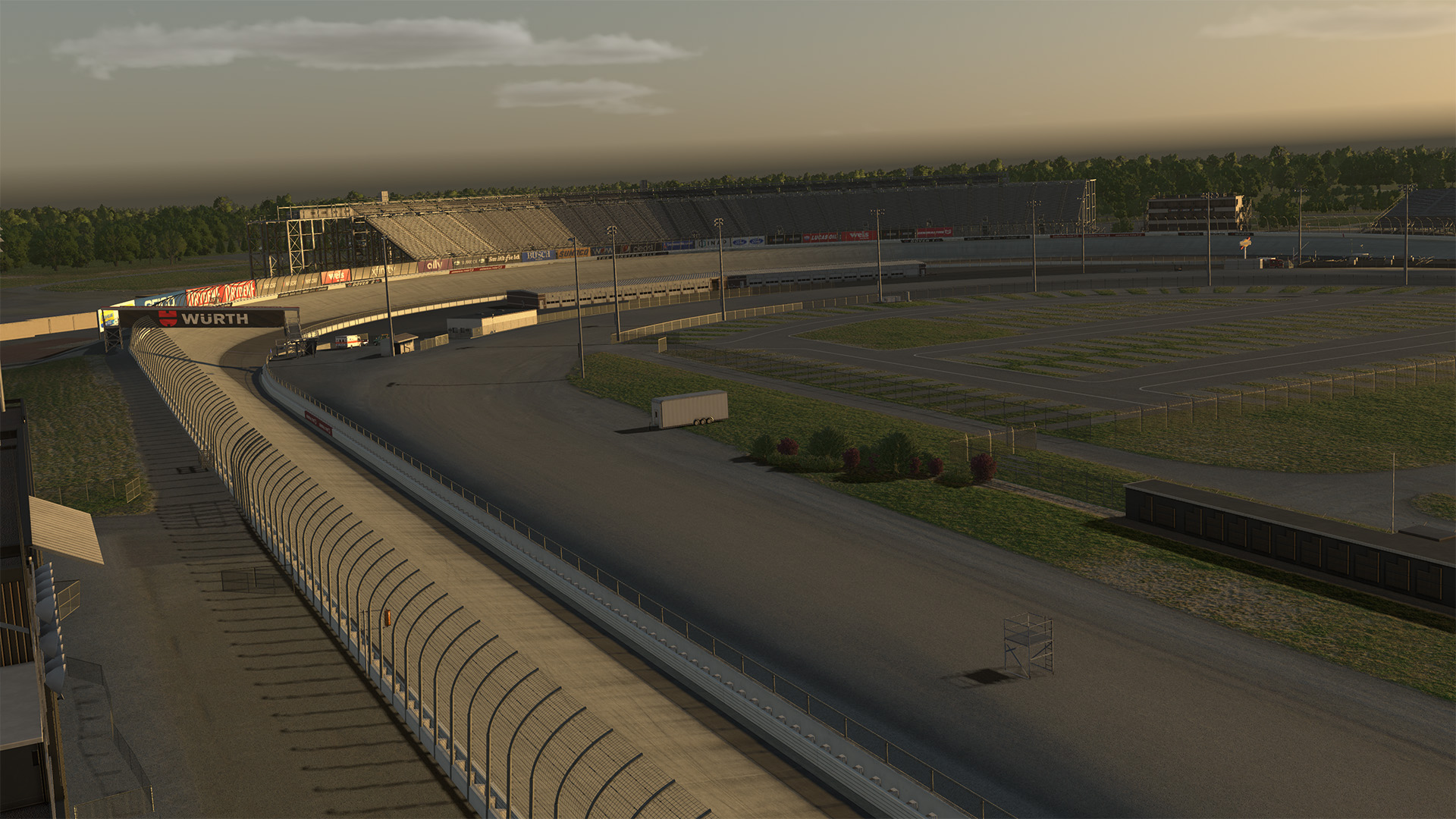
Diamonding is most effective on short ovals and tight tracks where exit speed matters more than entry speed. On a half-mile oval with tight corners, a driver who can maximize the exit and get to full throttle earlier will be faster than someone scrubbing the whole arc.

It is also effective when the inside groove is dirty or marbled. Many oval tracks develop a dirty zone on the low line that builds up rubber off the racing surface. A driver who diamonds can avoid the worst of the marbles by placing the car differently through the corner, getting cleaner grip on entry and exit.
Traffic management is another situation where diamonding has real advantages. If you are following a slower driver and your primary pass attempt is going to be on the outside off the corner, a late entry sets you up to get alongside at the exit without having to drive around the outside through the full arc.
When Diamonding Costs You
In a clear field on a high-speed oval, diamonding is often slower than a smooth arc line. The higher the banking, the less relevant exit straightening becomes, because the banking does most of the work of pushing the car through the corner. On a superspeedway, most drivers are not diamonding at all.
The bigger issue in traffic is contact risk. If you are diamonding and the driver behind you is not expecting it, your late entry looks like you are giving up the corner. If they have already committed to an inside line or are following your pace, the late turn-in can cause contact. Community standards on most short ovals accept diamonding when you have space to do it cleanly. If you are three-wide or in a close draft battle, extreme late entries that change the expected corner shape are a protest risk and a safety issue.
Setup Changes That Support Diamonding
If you are planning to diamond consistently, your setup choices should reflect that. More understeer on entry helps you manage the late, slower corner entry without the car pushing wide. More forward brake bias can give you more stability under braking before the late turn-in. A slightly softer front spring can help if the track surface catches bumps on the late-entry line.
A setup built for a circular line may fight you when you try to square the corners. If you are committing to the tactic, make the car comfortable running it consistently across a full stint.
The Short Version
Diamonding is a legitimate and effective technique in the right context. Short ovals, dirty low lines, traffic management, and long-run tire conservation are all situations where it makes sense. High-speed ovals, clean-field racing, and close-quarters traffic are situations where it may cost time or create contact.
If you are new to ovals, experiment with the technique in practice sessions on different track types. The line choice in oval racing is more nuanced than it looks from the outside, and diamonding is one of the clearest examples of that complexity.