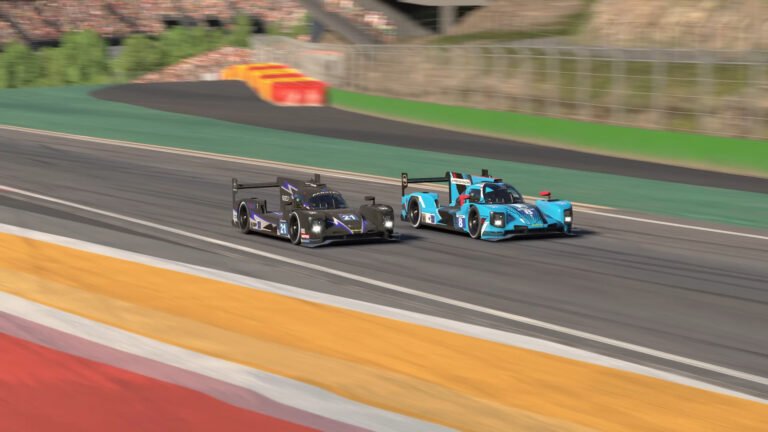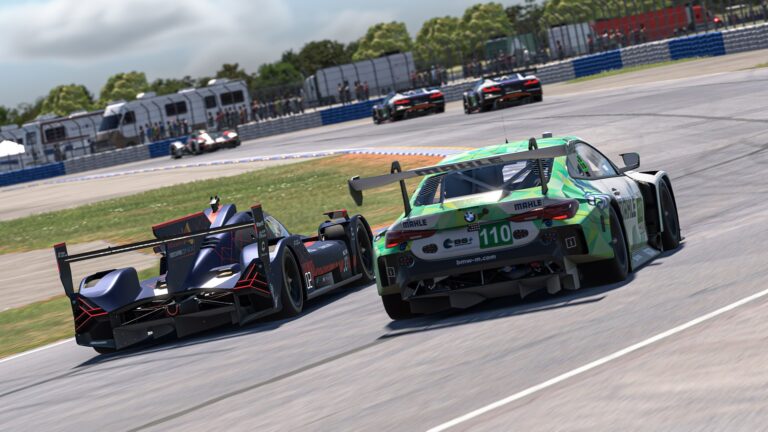
Watch any real-world endurance race and you’ll see it constantly. A faster car closes on a slower class car on a straight, and the slower car flicks on its left blinker. Simple signal. Clear message: I see you, I’m moving over, come through.
Also See
➡️ iRacing Safety Car: Should Endurance Racing Have Cautions?
iRacing doesn’t have blinkers. The real-world Nürburgring 24 Hours puts this question front and center: blinkers are standard practice in multiclass endurance racing, and their absence in iRacing is something drivers in those formats notice. Here’s the case for and against adding them.
The Case For Blinkers in iRacing
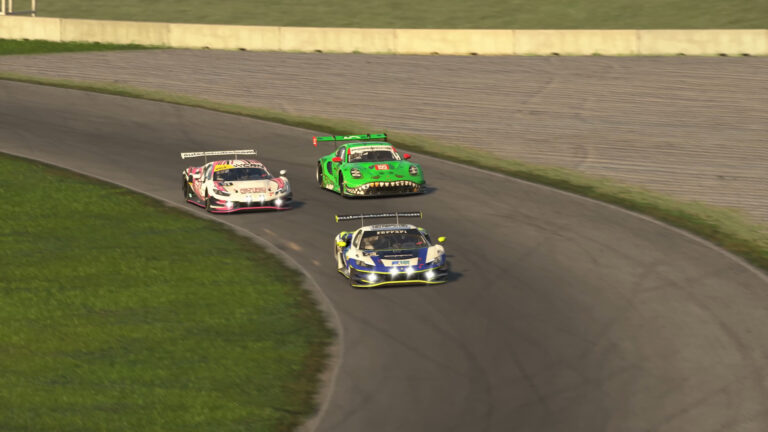
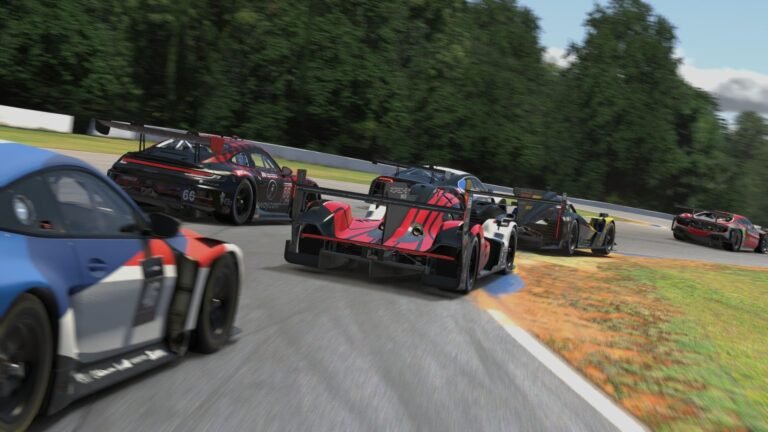
In real multiclass endurance racing, blinkers are a primary communication tool between cars running different speeds. A prototype closing on a GT car at high speed doesn’t have time for hand signals. The blinker is a standardized, universally understood signal. Crucially, it conveys intent without requiring voice comms between teams running different systems.
In iRacing, especially in longer endurance events, this gap is real. Current options for communicating overtake intent are limited: proximity indicators, the relative box, and hoping the other driver checks their mirrors. None of these replace a direct driver-to-driver signal. As a result, multiclass incidents happen that could be avoided with one button press.
The gap is clearest on long straights before chicanes, where a fast prototype approaching a slower GT car needs the GT car to know it’s coming before they’re side by side. A blinker solves that instantly.
How It Could Work
A few implementation approaches stand out. The simplest would be a keyboard or button binding that flashes a visual indicator visible to nearby cars in exterior camera view. This would work similarly to the flashing rear lights real prototype cars use to signal “I’m being lapped.”
Additionally, more complex versions could involve in-game UI indicators triggered by the overtaking driver. Some iRacers have suggested tying it to a horn already present on some car models in the sim. Either way, the technical lift seems manageable given what iRacing already does with proximity alerts.
The Counter-Arguments
The case against is also legitimate. iRacing’s existing flag system handles most multiclass communication adequately. Adding blinkers would introduce another variable for drivers to manage mid-race. Most serious league-organized endurance racing already uses voice comms, so blinkers would solve a problem that’s already handled in organized play.
There’s also the point that iRacing’s AI sessions struggle with multiclass behavior in general. Blinkers would offer limited benefit in solo play.
The Bigger Picture
This isn’t really just about blinkers in iRacing. It’s about whether iRacing continues building simulation depth into team and endurance formats. Blinkers are a small thing. But they represent the gap between iRacing’s individual series experience, which is extremely well-developed, and its endurance and multiclass experience, which still has rough edges.
The 24 Hours of the Nürburgring on iRacing is a legitimate event. Drivers put real hours into preparation. The communication tools available to them should reflect that level of commitment. Whether iRacing adds turn signals or finds another solution, the question points to something bigger: serious endurance racers who want the sim to go further.