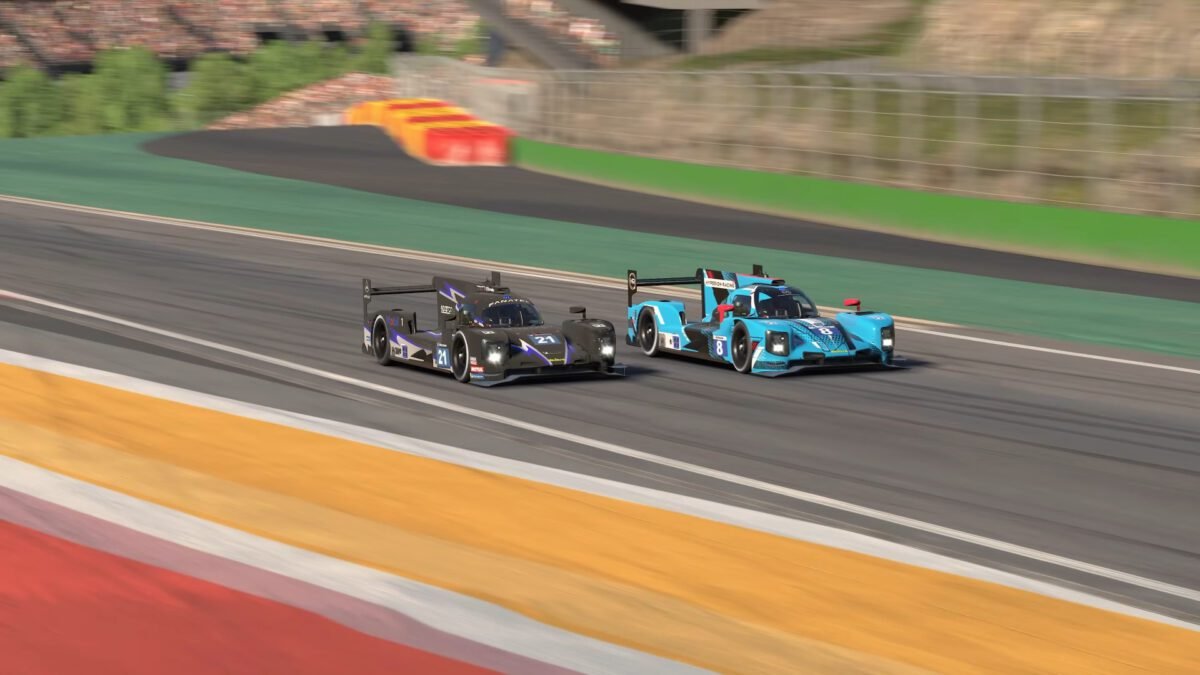
One of the most common complaints in iRacing goes something like this: why am I sharing a split with drivers who crash constantly, when my Safety Rating proves I race cleanly? It’s a fair question. Safety Rating seems to measure exactly what a split system should reward. So why does iRacing use iRating for race splits instead?
Also See
➡️ How to Get Out of Rookies (Without Cheating Yourself)
The answer involves understanding what each metric actually measures, and why competitive balance matters more than incident rate when organizing race fields.
What iRating Actually Measures
iRating is a measure of racing pace relative to the field you race against. When you finish ahead of drivers with higher iRating, your iRating goes up. When you finish behind drivers with lower iRating, it goes down. The system is specifically designed to group drivers by competitive speed, so that races are competitive throughout the entire field rather than just at the front.
If iRacing used Safety Rating for splits instead, faster drivers with lower SR would end up separated from fast, clean drivers. As a result, some splits would have a very wide pace gap. The front of the field would lap the back of the field, and the overall racing quality would suffer.
What Safety Rating Actually Measures
Safety Rating measures incident avoidance, not driving quality in the broader sense. It goes up when you finish races without collecting x-counts, and goes down when you do.
However, SR can be gamed in ways that don’t reflect real driver quality. A driver who avoids races during the week and only enters when conditions feel safe will have an artificially high SR. Meanwhile, a driver who races constantly, is genuinely skilled, but races in aggressive fields will have SR that doesn’t reflect their actual ability. More importantly, SR is partly outside your control. Racing in a field full of reckless drivers will hurt your SR regardless of how well you drive.
iRating is more insulated from this problem, because it measures finishing position relative to the field. Consequently, it tracks competitive pace more reliably over time.
The Real Tradeoff
The honest answer is that neither system is perfect. iRacing chose the lesser of two problems.
Using iRating for splits means the race is competitive at every position on the grid. The gap between any two adjacent drivers is roughly equal. This is the standard model in professional racing: group by pace, accept that incident rates will vary, and let results sort things out.
Using Safety Rating for splits would prioritize clean fields. However, it would also cost competitive balance. Fast drivers who occasionally cause incidents would end up in slower splits. Clean but slow drivers would rise into splits where they can’t compete. The racing quality would suffer in a different way. The community thread that sparked this debate had 43 comments and no consensus, which is genuinely a sign this is a hard problem.
What the License System Already Does
iRacing already has a safety floor built into the structure. Rookie license holders can’t enter C-class series. The license tier system provides a minimum standard, and within each tier, iRating handles the competitive grouping.
Therefore, it’s not that safety is ignored. It’s handled at the license level. The split system handles pace. The two tools do different jobs. Whether iRacing adds more nuance over time is an open question, but the base logic is sound: competitive racing requires competitive balance, and iRating is the best available measure of that.