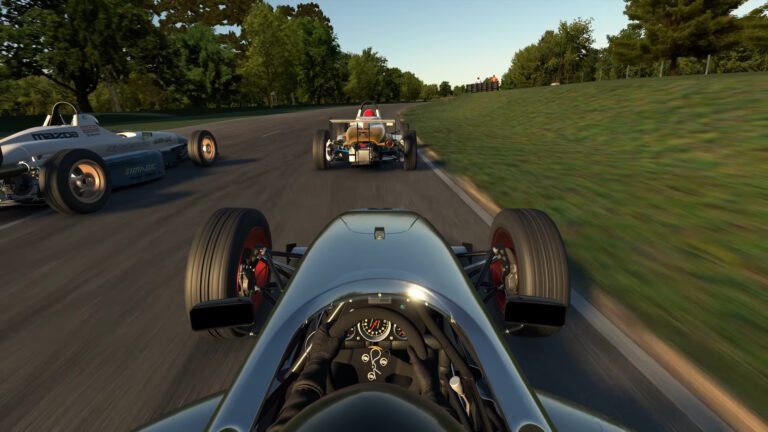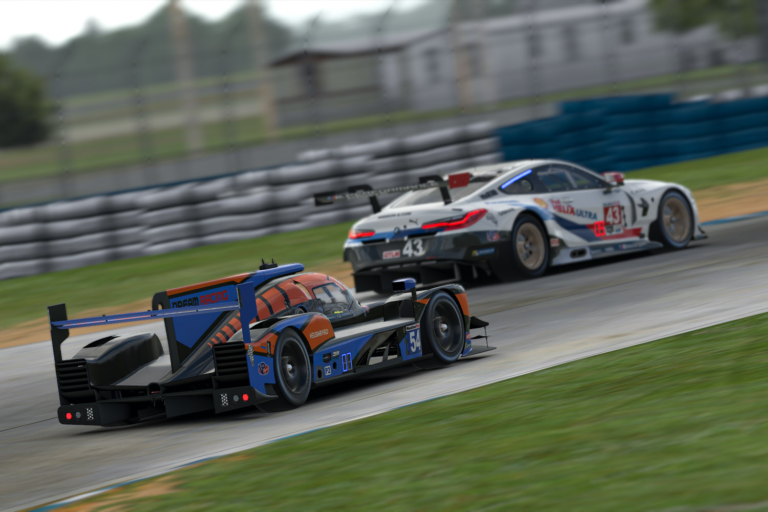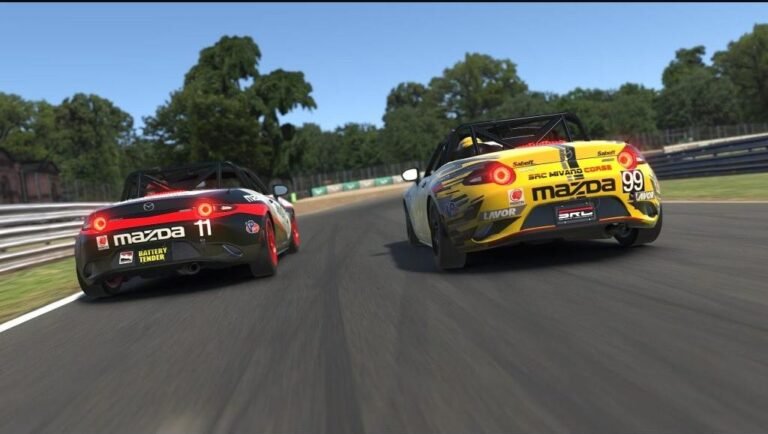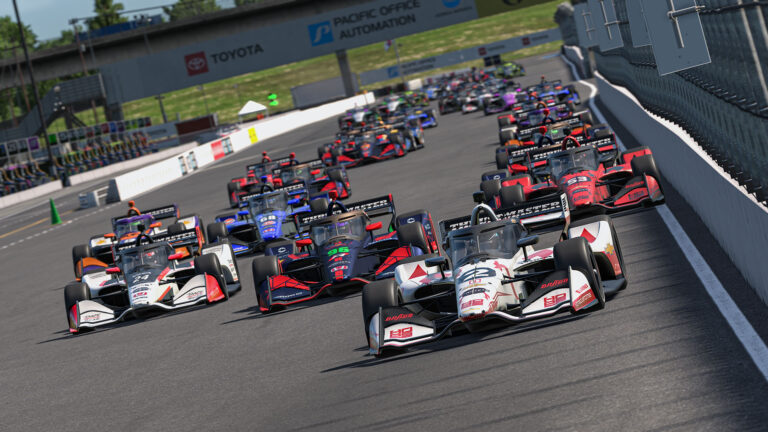
Getting the iRacing family life balance right is something most active sim racers figure out the hard way. The obstacle is rarely lack of desire to race, but a lack of structure around the time that does exist. Drivers who have kept iRacing as part of their lives for years tend to share a handful of specific habits that make it sustainable without creating friction at home.
Pick a Time and Stick to It
The most consistent pattern among iRacers who manage to stay active is a fixed, regular window for racing. Not a floating plan to hop on whenever a free hour appears, but an actual scheduled slot that everyone in the household knows about. Wednesday evenings, Saturday mornings while the kids sleep in, Sunday afternoons after family time ends. The specifics vary, but the structure is the same.
A regular window creates predictability. Your partner knows when you will be busy, and you know when you are not. That boundary actually reduces friction because it removes the constant negotiation over time. When sim racing has an assigned slot, it stops competing with everything else for attention. Most drivers who have kept iRacing as part of their lives for several years describe this kind of structure as the single change that made it sustainable.
Make the Hobby Visible at Home
Sim racing is easier to maintain when a partner understands what it involves. That sounds simple, but many drivers skip this step entirely. They start iRacing and then defend the time after the fact, which puts everyone in an uncomfortable position. The drivers who keep it going over the long haul tend to be the ones who explained the hobby early, or found a natural moment to bring someone along as a spectator.
Some iRacers run their setup in a shared space rather than behind a closed door. Others let their kids watch a race occasionally, which turns a potential source of tension into a shared moment. These are not strategies for gaining more time at the expense of other people. They are about making sim racing part of household life rather than something that competes with it. When the hobby is visible and understood, it does not need to be justified every time you want to race.
Build a Go-To Setup You Can Race Immediately
One practical habit that works well for time-constrained iRacers is maintaining one car and series combination that is always ready to race without preparation. A fixed series, a saved baseline setup, and a small rotation of tracks that are already familiar means you can queue for a race with minimal startup time. When you only have 90 minutes and you spend 30 of them reloading a setup or refreshing your memory on a track you have not driven in six weeks, that is wasted seat time.
Many veteran iRacers with demanding personal schedules settle into one or two series per season rather than sampling broadly. The result is that every session in that series builds on the last one rather than starting over. Tire behavior, track limits, and the handling characteristics of your car in various conditions all carry forward when you commit to a single combination. For drivers who race twice a week or less, consistency in series selection is one of the highest-leverage habits available.
Having a default series also means your progress compounds. You are not starting over with a new car every week. Your setup library, your track record in the series, and your racecraft specific to that car all accumulate over a full season. When you look back at the end, the improvement is measurable in a way that broad sampling does not produce.
Races Beat Practice When Time Is Tight
When a schedule is limited, race sessions deliver more value per hour than solo practice laps. A race has a defined start and end time, it develops racecraft in ways that solo driving cannot replicate, and it gives you a concrete result to work with. Practice sessions, by contrast, tend to stretch toward whatever time is available. If you have 45 minutes, practice fills 45 minutes.
For drivers with limited time, the better approach is to queue for a race, run it, and log off. Short practice sessions throughout the week keep the car and track familiar. However, the actual improvement in racecraft happens during races, not during open practice. iRacers who have stayed competitive through busy seasons almost universally built their routine around race sessions first and worked practice in around them, rather than the other way around.
Short Sessions Are Worth More Than You Think
Not every useful iRacing session needs to be a full race evening. Twenty minutes in the morning to run a few qualifying laps is genuinely productive preparation. One of the most effective habits from the community thread involves keeping a car set up for a specific track and returning to it during short gaps rather than starting from scratch each time. If your next race is at Watkins Glen in a GT4 car, spending 15 minutes in a practice session three days before keeps everything familiar without requiring a long block of uninterrupted time.
Short sessions also have a natural end point, which makes them easier to keep bounded. A half-hour practice at a known track is less likely to expand into an unplanned two-hour session than open practice at somewhere unfamiliar. Furthermore, choosing familiar content for short sessions and saving new tracks or setups for longer windows gives you more control over how time actually gets spent. That kind of intentional scheduling is, ultimately, what separates drivers who stay active from those who drift away from the sim when life gets busy.
There is no single approach that works for every household. The iRacers who manage this successfully are not finding hidden hours. They manage by being deliberate about when they race, making the hobby transparent to the people they live with, and letting go of the idea that they have to be in constant practice to race well. Most of them would tell you the racing is better for it.