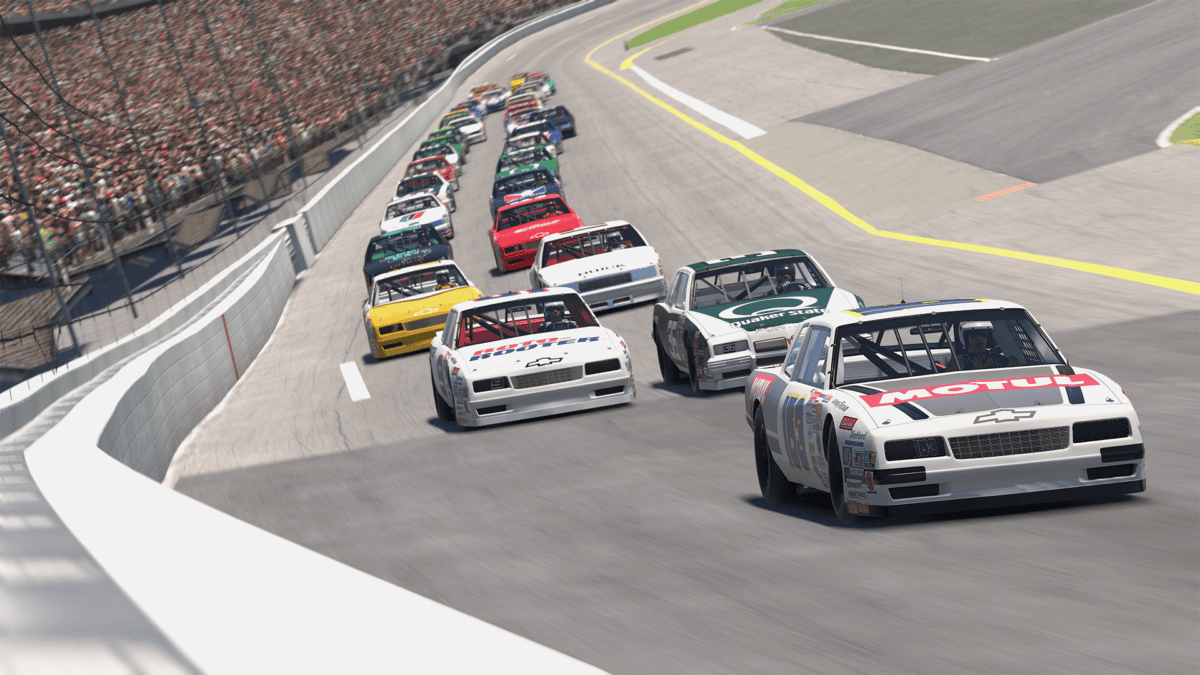
The iRacing Firecracker 400 2026 begins June 30 and runs through July 6 at Daytona International Speedway, and with the event window opening in three days, the time to prepare is now. Nine sessions are on offer across the week, split between five fixed-setup races and four open-setup races, using the 1987 NASCAR Legends cars on the Daytona 2008 oval configuration. Entry requires a D 4.0 license or better, the race distance is 160 laps, and dynamic weather is active for every session.
Also See
➡️ Martinsville MX-500: How iRacing NASCAR Special Events Work
🏁 Official 2026 Firecracker 400 Announcement
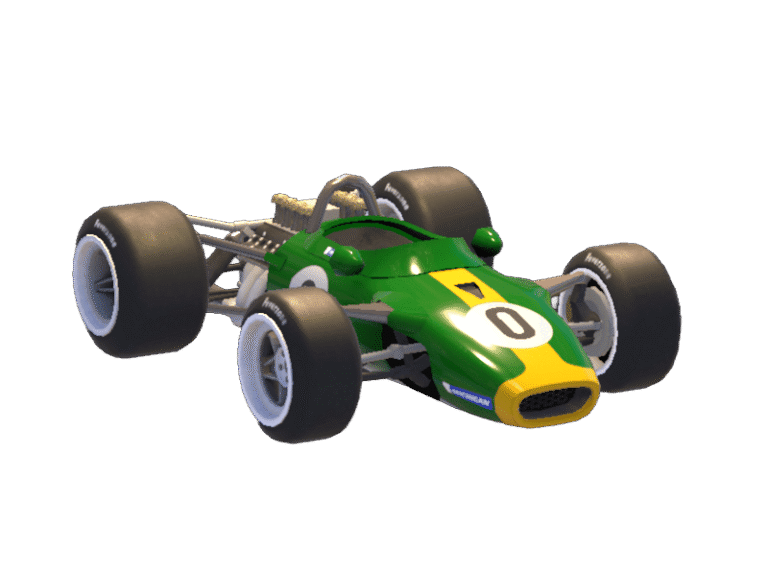
The split between fixed and open sessions is worth understanding before you pick a slot. Fixed setups remove the car-preparation variable entirely, so the race comes down to racecraft and tire management. Open sessions allow wing adjustments, which matter on Daytona’s high banking, and give drivers who know the Legends car well a tool to work with. For most drivers who have not raced the 1987 NASCAR Legends car before, the fixed sessions are the better starting point. The car has a short wheelbase, a lightweight rear-wheel-drive chassis, and it responds quickly to inputs. Drivers coming from GT3 or prototype backgrounds will notice that the Legends car punishes loose or inconsistent inputs more readily than a modern race car does.
Tire management is the core strategic challenge across 160 laps. The community strategy guide published ahead of the event makes clear that preservation in the early stages matters more than position. Tires that are pushed hard in the opening 20 or 30 laps do not recover. Drivers who run conservatively early often find they have more pace to give in the laps that decide the result, while those who charge from the start often fade when it counts. Nine tire sets are available for the race, and the number sounds generous until you factor in how heat builds during extended drafting battles.
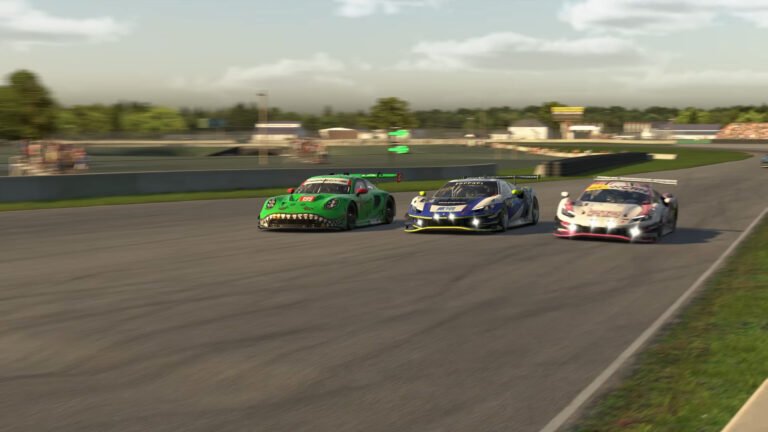
Traffic adds a complication that is easy to underestimate. Running in close draft at Daytona generates more tire heat than running in clear air, and packs form quickly on the high-speed oval. When you are deep in a group of five or six cars, your tires are working harder than your lap times suggest. Managing that heat buildup requires knowing when to pull out of a draft briefly and give your tires a recovery lap, rather than riding in the pack until the damage is already done.
For open-setup sessions, the community guide recommends starting with a conservative wing baseline rather than chasing maximum qualifying speed. The Daytona banking provides most of the aerodynamic grip the car needs. Adding wing costs straight-line speed in the draft, and that cost compounds over a long race where drafting dynamics decide position. Small wing adjustments validated in practice are worth more than an aggressive setup that gives up pace in the mid-race packs.
Qualifying technique at Daytona rewards a smooth, committed entry into Turn 1. The most common mistake is lifting too early in the approach, which costs optimal line and lap time. Equally, carrying too much entry speed scrubs tire temperature unevenly before the race even starts. One clean lap that protects the tires is the right call over a heroic attempt that damages them before the start of a 160-lap race.
The opening corners deserve specific attention on race day. The 1987 NASCAR Legends car is sensitive to contact, and oval races at this distance have earned a reputation for early-lap incidents among drivers still finding their rhythm. Hold position in the first few laps, trust your pace, and let the overdriving sort itself out before making moves.
The official Firecracker 400 announcement has the complete session schedule and entry requirements. The community strategy guide posted June 27 goes deeper on tire preservation, drafting approach, and wing adjustment detail. Both are worth reading before the event opens on Monday, June 30.