Rain racing in iRacing has been available for years, yet the same question keeps resurfacing in the community: why does wet weather only show up for two or three weeks out of every twelve-week season? A thread on the iRacing Forums, started in March 2026, asked exactly that. It grew to 13 pages, drew 7,023 views, and generated 255 replies. That level of engagement makes one thing clear: this is not a niche complaint. It is the loudest ongoing request in the sim.
Also See
➡️ Mastering the Wet Line in iRacing
The core of the frustration is simple. iRacing’s weather system is genuinely one of the most sophisticated in sim racing, yet most drivers rarely experience it in a real competitive context. Because wet weather weeks are scheduled sparingly, many iRacers can go an entire season, or two, without running a single proper rain race in their main series. That gap between capability and availability is where the community frustration lives.
What iRacing’s Rain System Actually Does
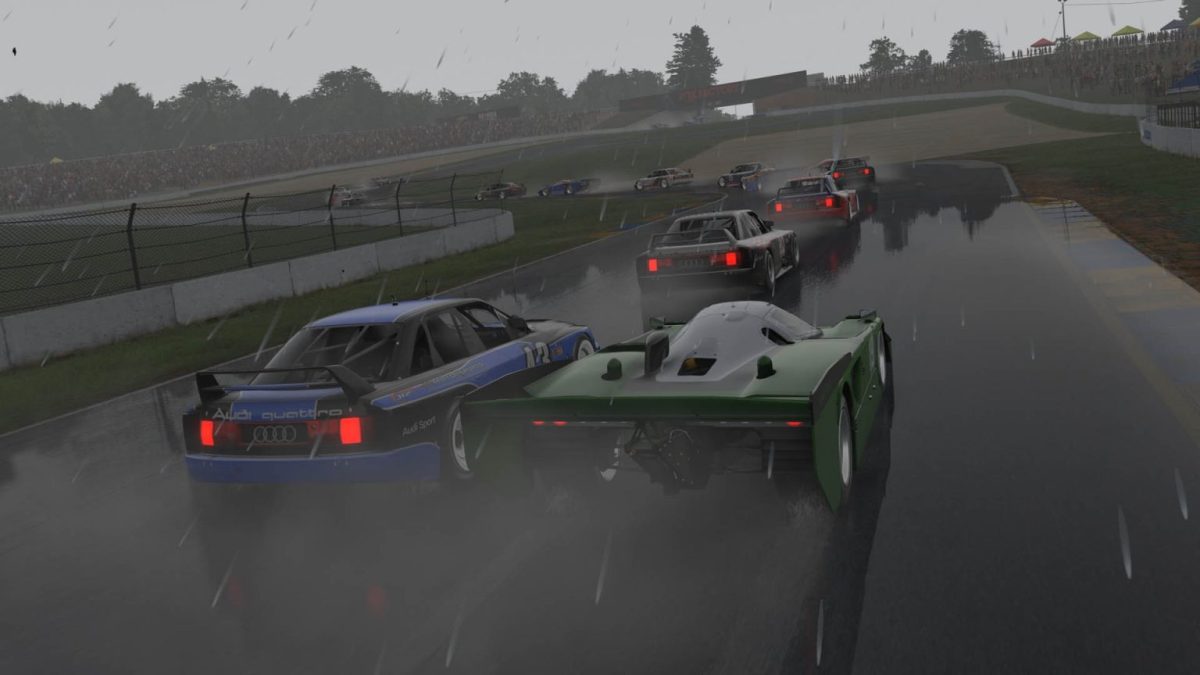
iRacing’s rain system uses dynamic weather, which means conditions change in real time throughout a session. Rain accumulates on the track surface, reduces grip, and creates aquaplaning risk in corners and braking zones. Rubber built up from dry sessions becomes less useful in the wet, and dedicated rain tires become available for supported cars. The transition between wet and dry conditions forces tyre strategy decisions that dry racing never requires. When it works as intended, it adds a layer of complexity that many iRacers find genuinely rewarding.
However, only certain tracks and series support dynamic weather. iRacing has expanded the list with each major season build, adding wet weather capability to additional venues over time. The technical work involved is substantial because each track needs to be re-modelled to simulate water drainage, surface puddle formation, and grip variation accurately. That development investment explains the pace, even if it does not fully satisfy the community.
The Scheduling Problem
The real complaint is not about the technology. It is about how often rain weeks appear in the schedule. In a standard 12-week iRacing season, wet conditions typically show up in two to three weeks, depending on the series. For many drivers, that ratio feels out of proportion with how capable the system actually is. Some iRacers noted that the infrequency makes rain sessions feel like random events rather than skill tests. Without consistent practice reps in wet conditions, the gap between experienced and inexperienced rain drivers stays wide whenever those weeks arrive.
A related issue is that rain availability varies significantly by series. GT3 and open-wheel iRacers have access to more wet weather weeks than, for example, oval or dirt series drivers, where weather support is limited or absent. As a result, the overall frustration is not uniform across the community. Some categories get a reasonable amount of wet racing, while others remain almost entirely dry regardless of the season.
What iRacing Has Said, and What Might Change
iRacing has acknowledged that the rain system is still expanding. New track support gets added with each season build, and the company has stated publicly that wet weather will continue to grow as a feature. The limitation is primarily one of development time, not intent. Building accurate rain physics for each individual track requires track-specific work that cannot be automated or copied from one venue to another.
The most common requests in the March thread were not for new tracks. They were for more rain weeks on the venues that already support weather. Several iRacers suggested that a ratio closer to five or six rain weeks per twelve-week season would feel balanced, without making wet racing the dominant format. Others proposed optional weather sessions, where drivers could choose dynamic conditions in any week rather than waiting for a scheduled window.

The State of Rain Racing Right Now
In 2026, iRacing’s rain system is more capable than it has ever been. The number of supported tracks is higher than two seasons ago, and the underlying simulation has been refined significantly since the feature launched. For iRacers who have put in the practice in wet conditions, rain weeks are often a highlight of the season calendar rather than something to avoid.
Whether iRacing accelerates the scheduling or introduces optional weather sessions depends on internal decisions the company has not detailed publicly. What is clear is that the appetite for more wet racing is genuine and growing. The March 2026 thread was not the first of its kind, and it will not be the last.
The community’s frustration, therefore, comes from a place of genuine engagement. iRacers are not arguing against rain. They are arguing for more of it. That shift in conversation, from debating whether the feature should exist to pushing for how often it appears, is a sign that the system has earned its place in the sim. The next step is expanding its presence in the schedule. Whether that happens quickly or gradually, the community has made its position clear.