The question of whether sim racing translates to real driving comes up constantly in the iRacing community. The honest answer: it depends on which skills you are asking about. Some things carry over directly. Others do not transfer at all. And a few actually require deliberate effort to unlearn when you get into a real car after months of sim time.
Also See
➡️ Speed & Strategy
🎮 iRacing Official Site
The sim racing community has been testing this question informally for years. Drivers from complete beginners to professionals have all weighed in. Most people who have done both seriously report a more nuanced picture than either camp of enthusiasts tends to admit.
What Sim Racing Transfers Well
Track knowledge is probably the strongest transferable skill. Drivers who have spent significant time in iRacing on a specific circuit report a consistent pattern. When they later drive it in real life, corner sequences, braking markers, and sight lines feel immediately familiar. The cognitive load of learning a new track is significantly reduced. Professional teams have used iRacing for this purpose deliberately, having drivers pre-learn circuits before travelling to them.
Racing lines also transfer with reasonable accuracy, particularly on modern circuits that are well-represented in the simulator. iRacing’s laser-scanned tracks reproduce the camber changes, bumps, and surface variations that affect the real driving line. Drivers who have dialled in a corner in iRacing typically find the same line works in the real car. Tyre behaviour and power output differ, but the line itself transfers.
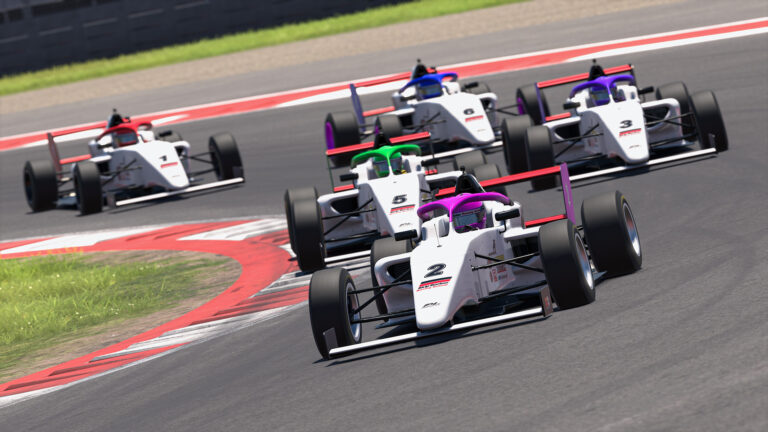
Strategic thinking, racecraft awareness, and situational reading all transfer strongly. The mental process of managing gaps in traffic is the same in the simulator as in real life. Planning an overtake and reading a competitor’s defensive positioning transfer directly. These are cognitive skills, and the simulator trains them effectively because the racing situations it creates are genuine.
What Does Not Transfer
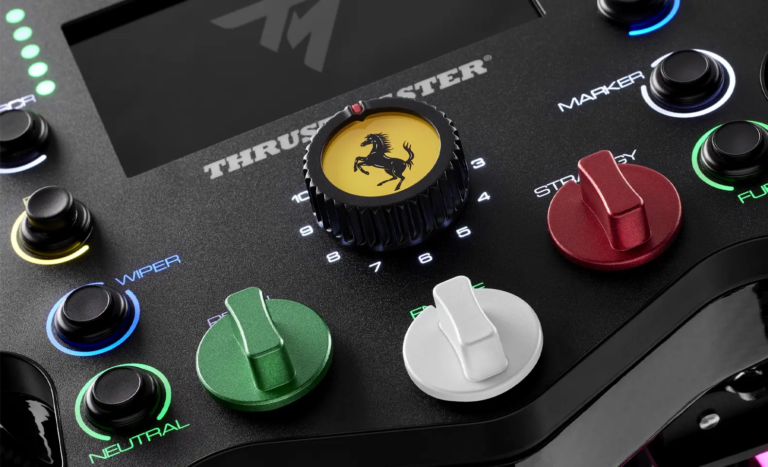
Physical sensation is the most significant gap. Real driving involves G-forces, vibration through the seat, tyre feedback through the steering column, and the instinctive proprioception of feeling the car’s weight shift. None of this exists in meaningful form in a simulator, regardless of how good the equipment is. iRacing transmits some of this through force feedback steering and, for drivers with bass shakers or motion platforms, through tactile feedback. However, it is a fraction of the sensory information a real car provides.
Braking confidence under real-world consequences is another area where the transfer is unreliable. In a simulator, the risk of braking too late is a time penalty and a reset. In a real car, it is a barrier or a gravel trap. Many sim racers find their real-world braking is overly conservative at first. The confidence built in the simulator does not carry the same psychological weight when the consequences are physical.
Certain sim-specific habits can also become problems in a real car. Aggressive kerb usage is one example. iRacing’s kerbs are modelled accurately for many circuits, but real kerbs vary enormously in their consequences and car response. Drivers who have built habits around aggressive kerb use in iRacing sometimes find those habits work against them in real-world track days.
What the Research Suggests
Academic research into simulator transfer has grown alongside the professional motorsport industry’s adoption of simulators. Studies generally support the view that high-fidelity simulators improve specific measurable skills. These include faster lap time learning on new circuits, hazard recognition response times, and strategic decision-making. Physical car control skills, however, see limited improvement — those depend on tactile feedback that simulators cannot replicate.
For iRacing specifically, the platform is more accurate in tyre and aerodynamic physics than most commercially available simulators. Because of this, the cognitive and strategic skills it trains are considered more reliable transfers to real driving than those developed in older or less accurate platforms.
How to Make Sim Racing Work Harder for You
If you are actively using iRacing to improve your real-world driving, specific practices maximize the transfer. Cockpit camera makes a real difference. Chase cameras and TV cameras let you process driving as a spectator. Cockpit view forces you to read visual references the same way a real driver does, using the track surface ahead rather than watching yourself from outside the car. That visual processing is the transferable skill, and it only develops when you are seeing what a real driver sees.
Treating sim sessions like real sessions compounds the benefit. The reset button is the biggest difference between sim and real driving. Drivers who take no resets in a sim session, treating barriers and gravel as real consequences, develop the judgment that transfers to real driving. Drivers who reset routinely build reflexes that only work when a safety net exists.
Track pre-study is one of the strongest use cases for iRacing specifically. If you have a track day at a circuit that is in iRacing, run structured sessions on it first. Learn the braking points, exit lines, and corner sequences. The payoff at the real track is immediate. The reduction in cognitive load at a new circuit is one of the most consistently reported benefits from drivers who have done both seriously. Racing situation practice is also underused. iRacing creates situations such as passing under braking, defending a position, and managing tire degradation over race distance that require real decision-making under pressure. These are reps that are difficult and expensive to accumulate in real cars, and iRacing delivers them at scale.
The Bottom Line
Sim racing makes you a better real driver in specific, measurable ways. Track knowledge, racing line optimisation, racecraft decision-making, and strategic awareness all transfer. Physical car control, braking confidence under real consequences, and sensory feedback skills do not transfer in the same way and require real seat time to develop fully. The drivers who benefit most from sim racing are those who treat the simulator as a supplement to real driving, not a replacement. Used that way, iRacing offers genuine preparation value. Used as a substitute for track time, it develops only the transferable half of what real-world driving ability requires.