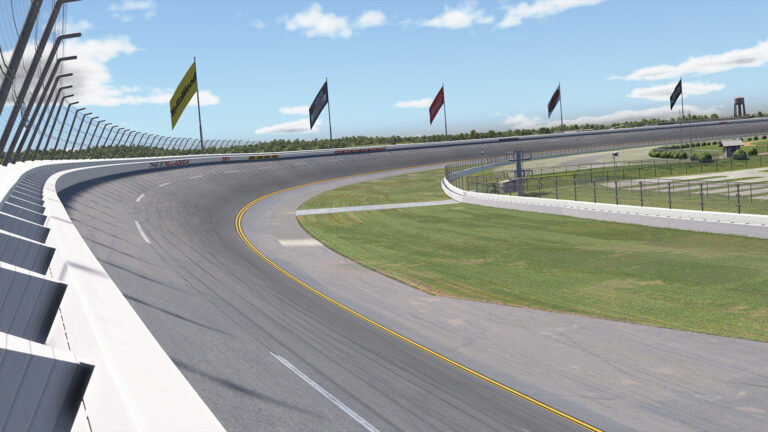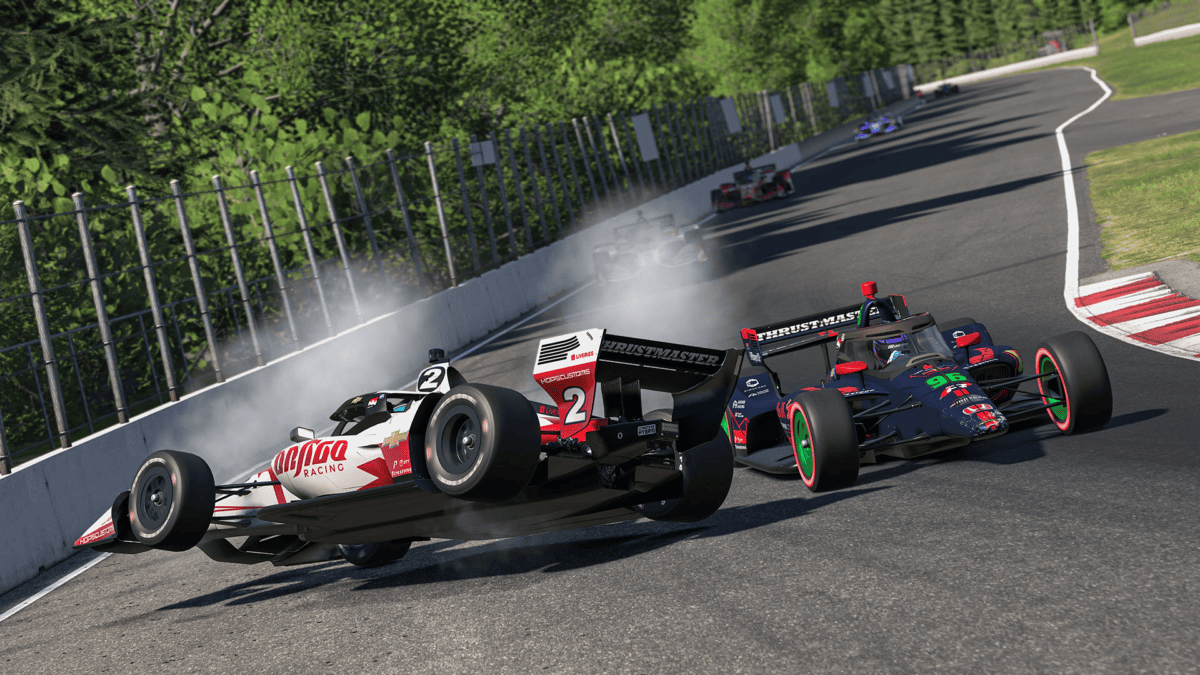
Most iRacing crashes do not come from bad luck. They come from predictable situations that follow predictable patterns. The same corners, the same lap numbers, the same gap decisions. Once you recognize those patterns, you can start avoiding them before they happen rather than reacting afterward.
This guide covers the racecraft decisions that lead to fewer incidents, better Safety Rating, and cleaner finishes. None of it requires a perfect setup or world-class pace. It requires attention and discipline.
The First Lap Is Its Own Race
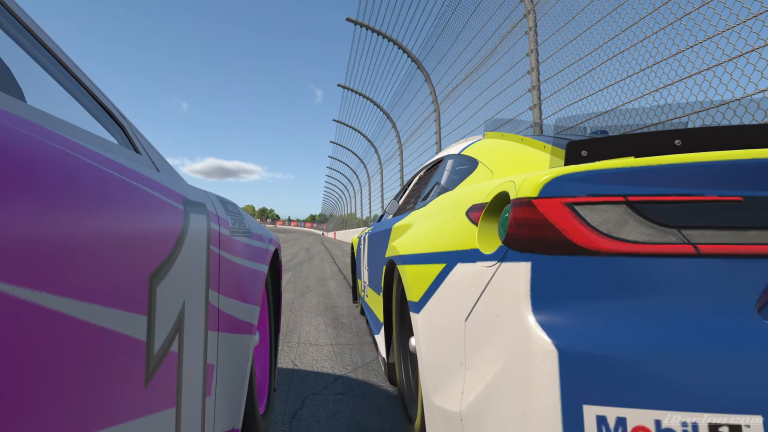
Turn 1 on lap 1 is where a large proportion of iRacing incidents happen. Cars are bunched up, gaps are small, and drivers carry more risk than the race situation warrants.
Two things help. First, give more space than you think you need. If you are starting from the second row, take a wider line into Turn 1 even if it costs you two positions. Finishing the first lap in fourth is far better than starting a recovery drive from P10 with a damaged car.
Second, lift your eyes. Look past the car directly ahead to read what the field is doing. Brake lights three cars up give you far more warning than brake lights on the bumper in front of you.
Brake on Your Reference, Not the Car Ahead
A common source of rear-end incidents is drivers who anchor their braking point to the car in front of them. When that car brakes earlier than usual, which is common at the start, the following driver gets caught out.
Find your own braking reference for every circuit. A marshal post, a painted mark on the track, a curb entry point: something you can hit consistently regardless of what the car ahead is doing. If you have a reliable reference, you can brake where you always brake without being surprised. iRacing includes a wide range of circuits with distinct visual reference points at every major braking zone, so finding one is rarely difficult. The work is building the habit of using it instead of leaning on the car ahead.
The flip side applies too. If a driver ahead is going to brake much later than expected, you need your own reference so you can use it rather than following them into the gravel.
Pass on the Gap, Not on Hope
Before committing to a pass, ask one question: will the gap exist when I get there? A gap that closes before your car arrives is not a gap. Drivers who commit to disappearing gaps are the source of most side-contact incidents.
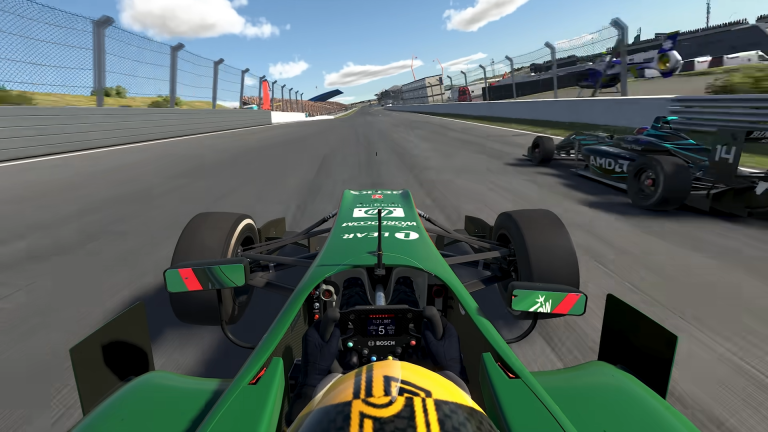
If the gap is there and you are fully alongside, you have the right to race for the corner. But fully alongside means your front wheels are level with their front axle at minimum. A nose at the rear quarter does not establish overlap in any meaningful sense for the corner ahead.
When you are not sure, back out. You will get another opportunity. Wrapping the front wing around someone’s rear wheel on lap three guarantees you will not finish.
Give a Car’s Width at Every Corner
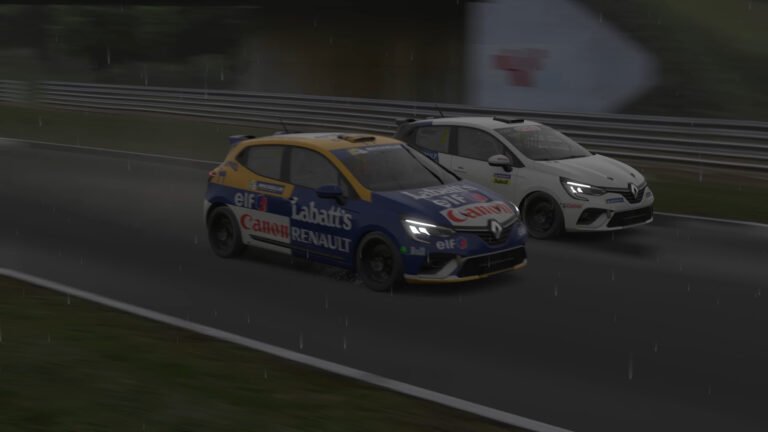
If you are side by side into a corner, leave a car’s width on the inside. Squeezed cars do not slow down predictably. They ride curbs, understeer, and make contact at the moment when both cars are at their least stable.
If you are the car being passed and you want to defend, make your move before the braking zone. Abrupt defensive moves inside the braking zone are a primary cause of punt incidents. Most leagues treat them as an infraction, and most drivers treat them as grounds for a protest.
Multi-Class Awareness
In split-class events, faster cars will lap you. Your job is to be predictable. Hold your line, avoid sudden moves, and track the faster class with your spotter.
The worst multi-class incidents happen when a slower car tries to get out of the way and moves to a spot the prototype was already committed to. Predictability protects you here. If you are going to move off-line, do it early and clearly. If you cannot commit to a clean move, hold your line and let them find the way around you.
Use Your Mirrors and Your Spotter
Set your spotter volume high enough to hear it over engine noise and headset audio. iRacing’s spotter calls left, right, and clear reliably enough to serve as your primary proximity sensor when you are focused on the corner ahead.
Use mirrors at corner exits. The exit is where side-by-side situations resolve. A glance tells you whether the car beside you made the corner cleanly or is running wide into your door. That one glance prevents a lot of incidents across a season.
Protect Your Safety Rating, Not Your Position
When a race goes sideways, a car spins ahead, a restart gets chaotic, someone makes an unexpected move, the instinct is to save position. That instinct causes secondary incidents.
If a car spins in front of you, your priority is to miss it, even if that means running wide or lifting significantly. A 4x incident is a rough finish. Five incidents from trying to thread a gap that was not there is a worse race and a much worse Safety Rating hit.
Position can be recovered over the remainder of the race. Safety Rating recovered from a clean finish feels much better than points scraped back after a string of avoidable contact penalties.
Clean Racing Is Consistent Racing
Drivers who finish cleanly finish consistently. Consistent finishes build iRating and Safety Rating faster than three fast laps and a DNF. Most drivers sitting below 3.0 Safety Rating are not there because they lack awareness. They are there because they make the same three or four decisions every race. Recognize the pattern, change the behavior, and the rating follows.
The goal in any iRacing session is not the fastest lap. It is getting to the end with the car intact and the incident count low enough to keep the SR moving in the right direction. Every clean finish is a step in the right direction, and clean finishes compound over a season in ways that aggressive racing rarely does.