iRacing endurance racing has a way of turning a reasonable person into someone who questions every life choice they have ever made. You spend two hours nursing a car through traffic, managing fuel windows, and staying clean on restarts, and then one moment of contact from a driver who wasn’t paying attention undoes all of it. The frustration is real, and it doesn’t mean you’re doing anything wrong. It means you’re racing. Here’s how to manage that frustration before it manages you.
Also See
➡️ iRacing Multi-Class Pace Cars: The iTested Series Explained
Why iRacing Endurance Racing Gets Under Your Skin
Sprint racing frustration fades fast. You have a bad race, it’s over in 20 minutes, and you’re lining up for the next one. Endurance is different. The investment is hours, not minutes. When something goes wrong deep into a stint, you’ve burned time that can’t be recovered. That asymmetry is what makes the emotional response feel disproportionate, but it isn’t. Your brain is accurately calculating how much was at stake.
Understanding that is the first step. Frustration in long-distance racing isn’t a sign that you care too much or that you’re too emotionally invested. It’s a sign that the format is working exactly as intended: pressure, consequence, and reward all scaled up. The drivers who handle it best aren’t the ones who stop caring. They’re the ones who have built habits that keep frustration from turning into poor decision-making.
Multiclass Traffic Is Not the Enemy
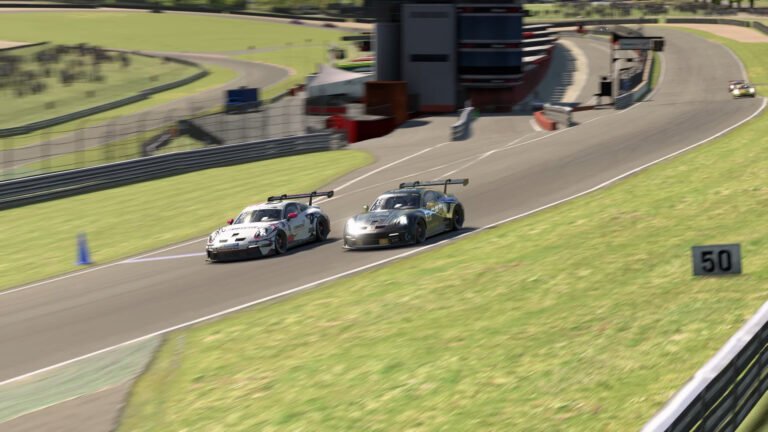
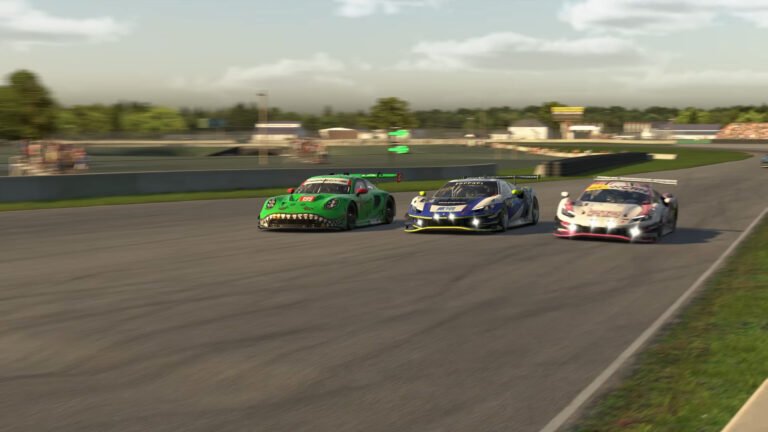
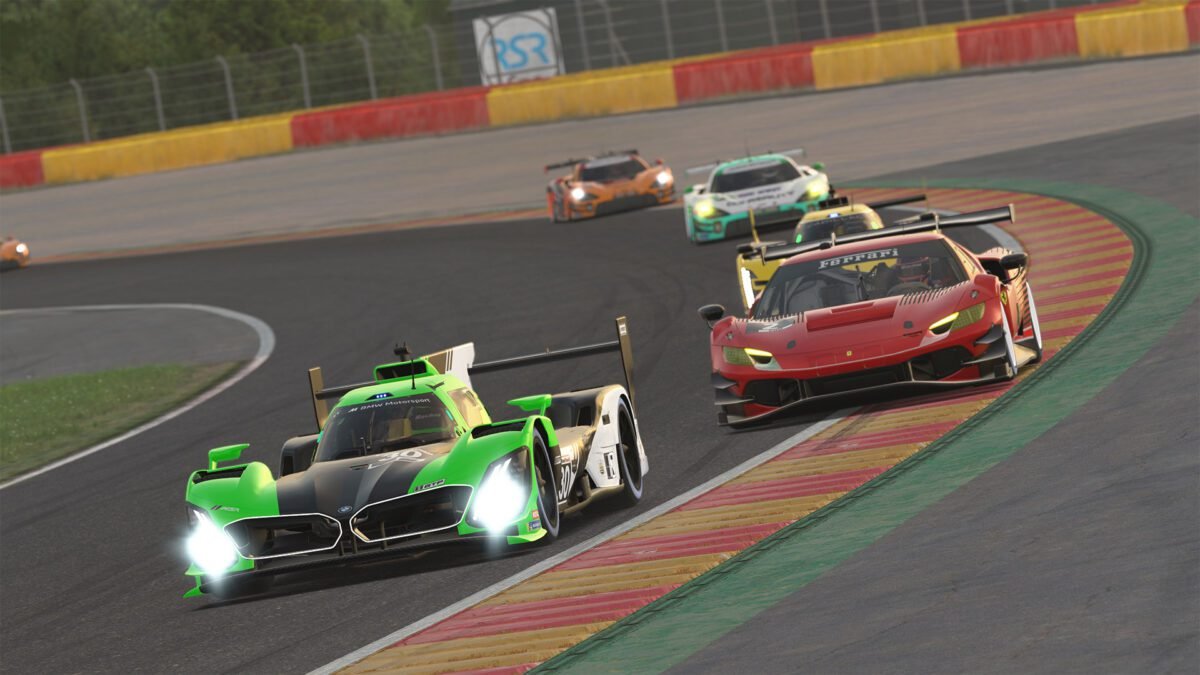
More than half of the incidents that trigger frustration in endurance formats come from multiclass traffic. A faster prototype closes behind you, you move to let it by, and someone else runs into the back of you in the confusion. Or you’re the prototype, and a GT car turns in on you when you both tried to occupy the same piece of road. These incidents feel like someone else’s fault, and often they are. That doesn’t matter as much as what you do next.
The mindset shift that works is treating lapping traffic as a puzzle rather than an obstacle. Faster cars owe you a clean pass if you hold your line. Slower cars are doing you the same favor. Neither party is the villain when things go wrong. Most multiclass contact in sim racing happens because one driver anticipated what the other would do and guessed incorrectly. Communicate early: if you’re going to move for a lapping car, start that move a full corner before it becomes urgent. If you’re the faster class, don’t assume the slower car has seen you just because you’ve seen them.
When contact does happen, the thought process has to be immediate and cold: can the car continue, and are there incidents worth protesting? Those are the only two useful questions in the seconds after an impact. Getting on the radio to vent about who was at fault delays both of those assessments.

Protecting Your Safety Rating in Long Stints
One of the decisions endurance racers avoid thinking about until it’s too late is when to absorb a position loss instead of fighting for it. In a two-hour race, trading paint to protect fourth place is almost never worth it. The math on Safety Rating punishment for incidents, combined with the time lost to repairs and potential disqualification risk, almost always favors letting the other car through and rebuilding from there.
That calculation is harder to make when you’re in the moment and the car behind you is clearly slower on raw pace. It feels wrong to hand over a position you earned. But race craft in longer formats is partly about accepting that the race isn’t over after one exchange, and that survival long enough to see strategy play out is more valuable than winning any individual battle before the final third of the race.
Set a personal threshold before the race starts: something like “I will not put the car in a wall or collect a 4x incident trying to defend before the last 30 minutes.” Having a rule before emotions are involved means you don’t have to make the decision under pressure. You already made it in a calm moment, and now you’re just executing it.
When the Team Makes a Mistake
Team endurance racing in iRacing introduces a variable that solo racing doesn’t: other people. A co-driver who damages the car, a pit caller who brings you in a lap early, a communication breakdown that costs you track position. These situations can feel worse than anything that happens on track because the frustration has a face attached to it.
The teams that stay competitive across long events have one thing in common: they do their post-incident analysis after the race, not during it. A quick, neutral acknowledgment on comms (“noted, we’ll talk after the race”) is far better than a real-time review of what went wrong. That review rarely improves the driving, and it almost always damages team cohesion for the rest of the stint.
If you’re leading a team, model the behavior you want. When something goes sideways, stay calm on radio and focus on what comes next. The drivers who race well under pressure aren’t suppressing frustration. They’re redirecting it. There’s a difference between bottling something up and choosing the right moment to address it.
How to Build Mental Consistency Across iRacing Endurance Racing Sessions
The most durable version of frustration management isn’t something you develop in one race. It’s built across a season of events where you train yourself to separate what you can control from what you can’t. Your tire management, your line through traffic, your communication, your decision-making in the final stint window. Those are yours. Everything else is noise.
After each endurance session, spend five minutes with your race data before you do anything else. Not to punish yourself for what went wrong, but to find one thing that was within your control and went right, and one thing that was within your control and could have been better. That’s it. Two data points. Over a full season, those two-point sessions stack into a genuine picture of where your mental game is improving and where it still has gaps.
Endurance racing in any form, on track or in sim, rewards the driver who is still thinking clearly in the last 30 minutes. That clarity is a skill, and like all skills it responds to deliberate practice. The drivers putting up consistent results in iRacing’s official endurance event schedule aren’t necessarily faster. They’re usually just less rattled by the moments that send everyone else sideways.