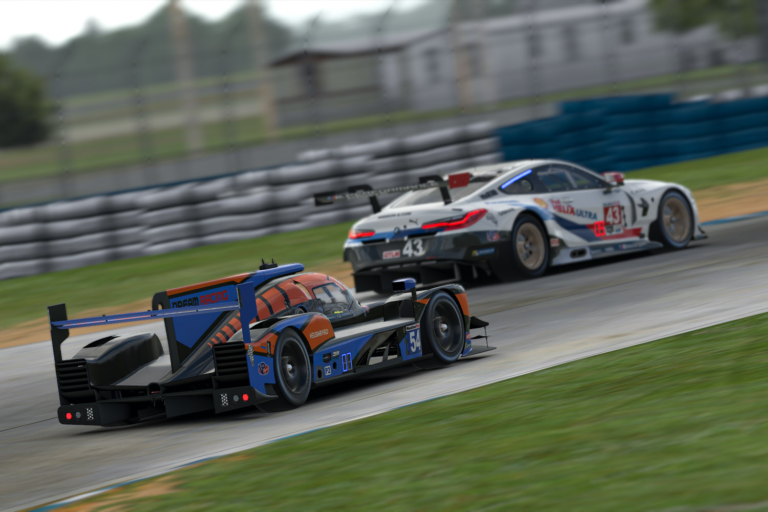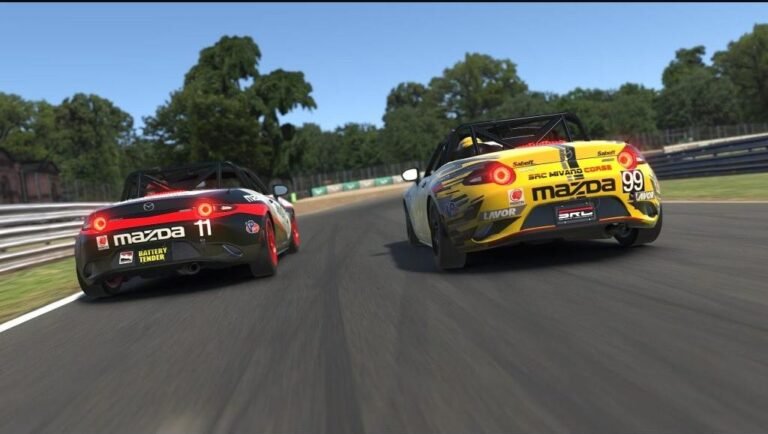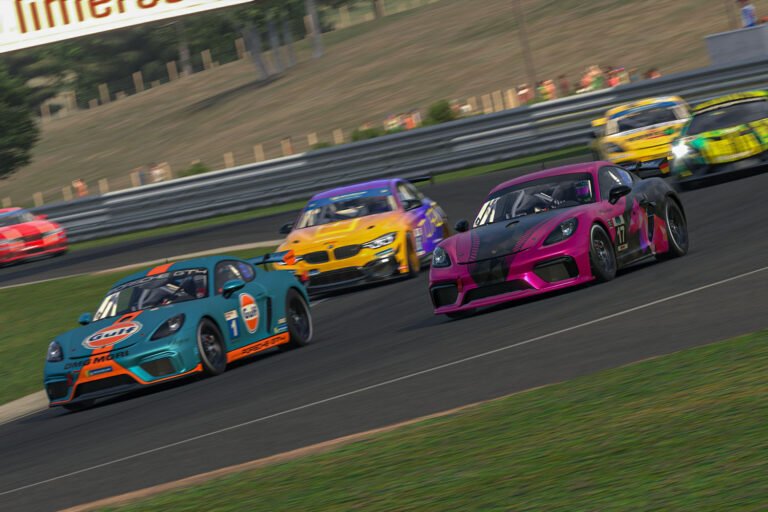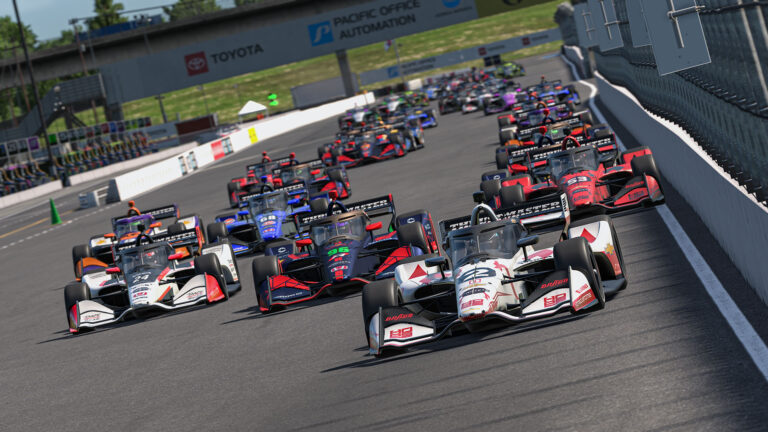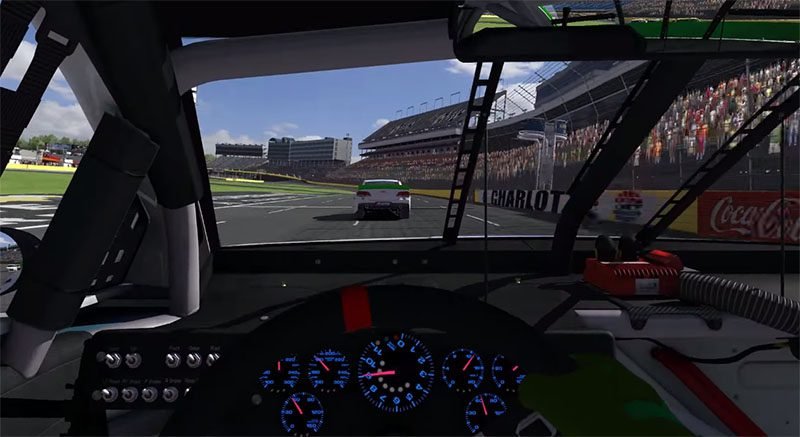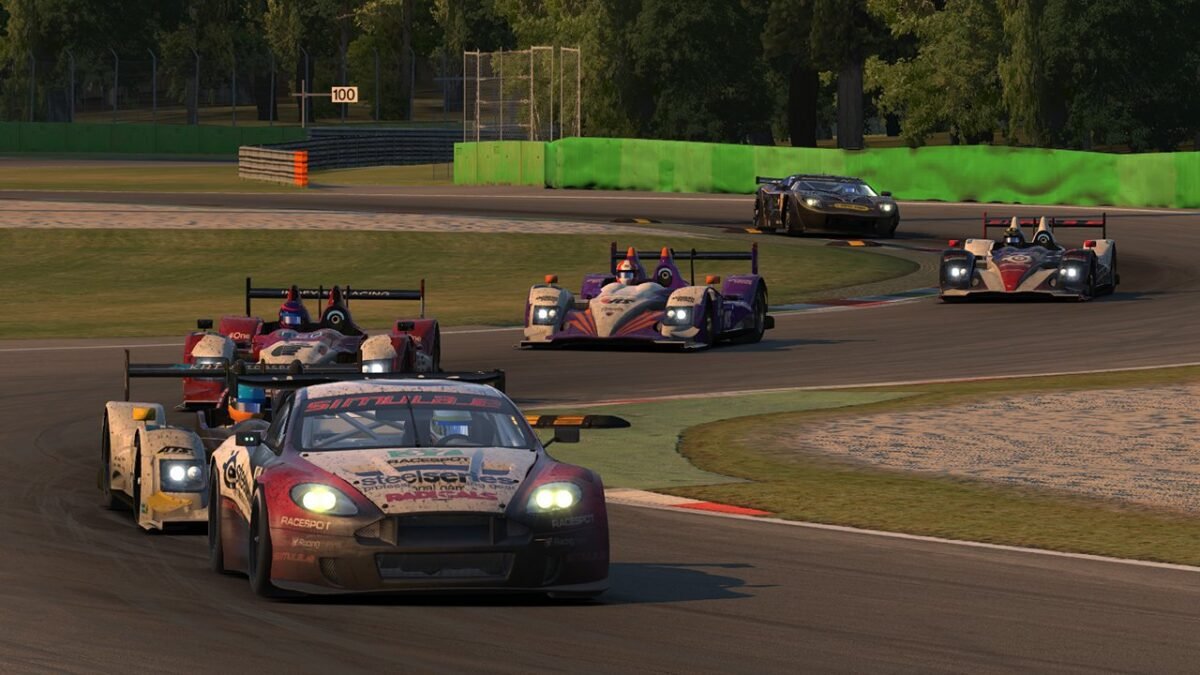
Wheel to wheel racing in iRacing is a different discipline from everything that comes before it. You can be a strong time trialer, a consistent hot lapper, and genuinely fast in solo practice, and still find yourself in a complete mess the first time cars are fighting for position around you. That’s not a reflection of your pace. It’s a reflection of how different the skill set is. The good news is that it’s learnable, and it responds directly to deliberate practice.
Also See
➡️ How to Race Clean in iRacing
The Mental Shift From Time Trial to Wheel to Wheel Racing in iRacing
Time trial mode trains you to optimize every single lap. You learn the ideal line, the maximum braking point, the fastest exit. The problem is that wheel to wheel racing in iRacing doesn’t give you those things reliably. Someone is braking early in the corner you’re carrying speed through. Someone is taking a wide entry that cuts off your exit. The ideal line belongs to whoever is there first, and if you’re chasing someone else’s braking point instead of tracking where they actually are, you’ll drive into the back of them.
The mental shift is from “where do I need to be to go fast?” to “where do I need to be relative to the car around me?” Your reference points change. Instead of using the curb as your sole braking marker, you’re using the curb and the car ahead simultaneously. That’s harder, and it takes laps to feel natural. Expect the first several weeks of racing to feel slower and messier than your time trial benchmarks. That’s normal, and it’s temporary.
What the Mirrors Are Actually Telling You
Most drivers in the early stages of racing barely use their mirrors. They know a car is close because they see its bumper in their peripheral view or feel the contact. Neither of those is useful information. By the time you’re feeling the contact or seeing a bumper fill your screen, the situation is already past the decision point where you could have done something about it.
The mirrors tell you where a challenge is developing before it arrives. A car that’s two seconds back on the previous straight is three or four seconds back on the straight before that if they’re matching your pace. A car that’s been two seconds back for three consecutive laps but is now one second back is going to be at your bumper within a few laps. That’s information you can act on by covering lines earlier, adjusting your pit timing, or simply being mentally prepared for a fight rather than being surprised by one.
Build the habit of checking mirrors at three points every lap: the straight before the first major braking zone, corner exit when you have a moment of lower cognitive load, and the back straight if there is one. You don’t need to look constantly. You need to look at useful moments so the picture in your head of where everyone is stays accurate.

Gap Management: The Skill Behind Every Clean Lap
Gap management is the art of controlling the space between your car and every other car on track. It isn’t about leaving massive gaps everywhere. It’s about leaving the right gaps at the right moments. Braking zones need more space than straights. Traffic in multiclass races needs more space than single-class. Drivers who have been moving unpredictably need more space than ones who have been consistent all race.
The most common gap management error in iRacing is carrying time trial pace into a following distance that was set for time trial conditions. If you’re three car lengths back and going the same speed as the car ahead, you’re fine on a clear lap. In a race, that gap closes instantly when the car ahead brakes. Train yourself to extend the following gap by a car length or two in the braking zones, especially in the early laps when the field is dense and behavior is unpredictable.
The flip side is not leaving so much space that you’re a sitting target for the car behind. A gap that’s too large in front of you is an invitation for the car behind to get a run on you. Gap management is about calibrating the space dynamically as the race evolves, and that calibration gets faster with practice until it becomes automatic.
How to Practice Wheel to Wheel Racing in iRacing Without Burning Your Safety Rating
The best way to build wheel to wheel racing skills in iRacing without doing damage to your Safety Rating is to use official sessions strategically. Run sessions where you’re faster than the mid-pack. When you’re faster than the cars around you, you have more control over your own situation. You’re passing more often than defending, and passes are generally lower-risk than defensive battles. Your Safety Rating climbs while your racecraft improves, rather than the Safety Rating taking the hit every time you’re still learning.
The second method is to join fixed-setup series. Fixed-setup racing narrows the pace differential in the field, which means the racing is closer and the skill you’re building is more transferable. When everyone is on the same setup, car control and racecraft are the variables, not setup optimization. That’s exactly the environment where racecraft practice is most productive.
After each session, pick one wheel-to-wheel exchange from your replay and watch it from an overhead view. Not to assign blame, but to watch where the gap opened and closed and what both drivers did. The official iRacing YouTube channel also posts race footage from various series worth studying for how cleaner drivers handle traffic. Over time, patterns emerge that you can’t see while you’re in the car. The car that got passed always left a gap somewhere. The pass that went wrong always had a moment earlier where a different decision would have kept it clean. Watching for those moments in other people’s driving is how you start to see them in your own.
Track Positioning Before the Corner, Not At It
The last piece that separates improving racers from ones who stay stuck is when they make their positioning decisions. Drivers who struggle with wheel to wheel racing decide where to be when they get to the corner. Drivers who race well decide where to be on the straight before the corner. That extra 200 to 400 meters of decision time changes everything.
If you want to defend the inside into a right-hander, position your car toward the left side of the road on the straight approaching it. When the challenger goes to commit to an inside move, the door is already closed before either of you reaches the braking zone. No dramatic move under braking needed. The defending was done early, quietly, and without the risk that comes with moving on a car that’s already committed.
The same applies to attacking. When you’re looking for an overtaking opportunity, position yourself on the side of the track you plan to attack from at least half a straight before the braking zone. That lets you carry a more natural line into your move and removes the need for a sudden direction change under braking, which is where most passes deteriorate into incidents. Position early. Commit clean. The result is racing that’s faster, safer, and significantly more satisfying to do and to watch.