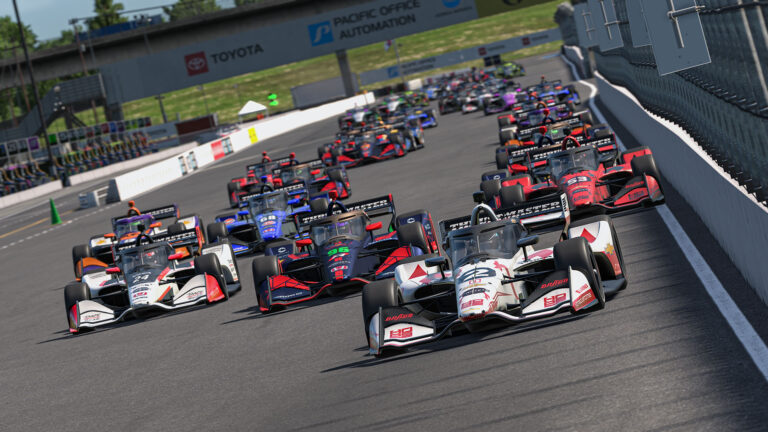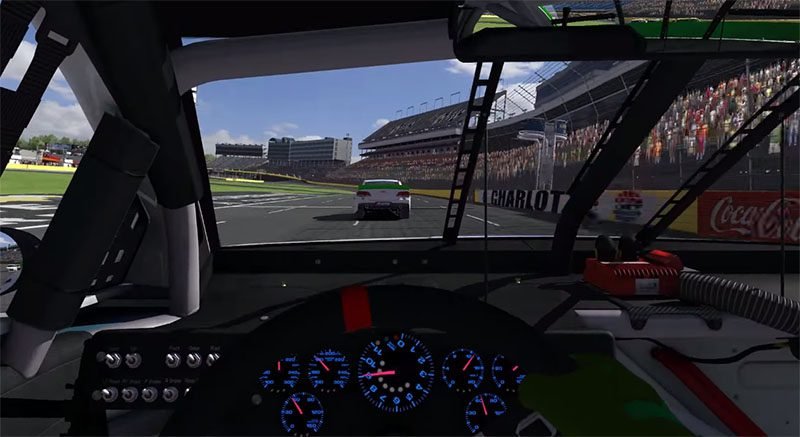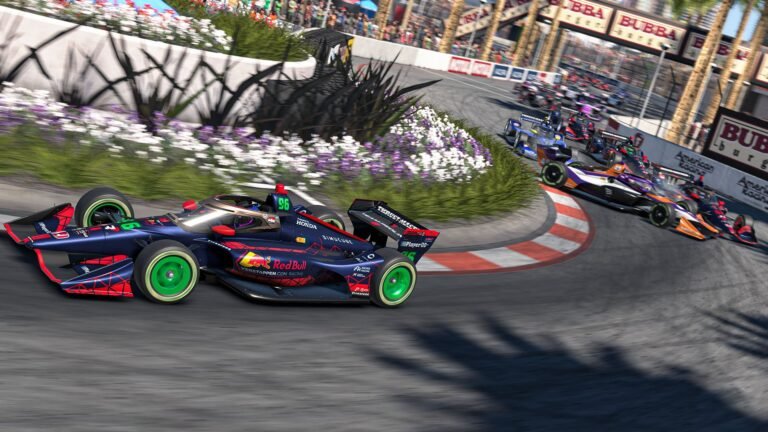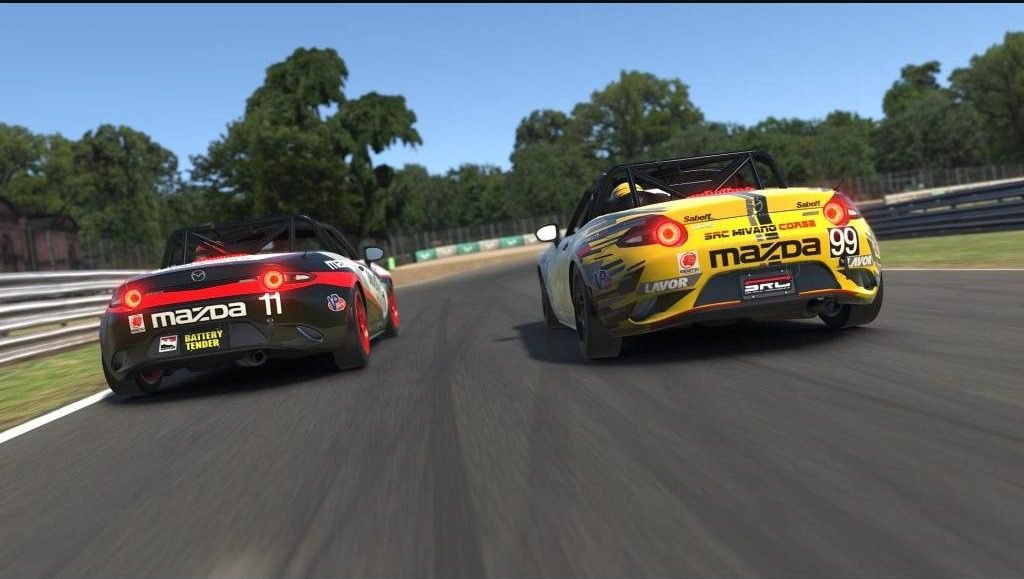
Most drivers believe overtaking in iRacing starts in the braking zone. They trail an opponent through a complex, wait for a gap at turn-in, and lunge across the inside line. Sometimes that works. More often it ends in contact, a spin, or a lost position because the exit was too slow to hold the line.
Also See
➡️ Your First iRacing Race: What to Expect and How to Stay Clean
➡️ iRacing Steering Input and Why More Angle Loses Grip
🎮 Sim Racing Technique Guides – Driver61
A clean pass almost always begins one or two corners before the position actually changes. The braking zone is the last step in the process, not the first. This guide covers how to build the move correctly, from the corner where you generate exit speed to the moment you commit and go.
You will learn how to create pressure without contact, force a defensive line, choose inside or outside based on what the corner offers, recognize when to back out, and stay clean in multi-car traffic. Each skill builds on the last.
Overtaking in iRacing Starts Before the Braking Zone
The most common reason drivers fail to complete passes is slow exit speed from the corner before the passing zone. If the car ahead carries better speed onto the straight, there is no move to make. They simply drive away.
Before you identify where to pass, identify where you will build speed. On most road courses in iRacing, the corner before a long straight or a tight hairpin is where the move is actually constructed. Protect your exit there. If that means giving up a slightly earlier apex to get a cleaner rotation and a faster exit, that trade is usually worth it.
This is where many drivers go wrong. They see the car ahead make a mistake and react immediately, abandoning their own line through the preceding corner just to close the gap. They arrive at the passing zone with no speed advantage, and the move has nowhere to go.
Mechanical grip also plays a role. A car that has overworked its front tires through the approach to the straight will have reduced braking performance at the entry point. Keeping tire temperatures in range through the complex gives you more grip at the braking reference into the passing zone.
In practice, this means driving your own race for one or two laps before committing to a pass. Build the exit speed. Build the gap on the straight. Arrive at the braking zone with a half car length on the car ahead. That is the position that opens a real move.
Applying Pressure and Forcing a Defensive Line
Once you have exit speed, the next step is applying consistent pressure without touching the car ahead. In iRacing, contact almost always hurts you more than the opponent because of how safety rating works. There is no benefit to being the faster car if you are also the at-fault driver in an incident.
Pressure without contact means staying close through corners where passing is difficult, not because you are attempting to pass there, but because you want the driver ahead to make decisions under stress. A driver checking their mirror through a long sweeper is not focused on their braking reference for the next corner.
Keep the gap below one second on the straight and stay patient at corner entry. A small gap combined with a strong exit puts you right on their rear bumper at the next braking zone, which is exactly where you need to be.
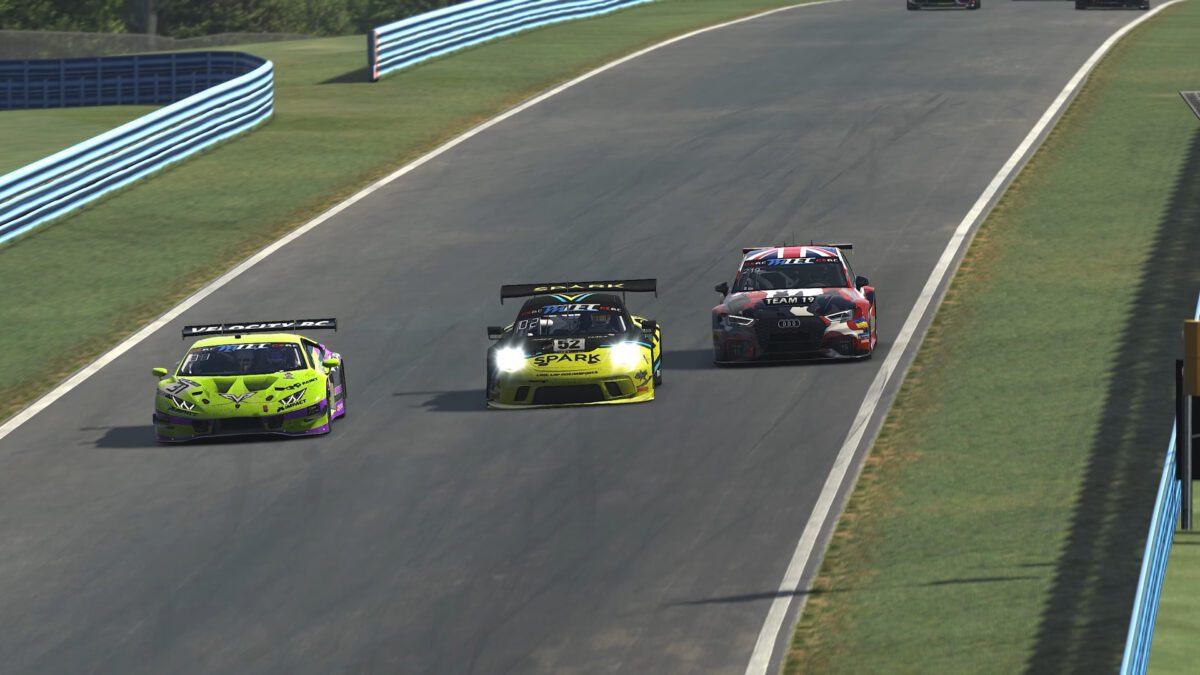
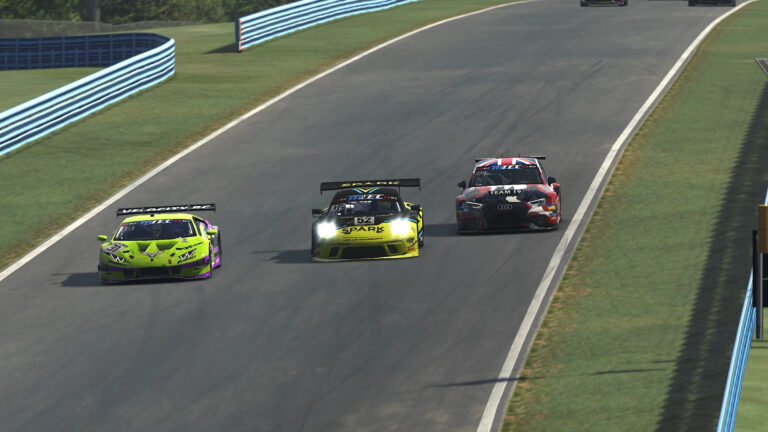
When you pull alongside or show your nose on the approach to a passing zone, the driver ahead has to choose. They can hold their normal line and risk being overtaken on the inside. They can cover the inside, which opens the outside. Or they can brake earlier to defend, which costs them exit speed and opens the door for the following lap. Any of those responses benefits you.
The key is showing the car early enough that the opponent must commit before the braking zone. If you are still half a car behind at turn-in, they have no reason to move. They take their normal line and you must back out. A nose held at the door mirror through the approach is enough to force the decision. In iRacing, use replay mode after battles to see exactly where your opponent reacted to your position. That feedback sharpens your approach quickly.
Choosing Inside or Outside in iRacing
Most drivers go inside by instinct because it is the shorter path to the apex. However, the outside line is often the cleaner option, particularly at corners where the inside line is tight and the exit requires managing oversteer or wheelspin while the other car is still beside you.
The inside pass requires late braking, a tight entry, and then managing the car on exit while the opponent is still alongside. If you are not meaningfully faster through the corner, the outside car can drive around you on exit. That crossover pass happens constantly in iRacing because drivers on the inside run wide under pressure or take a tighter entry than the corner requires.
The outside line requires getting alongside before the braking point and carrying momentum through. It works best at corners where the outside arc still allows reasonable entry speed. At Spa’s Raidillon, at Road Atlanta’s Turn 12, and at similar fast entries, outside momentum passes work well because the entry speed is high and the exit straight is long. You do not need to out-brake anyone. You need to be positioned early.
Choose based on the corner, not instinct. Before each passing zone, ask two questions. First, which line lets you get alongside before the braking point? Second, which line gives you the better exit? The answers dictate which side to attack. At some corners the answer is neither side. If you cannot get alongside before the braking zone and neither line offers a meaningful exit advantage, the move is not ready. Commit to building exit speed instead and try again next lap. Overtaking in iRacing rewards patience more than aggression in almost every situation where the cars are evenly matched.
Recognizing When Overtaking in iRacing Is Not On
Not every setup leads to a pass. Knowing when to back out is as important as knowing when to commit.
If you arrive at the braking zone at equal speed with no positional advantage, the move is not ready. Forcing it means contact or a trip through the gravel. Back out, protect the corner exit, and rebuild for the next lap.
In iRacing, a failed pass frequently costs you more than waiting would have. The iRacing safety rating system penalizes contact regardless of who initiates it. A driver who waits for the right moment and executes one clean pass will generally finish ahead of the driver who forces three moves and completes one at the cost of an incident point.
The other reason to hold back is track position value at a given circuit. Some tracks in iRacing are difficult to overtake at regardless of pace difference. At circuits where passing opportunities are rare, finishing within a second of the car ahead and waiting for a mistake is often the faster strategy overall. Oval drivers understand this instinctively. Road course drivers sometimes have to learn it the hard way.
A clean result is always worth more than the excitement of a move that works once in five attempts. Build the pass correctly. If the situation is not right, reset and try again. The lap time you give up by waiting is almost always less than the positions you lose when the move fails. The same patience that keeps your first online races incident-free, as covered in Driver School #4, applies here at every level.
Making Passes Stick in Traffic
Multi-car traffic creates a different set of challenges. You may be catching a slower group, or two battles may be converging at the same section of track. In both cases, patience matters more than aggression.
When approaching backmarkers in iRacing, look for a gap that lets you pass two or three cars in a single section rather than picking them off one by one. A cluster of backmarkers spread across the track is often passable in one move if you wait for the right corner. That approach is faster than three separate attempts and keeps your incident count clean.
When two battles converge, give yourself room. A car braking late in front of you is not always predictable, and a second car running beside you removes your escape route. The best approach in converging traffic is to back out of the contested space, let one battle resolve, and then attack the position ahead cleanly.
In traffic, the best overtaking in iRacing usually happens to the driver who stays calm, reads the situation two corners ahead, and takes the clean gap when it opens. The gap always opens eventually. Rushing it is the only way to make sure it does not.
Practice drill: Load an AI session at a circuit you know well and set the AI strength to around 75 percent. Give yourself one rule: you may only attempt a pass when you have already built an exit-speed advantage from the preceding corner. If you have not built that advantage, wait another lap. After the session, review your successful passes in the iRacing replay tool. In nearly every case, the move was set up one corner before the pass happened. Identifying that pattern in your own footage makes it automatic in the next real race session.