The iRacing Gen 7 superspeedway package is not in the simulator yet, but it is coming — and what it brings changes nearly everything about how Daytona and Talladega will drive once it lands. NASCAR announced the new superspeedway specification on July 15, 2026, and it debuts in the real-world Coke Zero Sugar 400 at Daytona on August 29. iRacing will follow in a separate build window. Before any of that happens, this guide breaks down exactly what the package is, what it changes in the cockpit, and when you can expect it to appear in the sim.
Also See
➡️ NASCAR Superspeedway Aero Package Changed: When iRacing Gets the Update
🏁 How NASCAR Is Targeting Superspeedway Strategy With New Aero Package (RACER)
If you have been running Daytona or Talladega recently in iRacing, you are using the Season 2 2026 specification — a seven-inch rear spoiler and approximately 510 horsepower. That setup exists for every current iRacing race at those tracks. The real world, however, is moving to a four-inch spoiler and 465 horsepower in less than two weeks. Understanding the difference between those two specs is the first step toward being ready when iRacing catches up.
What the iRacing Gen 7 Superspeedway Package Changes Technically
The core change is the rear spoiler drop from seven inches to four. That four-inch height already exists on Gen 7 intermediate track setups, so NASCAR is pulling a component that teams know rather than introducing a completely novel piece. Alongside the spoiler reduction, NASCAR added wide splitter stuffers to reduce front-end drag at superspeedway speeds. The tapered spacer also shrinks to a 27/32-inch unit, bringing the engine output down to 465 horsepower from approximately 510.
The combined effect is a car that generates less total downforce and less total drag. Less rear downforce means the car is more sensitive in traffic — it reacts faster to the turbulence behind other cars and requires more active steering input to hold a line. Less drag means raw speed goes up when running alone. NASCAR’s working group projects single-car lap speeds will increase by two to three miles per hour compared to the current package. Passing runs are projected to generate about five miles per hour of advantage on the car being passed, which makes the move to the outside far more executable than it has been.
Why NASCAR Made the Change
The problem the change addresses is fuel mileage positioning. Under the current seven-inch spoiler spec, the gap between running in clean air and running tucked in the draft is wide enough that strategy almost always overrules pace. Teams manage fuel windows obsessively, and drivers hold position to protect their fuel numbers rather than racing for it through turns. NASCAR’s president of event management, John Probst, named two specific concerns: fuel-mileage-dominated outcomes and the inability of drivers to pull out and complete passes outside the draft. Both trace back to excessive rear downforce generating too much drag for solo runs to pay off.
By cutting the spoiler to intermediate-track height and reducing horsepower to match, NASCAR reduces the drag penalty for driving outside the pack. A driver who commits to a passing move now has enough speed differential to complete it. The high-downforce pack racing that defined recent Daytona and Talladega finishes should become less dominant, though Probst acknowledged the change targets reducing fuel strategy from a central factor to a minor one — not eliminating it entirely.
How the New Package Changes Racing at the Superspeedways
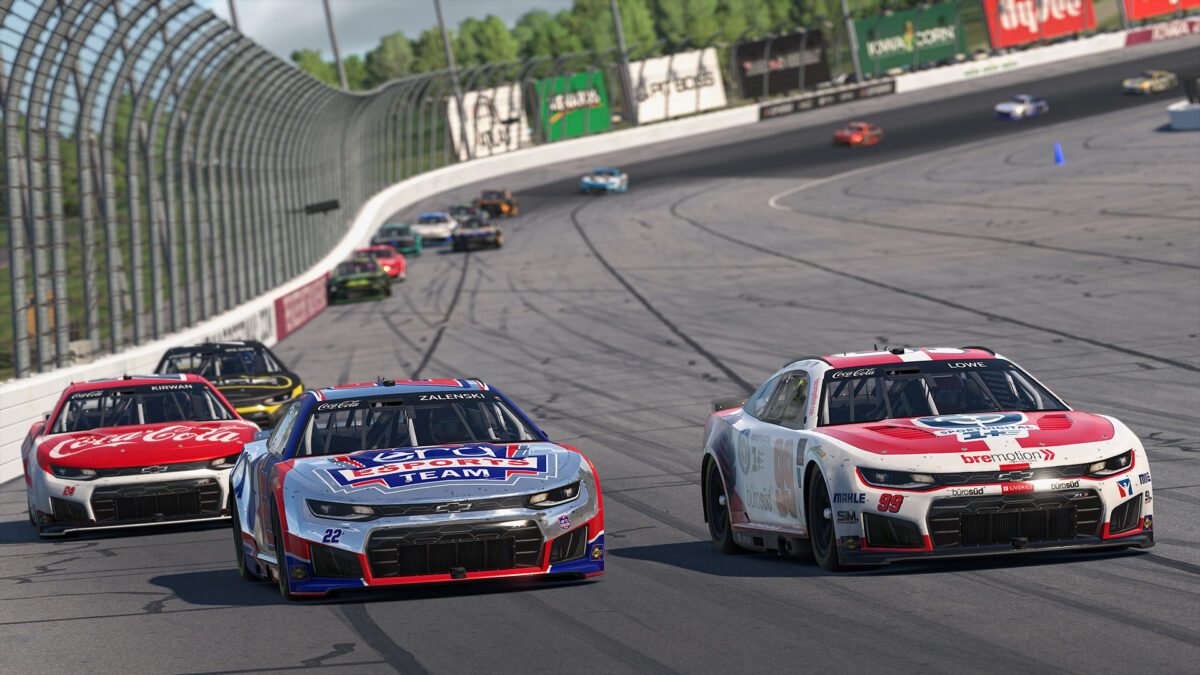
The practical driving difference sits in how the car behaves outside the draft. Under the current iRacing Gen 7 superspeedway spec, pulling out of line at Daytona or Talladega creates an immediate speed disadvantage that makes clean passes very difficult without a push from behind. The new package narrows that gap significantly. A driver making a move on the outside runs at speeds that actually threaten the car ahead rather than bleeding pace the moment they leave the slipstream.
Pack density should also change. When individual cars run faster in isolation, the tight formation that packs cars together at nearly identical speeds loosens somewhat. That opening creates more situations where a single driver can break away rather than the whole field moving as a unit. Intermediate-track thinking starts to apply more readily — where you place your car relative to the draft matters, but so does finding a clear lane that lets you actually run your own pace.
Line diversity increases with lower rear downforce as well. The downforce that pins cars into the low groove at maximum efficiency gets reduced, which opens the upper lane as a more competitive option than it currently is. Drivers who know how to use both lanes at intermediate tracks should find those skills transfer more directly to superspeedway racing under the new spec.
Where the iRacing Gen 7 Superspeedway Package Stands Right Now
iRacing is still running Season 2 2026 specifications at Daytona and Talladega. The Season 3 June build predated the July 15 announcement entirely, so it never had a chance to incorporate the new package. That means every lap you run at those tracks right now — in official races, practice sessions, or open setups — uses the old seven-inch spoiler and 510-horsepower configuration.
The September Season 4 build is the realistic update window. iRacing’s four-season annual cycle aligns the September release closely with the timing that makes the most sense: the real-world Daytona debut on August 29 provides initial data, and Talladega follows in October using the same package pending that Daytona evaluation. A Season 4 update would put iRacing on the correct specification before or right around the Talladega window, which is the track on the NASCAR schedule where it matters most to have the right physics in place.
iRacing has not confirmed a public timeline. When Season 4 patch notes drop, the Gen 7 car listing will show whether the spoiler, horsepower, and splitter stuffer specifications have been updated. That is the definitive place to verify the change has arrived — not forum rumors or third-party sources.
What to Practice Before the Update Arrives
The iRacing Gen 7 superspeedway package update will change the numbers, but it will not change the core skills that win drafting races. How you position in a pack, when to hold your line versus commit to a move, and how you manage restarts and last-lap chaos are all techniques that carry over regardless of downforce levels. Those are worth developing right now even if the exact speeds and handling responses will shift post-update.
Setup work is the area where caution makes sense. A setup tuned tightly to the current seven-inch spoiler balance — particularly anything involving brake bias, suspension stiffness to manage rear grip, or ride heights optimized for existing downforce levels — will likely need revisiting after the Season 4 build. Building a deep setup file around the current spec is not wasted effort, but treat the numbers as a starting point for the updated package rather than a finished product. The fundamental directions — more front brake bias as rear downforce drops, less aggressive suspension to handle increased sensitivity — are predictable enough that you can think ahead.
Watching the August 29 Daytona race closely is also practical preparation. Real-world drivers will be running the exact specification that will eventually come to iRacing. How the field behaves in packs, where passes get completed, how multi-car drafts form and break — all of that is a live preview of what the sim will feel like once Season 4 updates the physics.
The Gap Between Real-World and Sim Is Temporary
A lag between real-world NASCAR specification changes and iRacing physics updates is a normal part of the simulation cycle. iRacing validates its physics builds against real-world data before releasing them, which means the sim update follows testing rather than preceding it. The current gap — where the Coke Zero Sugar 400 runs the new iRacing Gen 7 superspeedway package in the real world while the sim still uses the old spec — will close once Season 4 drops.
Until then, Daytona and Talladega in iRacing remain competitive and worth racing. The Season 2 2026 specification is what it is, and everyone on track runs the same car. Once September arrives and the build notes confirm the update, drivers who understood what was coming will have a shorter adjustment period than those encountering the new physics cold. That preparation starts now, even though the iRacing Gen 7 superspeedway package itself has not arrived yet.