Choosing the right iRacing beginner car is one of the most useful decisions a new member can make, and also one of the most overlooked. Most people gravitate toward whatever looks fast or matches the real-world series they follow. However, the car that teaches you the most is rarely the car that looks the most exciting. The vehicles that develop lasting habits share a common trait: they are unforgiving enough to expose mistakes but forgiving enough to let you learn from them without destroying your Safety Rating every session.
Also See
➡️ iRacing Beginner Series Strategy for Your First Year
Why the Car Choice Matters More Than You Think
Every car in iRacing teaches you something specific about car behaviour. A high-powered GT car teaches you to manage torque, but it can also let you get away with laziness at the limit because the grip level covers up your mistakes. A lower-powered, balanced car forces you to be precise because there is no excess performance to compensate for a sloppy corner exit. Experienced iRacers have watched countless drivers spend months in powerful cars developing habits that eventually plateau, then improve dramatically after spending a season in something slower and more demanding.
The logic holds true: underpowered cars teach technique that overpowered cars will expose later. If you cannot run clean laps in an iRacing beginner car, you are not ready for the car you actually want to drive. This is not about being humble. It is about building the right foundation so that when you step up, you are actually faster, not just louder.
The Best iRacing Beginner Car for Road Racing
The Mazda MX-5 is the most consistently recommended iRacing beginner car for road racers, and the reason is simple: it is free, it is balanced, and it rewards smooth driving in a way that almost nothing else in the roster does. The MX-5 has relatively low grip and a narrow power band, which means you need to manage your speed carefully through corners. Slide it, and you feel it. Smooth it out, and the lap time comes to you naturally.
Because the MX-5 is included with your iRacing subscription, you can spend weeks or months in it without additional cost. The Mazda MX-5 Cup series runs through most of the lower license tiers, giving you structured racing against drivers at a similar level. Many experienced iRacers return to the MX-5 when they feel their fundamentals slipping, which tells you something about the car’s effectiveness as a teaching tool.

The Skip Barber Formula: When You Want the Next Level
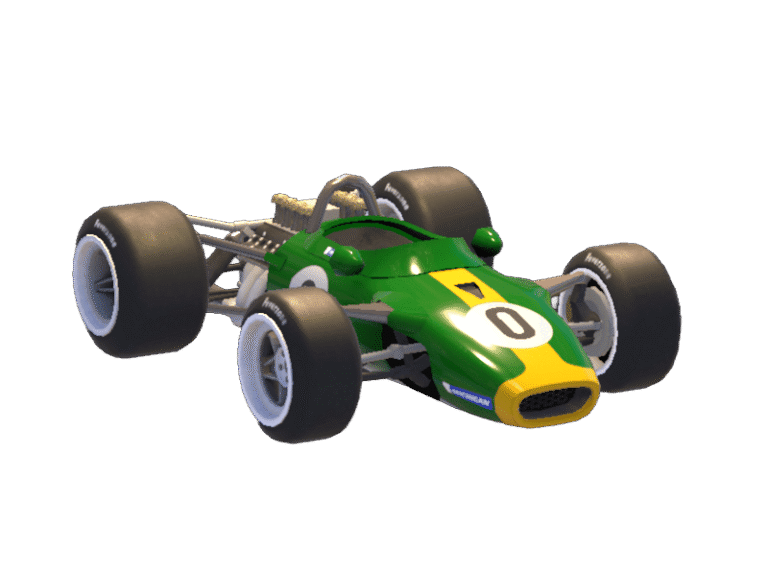
Once you have a feel for the MX-5 and you are consistently finishing races without incidents, the Skip Barber Formula 2000 is the traditional step up for road racers who want to develop genuine car control. The Skip Barber is an open-wheel car with significant downforce relative to its power, which means the grip limit is higher but the consequences of exceeding it are also sharper. Oversteer in the MX-5 feels educational. In the Skip Barber, it requires an immediate correction or the car is gone.
The Skip Barber series also runs with a clean-racing culture that makes it one of the better environments in iRacing for developing racecraft. Because so many drivers use it as a development car, you tend to find split fields with a reasonable mix of experience levels and a genuine commitment to clean racing. Additionally, the car is relatively affordable by iRacing’s content pricing, which makes the investment reasonable for a development tool you will use for months. Resources like Skip Barber Racing School also publish driver development material that directly applies to the iRacing version of their car.
The Best iRacing Beginner Car for Oval Racing
For oval racers, the Legends Car is the most commonly cited starting point. It is small, relatively slow, and extremely sensitive to setup and driving inputs. Because it is rear-wheel drive with a high-revving engine, it teaches throttle discipline and weight transfer in a way that larger, more planted oval cars do not. Many iRacing oval veterans credit the Legends Car with teaching them the throttle-entry relationship that defines fast oval driving at every level above it.
The Street Stock is another option for drivers who want slightly more stability and a more accessible entry into oval racing. It is heavier and less twitchy than the Legends Car, which makes it a better choice for drivers who are entirely new to left-turn-only racing and need more time to understand the rhythm of oval circuits before managing a nervous rear end. Both cars are inexpensive and run at a wide range of tracks, so you have plenty of session options regardless of where your interest lies.
Open-Wheel and Dirt: Honourable Mentions
For drivers interested in open-wheel development outside of the Skip Barber, the Dallara F3 is a popular choice in the intermediate range. It is faster and more demanding than the Skip Barber, and it exposes setup sensitivity in a way that benefits drivers who want to understand what each suspension adjustment actually does to the car. For dirt racing, the 360 Sprint Car is the traditional starting point, though it requires patience because its sensitivity to driver inputs is extreme. Dirt racing has a steep learning curve, and most drivers in that discipline recommend starting in the Super Late Model on dirt to understand the basics of track progression before stepping into anything with a wing.
The Principle Behind Every Good iRacing Beginner Car
Every car mentioned above shares the same characteristic: it does not let you get away with being sloppy. The MX-5 slides when you rush the apex. The Skip Barber spins when you pick up the throttle too early. The Legends Car punishes late braking in ways you feel immediately in the lap time. These are not punishments. They are feedback. The cars that grow fast drivers are the ones that give accurate, real-time information about what the driver is doing wrong.
Furthermore, spending extended time in a single car matters more than trying several. The fastest way to develop in iRacing is to choose one car, commit to it, and run it until the behaviour feels natural. Switching cars constantly resets part of the learning process. Pick your iRacing beginner car, accept that you will be slower than you want to be for a while, and build from the fundamentals outward. The rest follows from there.