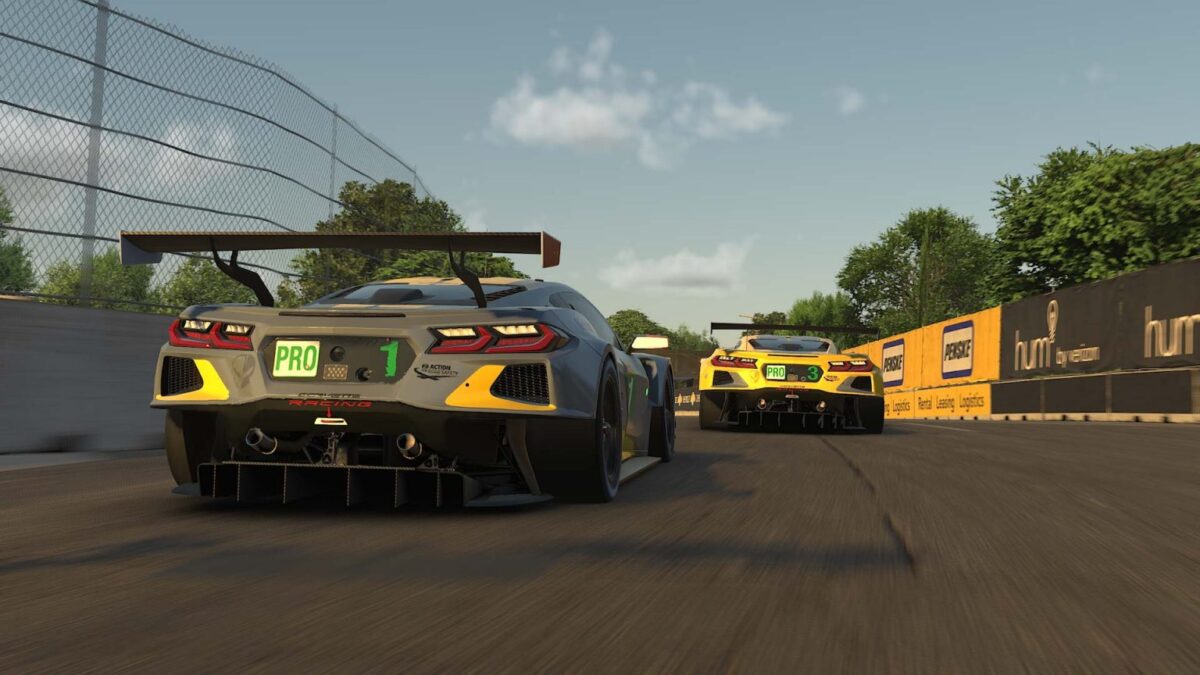
Mastering the Corvette C8.R iRacing requires a driver to embrace the unique physics of a mid-engine, high-torque platform. Unlike the front-engine Corvettes of the past, the C8.R rotates from its center point, meaning it is much more sensitive to throttle and brake inputs. To find the podium in the GTE class, you must learn to trust the front-end downforce and manage the rear-end traction, ensuring that you don’t overwhelm the Michelin tires with the 5.5L V8’s aggressive power delivery.
Trust the Front End
The greatest strength of the Corvette C8.R iRacing is its front-end grip. In high-speed corners like the Climbing Essess at Virginia International Raceway, you can carry significantly more speed than you think. The key is to trust the aero. Because the C8.R has a very efficient front splitter, the car “sucks” to the road as you turn in. However, this requires a “smooth hands” approach; if you jerk the wheel, you can upset the aero platform and cause the car to “snap” into oversteer. You want to lead the car into the corner with a progressive steering input, allowing the downforce to build up as you reach the apex.
Throttle Modulation: The flat-plane Challenge
While the Corvette C8.R iRacing has incredible traction on exit, the flat-plane crank V8 delivers its power very linearly. This means the car is “predictable,” but it also means it’s easy to spin the tires if you’re too aggressive in lower gears. In the absence of Traction Control (per GTE rules), you must use your right foot as the limiter. On slow-speed exits, short-shifting from 2nd to 3rd gear can often result in a faster lap time by preventing excessive wheelspin. The C8.R is a car that rewards a “measured” driver who knows exactly when to unleash the full fury of the American V8.