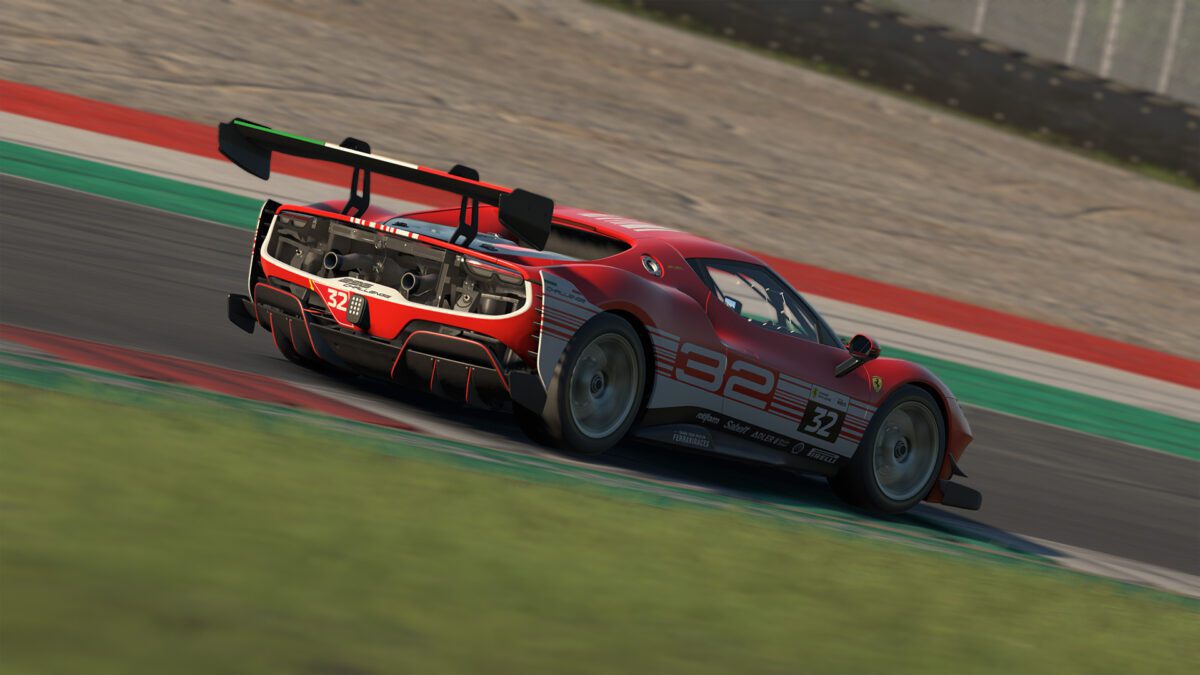
Most iRacing setups aim for the best possible lap time. On many circuits, that means maximizing downforce for grip, stability, and corner speed. However, on certain tracks, the fastest lap time and the most defensible race setup are two very different things. Understanding when to sacrifice overall pace for straight-line speed can be the difference between holding a position and watching cars sail past you on every straight.
Also See
➡️ Does Car Choice Really Matter in iRacing GT3?
🎮 iRacing — Official Site
This is not about running a slow setup. A low downforce configuration will feel fast on the straights, and that is the point. The challenge is knowing which tracks justify the tradeoff, and how much downforce you can actually afford to give up before the corners start hurting you.
What Low Downforce Actually Means
Downforce is the aerodynamic load pushing your car into the track. More downforce means more grip through corners but more drag on the straights. Less downforce means higher top speed but reduced grip, slower corners, and a narrower handling window before the car gets unstable.
On most closed-wheel iRacing cars, you influence this through wing angles, splitter height, and diffuser settings. Small changes can have a significant effect on both cornering balance and straight-line speed. The key variable is drag, and as a result, some setups cut drag enough to gain several miles per hour on the straight at the cost of overall lap time.
That sounds like a bad deal on paper. In practice, it sometimes wins races.
The Core Dilemma
The problem with running the fastest possible setup in a race is that it does not always protect your position.
If the cars around you are running less downforce, they will be faster in a straight line. Even if your lap times are quicker overall, you will lose ground every time a long straight comes around. They pass you, you repass them through the corners, and the result is a messy, contact-prone race that drains your Safety Rating and your concentration.
Therefore, the real question is not which setup is faster in isolation. It is which setup wins the race at this specific circuit with these specific opponents in these specific conditions.
When Low Downforce Makes Sense
There are three situations where going low downforce is the right tactical call.
The first is high-speed circuits with long straights and fast corners that do not require significant downforce to get through cleanly. Tracks like Monza, Daytona Road Course, and the long Kemmel Straight at Spa are strong examples. When the corners are fast but not particularly demanding, you can reduce downforce without losing meaningful time in those sections.
The second situation is any race with sustained drafting. When the pack stays together and slipstreaming is a constant factor, top speed becomes disproportionately important. Because a car that can break a draft and defend its position on the straight is far harder to pass, even if it is half a second slower per clean lap.
The third is when qualifying and race objectives diverge. You might qualify on a high downforce setup for the best single lap, then switch to a lower downforce setup for the race. In iRacing, these are separate saves. Using different setups for qualifying and the race is standard practice at the top of most splits.
When to Stay High Downforce
Low downforce is the wrong choice at technical circuits. If the lap is dominated by medium-speed corners, chicanes, and tight hairpins, removing downforce will cost you lap time without giving you meaningful straight-line gains. At tracks like Imola, Suzuka, and the Nurburgring GP layout, high downforce almost always wins.
Additionally, lower downforce increases tyre stress in many cars. The higher cornering loads needed to compensate for reduced aerodynamic grip can eat the front axle, especially in front-heavy cars. Consequently, if a stint is long, the tradeoff may cost you more in tyre degradation than you gain on the straights.
Wet conditions are also a hard no. In rain, downforce is one of the few things keeping the car stable through standing water and low-grip patches. Running a low downforce setup in wet weather is dangerous regardless of how good the straight-line speed looks on paper.
How Much Is Too Much
There is a point where cutting downforce stops being a tactical advantage and becomes a handling liability. The car will start to move around at high speed, which makes braking unstable, erodes confidence, and puts you at risk of contact with other cars.
The answer varies by car and circuit. A GT3 car at Monza can run quite aggressive low downforce without feeling dangerous. The same cut at a track with sustained high-speed sweepers would push the rear well out of the handling window.
The practical test: if you are fighting the car in places where you would normally be on autopilot, you have gone too far. Wind the wing up one click at a time until the car feels planted and predictable, then reassess whether the straight-line gain is still worth keeping.
A Decision Framework
When choosing your setup direction before a race, work through these four questions.
First: how long is the longest straight? If you have more than 10 seconds of full throttle on the main straight, low downforce deserves serious consideration. Below that threshold, the straight-line gain is usually marginal.
Second: are you likely to race in close traffic? If yes, straight-line speed matters more than in a clean race. However, in a time trial or a race where you expect to run in clear air for most of the distance, absolute lap time wins.
Third: what does tyre life look like? If you are running long stints, build in a buffer. A setup sitting right on the limit of tyre wear will cost you more over a full race distance than any straight-line gain is worth.
Fourth: what are the fast splits running? Check what the pole setters in higher splits are using at this circuit. Their setup choices are a strong signal for what works here. Matching their downforce philosophy is a good starting point before you start tuning for your driving style.
Finding Your Window in Testing
The best way to find your low downforce limit is systematic testing. Load the circuit, start from a mid-range setup, and remove downforce incrementally. Two clicks of rear wing is typically a measurable change. Run five to six laps after each adjustment and compare sector times carefully.
When you find the point where straight-line time is no longer improving but cornering times are getting worse, back it up one increment. That is usually the optimal tradeoff for that car at that track.
Most importantly, test the setup in traffic before committing. A stable setup in solo testing can feel unpredictable when you are in a slipstream, braking late to defend a position, or running through dirty air in a high-speed section. As a result, run it in a practice session or a hosted race before taking it to ranked competition. The data will tell you a lot. How the car feels in traffic will tell you the rest.