Racing clean in iRacing is one of the most valuable skills you can build. Your Safety Rating depends on it. Your iRating depends on it. And finishing races without wrecking people is just more satisfying.
Also See
➡️ Understanding iRacing’s Incident System
🎮 iRacing — Official Site
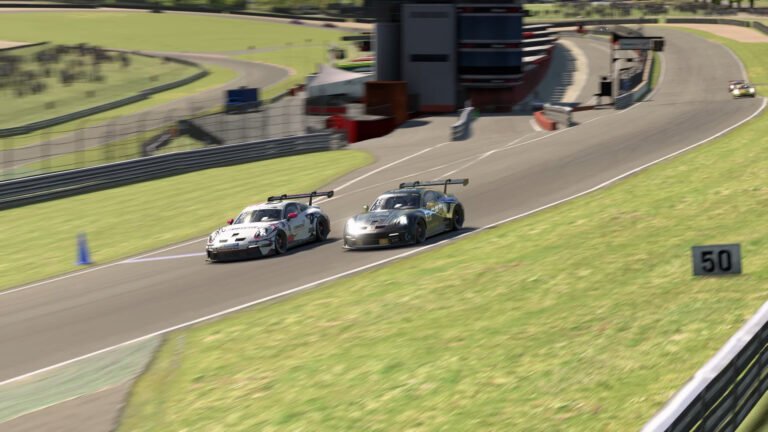
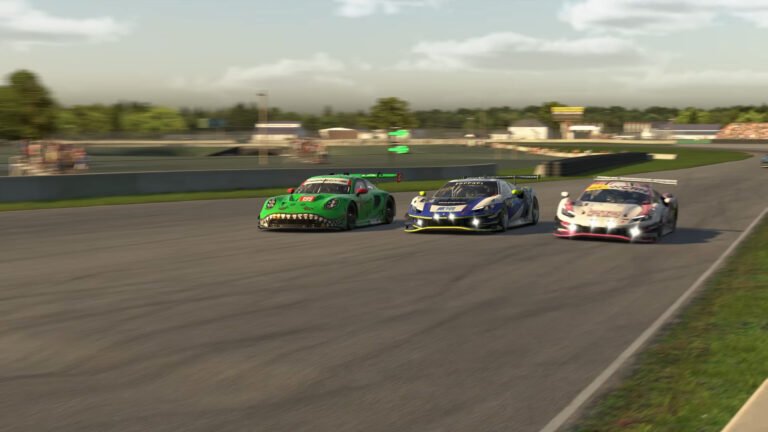
The challenge is that iRacing puts you in a race car with 20 to 40 strangers, all pushing hard, and everyone has a different idea of what fair racing looks like. Some iRacers treat every corner like a qualifying lap. Others make contact first and rationalize it later. However, you can control your half of the equation. When you race clean consistently, the results follow.
Give Yourself a Brake
The most important clean racing technique is braking predictably. If the car behind you cannot anticipate your braking point, you are already creating a dangerous situation.
Brake early enough to keep something in reserve. You do not need to extract every last meter of braking on lap one while the field is still bunched. Carry smooth, progressive pressure to the pedal. If you find yourself stabbing the brakes, you were already too late, and so was whatever gap you thought was there.
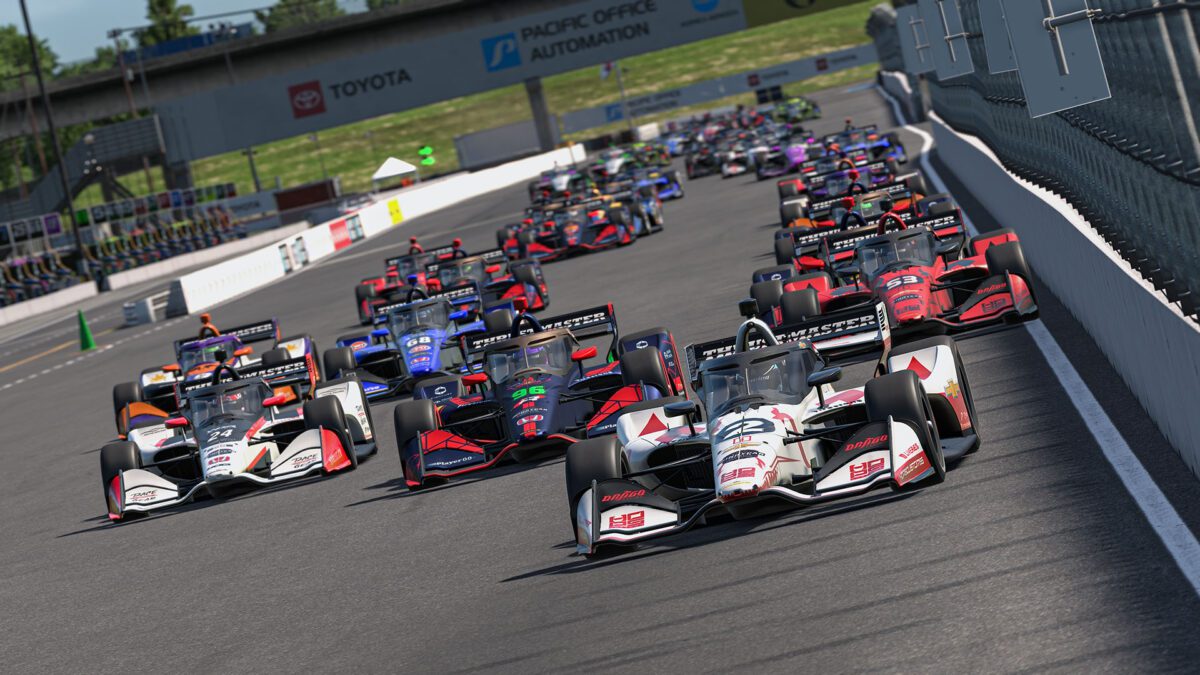
This matters especially at race starts. The first few corners of any race are chaotic. Therefore, brake early, stay wide where the track allows, and just survive. Positions are won in the middle of a race, not at corner one.
Position Smart Before the Braking Zone
Clean racing is largely about where you put your car before you reach the braking zone, not just what you do inside it.
If you are in a position where any slight mistake by the car ahead sends you into the wall, move out of that position. Leaving a couple of car lengths of gap feels slow. It is not. Because a 4x incident on your license, plus losing two corners of ground during the contact, costs far more than one careful lap.
Side-by-side into a slow corner with a driver you have not raced before is almost always a bad trade. Let them go, look for a cleaner opportunity on the next lap, and you will usually get the position back.
Think in Incidents, Not Positions
Here is the mental shift that makes the biggest difference: stop focusing on positions and start focusing on incident avoidance.
Most iRacers think about the car ahead. Clean racers think about avoiding contact with any car on track. Those are different goals. One is about raw pace, while the other is about consistent execution.
When you are defending hard and someone is pushing you, ask yourself a simple question. What is the worst outcome if you give up the position? You drop one spot in the standings and lose a handful of iRating points. Now ask what happens if you fight it and misjudge: both cars go into the wall, you collect 8 incidents, and your Safety Rating suffers for the next three races. The math is obvious once you frame it that way.
Use Your Mirrors
Most contact in iRacing happens because one driver simply does not know where the other is. So use your mirrors, and use them early.
Before every braking zone, confirm: is there a car alongside you? If yes, have you left them racing room? If you have been passed into a corner and the car is still there on exit, they have earned the line. You may need to go around the outside or yield. That is a normal part of racing.
The hardest situation in iRacing is being the car that was clearly there first and getting hit anyway. It is genuinely frustrating. However, the driver who stays calm, holds their line, and avoids the contact walks away with a clean license. That is worth more than the position.
Communicate With Your Car
In iRacing, you cannot talk to the drivers around you. So your only communication tool is how you move the car.
Predictable driving is safe driving. Weaving to defend on a straight is against the sporting code and causes accidents. Brake in the same spot every lap. If you are going to make a defensive move, make it once and commit to it. Late, jerky moves are how wheels touch.
When you are side-by-side into a corner, take the line that gives both cars the best chance to exit cleanly. Trying to force a tight apex while you are still wheel to wheel is how you end up with a broken front wing and a DNF.
Multiclass Traffic
If you have raced anything in iRacing’s road category, you have encountered multiclass traffic. A prototype closing at 40 mph faster than you is alarming the first time it appears in your mirrors.
The rule is simple: hold your line and make your movements predictable. They will go around you. What you should not do is brake early out of panic, or drift offline on the straight to try to make room. Both are unpredictable moves that cause more accidents than simply holding steady.
As a result, multiclass becomes manageable once you trust the process. Hold the line. Let them do the work.
When You Get Hit
You will do everything right and still get hit. It happens to everyone at some point.
Retaliation creates incidents on your license, not the other driver’s. If the car is undriveable, park it. If it is still running, put your head down and finish the race. Use the protest system for genuinely dirty driving.
The iRacers who improve over time are the ones who learn from every incident, even the ones that were not their fault. Was there a position that would have kept you out of the danger zone? Was there a gap you did not need to commit to? Many incidents that feel unavoidable had a moment earlier where one different decision changes the whole outcome. That is not about blame. It is about getting better.
Building the Habit
Clean racing is not a single technique. It is a habit that builds over hundreds of laps. Every time you brake a little earlier because someone is alongside, every time you give up a position rather than force a risky move, you are reinforcing the right instincts.
The iRacers with the best Safety Ratings and steadily climbing iRatings are rarely the fastest people in the lobby. They are the ones who finish races. That is the goal.