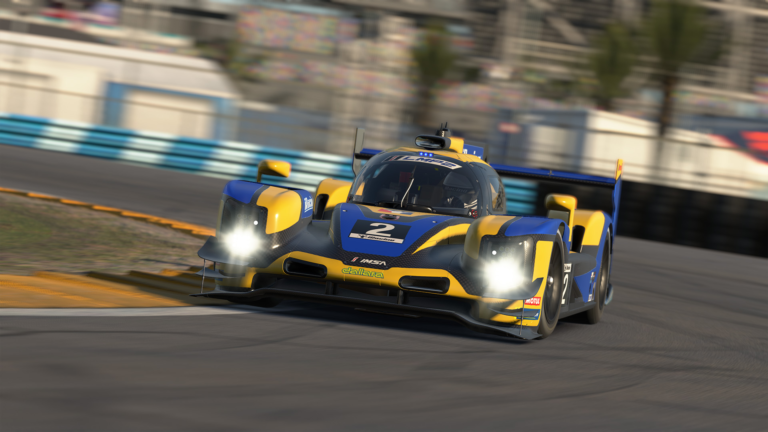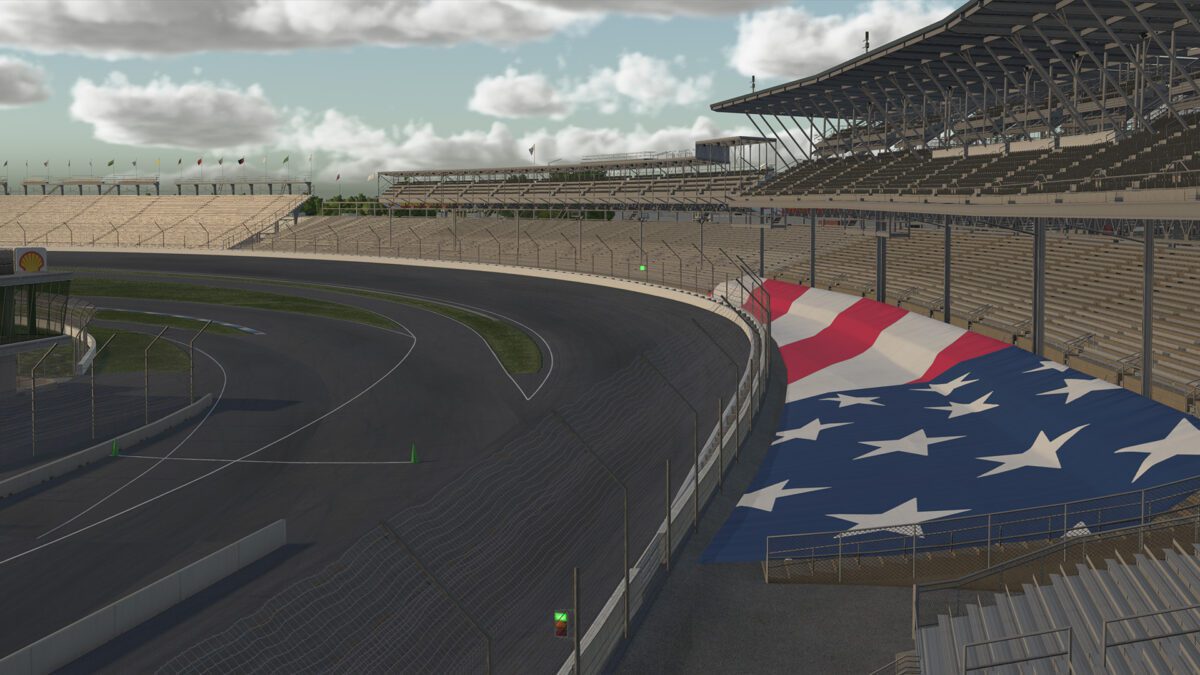
The Indianapolis Motor Speedway Road Course in iRacing represents one of the most versatile and unique track layouts on the service. Built inside the historic oval at the “Racing Capital of the World,” the road course takes full advantage of IMS’s enormous footprint. It combines sections of the oval with an infield road course that has evolved over time to suit Formula One, IndyCar, sports cars, and NASCAR.
Advertisement
Configurations in iRacing
iRacing offers the modern road course configuration, which includes a blend of the oval’s south short chute, the front straight, and a technical infield section.
- Grand Prix Circuit (modern layout):
- Length: 2.439 miles / 3.925 km
- Turns: 14
- Direction: Clockwise
- Primary Use: IndyCar Grand Prix, NASCAR Cup/IndyCar doubleheaders, IMSA events, eSports championships
- Historic Formula One Layout (2000–2007):
While not currently featured in iRacing, the historic F1 layout reversed part of the oval’s banking. The current iRacing scan focuses on the modern road course, as used by IndyCar and IMSA.
Characteristics of the Road Course
- Blend of speed and precision: The front straight uses part of the iconic oval, while the infield is a slow, technical challenge.
- Heavy braking zones: Turn 1 and Turn 7 are two of the hardest braking points in iRacing, demanding consistency and awareness in traffic.
- Curb management: Corners such as Turns 5–6 and the backstretch chicane require aggressive curb usage without unsettling the car.
- Multi-discipline adaptability: The track is equally effective for IndyCar, GT3, prototypes, and stock cars, making it one of the most flexible circuits in iRacing.
- Flat profile: Unlike tracks like Road Atlanta or Watkins Glen, IMS is almost entirely flat. Precision rather than elevation defines its challenge.
Racing Traits
- Overtaking zones:
- Turn 1: A long draft from the oval straight into a heavy braking zone makes this the prime overtaking spot.
- Turn 7 (backstretch): Another heavy braking zone following a fast acceleration section.
- Draft importance: Cars slipstream heavily down the oval straight, setting up overtakes.
- Traffic dynamics: In multi-class events, the wide straights help prototypes move past GTs, but the narrow infield requires patience.
- Setup balance: Cars need both strong braking stability for the infield and straight-line speed for the oval sections.
The Indianapolis Road Course in iRacing perfectly mirrors the circuit’s real-life character: a venue that demands adaptability, discipline, and bravery.
Advertisement
Advertisement