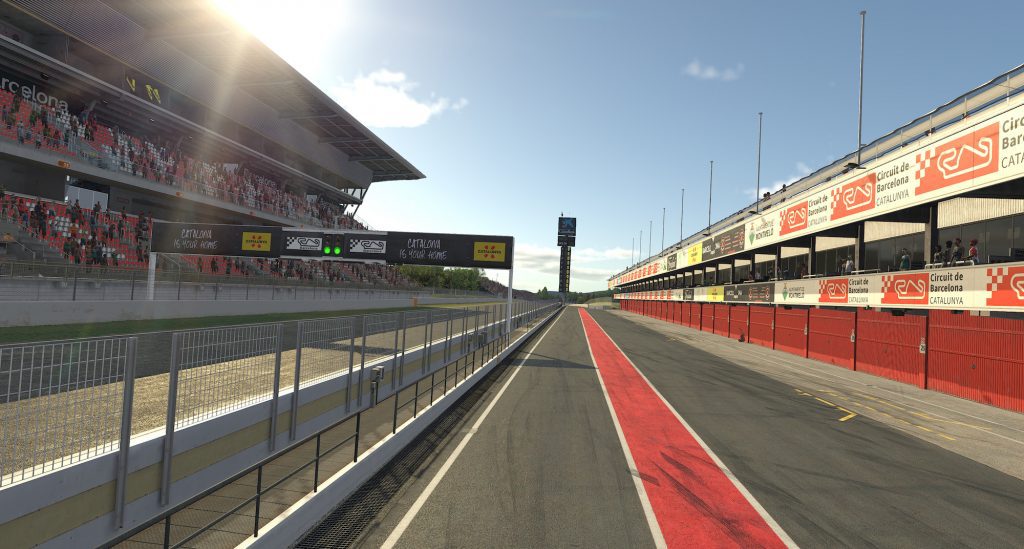
iRacing redesigned pit road speed enforcement in Season 3 2026. The iRacing pit speed limiter now runs on a completely different system. The old limiter held the car slightly under the speed limit to avoid triggering a penalty. Skilled drivers exploited that by manually modulating the throttle to average a slightly higher speed. The new system eliminates that advantage. A PID controller now targets the exact maximum allowable speed. As a result, enforcement is consistent across every car in the field.
Also See
➡️ iRacing Season 3 2026: Full Build Breakdown
How the iRacing Pit Speed Limiter Works
A PID controller is a feedback control algorithm. It continuously reads your current speed and compares it to the pit speed limit. The controller then adjusts throttle output to hold you right at that limit. Because the old system used a fixed conservative target, it always ran slower than necessary. The new system actively corrects toward the exact limit. Therefore, it produces a more precise pit road speed for every driver.
iRacing also tightened enforcement tolerances alongside this redesign. Pit speed rules are slightly stricter now. There is less tolerance for brief overruns. However, the new limiter is specifically designed to keep you inside those tighter rules. Drivers who use the system correctly should find pit road easier to manage than before.
How to Drive Pit Road Under the New System
The key change in driver behavior is gear selection. The PID controller holds a fixed throttle position to maintain speed. In fact, shifting gears while the limiter is active can spike your speed briefly. That spike can trigger a penalty under the tighter enforcement rules. Therefore, select your gear before the pit road entry line.
Once the limiter engages, hold full throttle and do not shift again until past the pit exit zone. Choose a gear that puts the engine in the middle of its rev range at pit road speed. A correction oscillation near the rev limit can briefly spike past the speed limit. Additionally, do not enter pit road hot and plan to bleed speed on the way in. The safest approach is to lift early, select your gear, and let the limiter do the work.
A brief overspeed when pulling out of your pit box is expected. This happens because you are accelerating from a dead stop. The system accounts for that. You will not receive a penalty for the initial rollout after a pit stop.
What This Means for Your Lap Time
For most drivers, the practical effect is small. If you have been using the auto-limiter consistently, the new system behaves similarly. The main difference is that it now targets the exact limit rather than a conservative value below it. As a result, you are no longer giving away small fractions of time through pit road.
For drivers who were manually modulating the throttle to beat the old limiter, that approach no longer works. The new controller produces consistent results that manual throttle work cannot improve on. Furthermore, using the limiter correctly is now the right technique for every car in every series. The manual throttle method is gone.