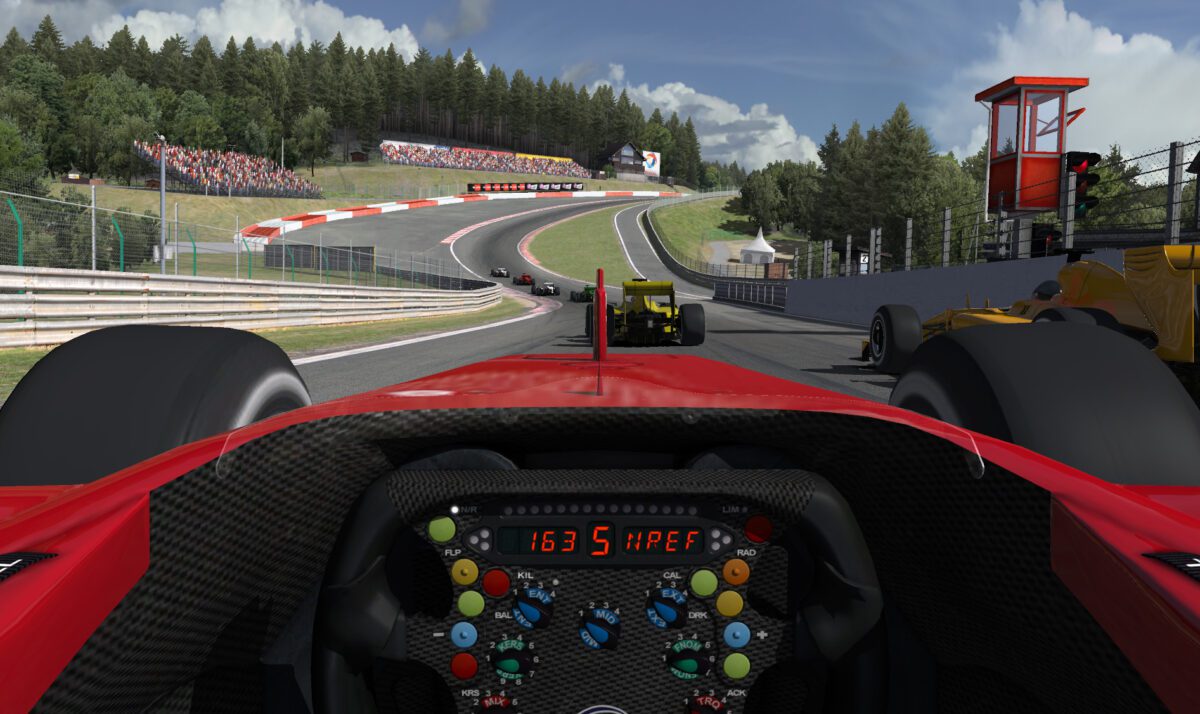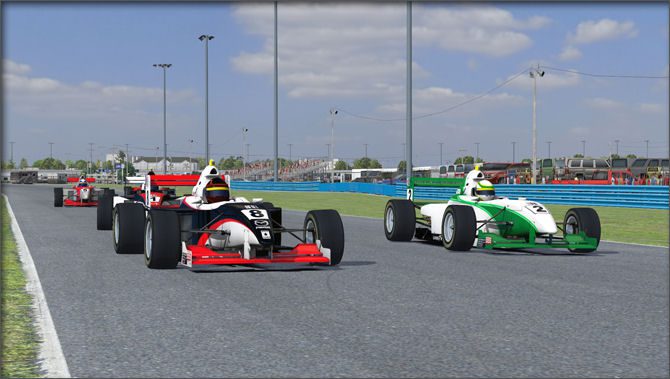
Welcome to the Pro Mazda iRacing driving school. Mastering this legacy open-wheeler is a masterclass in finesse and momentum. Because the car features a relatively short wheelbase and a high-revving rotary engine, it reacts quickly to every input. You cannot “muscle” this car around the track like a heavy GT3. Instead, you must learn to dance with the chassis, using weight transfer and smooth pedal work to maintain a high minimum corner speed. This guide breaks down the essential techniques to make you a faster, more consistent driver.
Mastering Weight Transfer in the Pro Mazda
The most important skill in the Pro Mazda iRacing cockpit is managing weight transfer. When you apply the brakes, the weight shifts forward, pressing the front tires into the asphalt. This is your best friend for turn-in. If you release the brakes too suddenly, the weight snaps back to the rear, causing the front to lose grip and results in “push” or understeer. You must practice trail braking—gradually easing off the brake as you turn—to keep the nose “pinned” until you reach the apex.
Conversely, the Pro Mazda iRacing car is very sensitive to throttle application. As soon as you touch the gas, the weight moves to the rear. This stabilizes the car on exit but can cause the front to wash out if you go to 100% too early. The secret is to find a “maintenance throttle” point mid-corner. This keeps the car balanced and settled before you eventually commit to full power for the straightaway. Think of the car like a see-saw; your job is to keep it from tipping too violently in either direction.
The Rhythm of the Rotary Engine
The 1.3L Renesis engine in the Pro Mazda iRacing model is unlike anything else you have driven. It has very little low-end torque but screams at high RPM. To be fast, you must maintain a high “minimum speed” through every corner. If you over-slow the car, the engine will fall out of its power band, and you will be a sitting duck on the straights. You should aim to keep the RPMs between 6,500 and 8,000 at all times.
Shifting is all about rhythm. The 6-speed sequential gearbox is fast, but the smooth power delivery of the rotary can make it easy to forget to shift. Use your shift lights religiously. Upshifting just before the rev limiter is essential for maximizing acceleration. On the downshift, a quick blip of the throttle helps match the engine speed to the wheels, preventing the rear from locking up. This “brap” sound of the rotary is iconic—learn to use it as your auditory cue for every gear change.
Steering with Your Feet
In a short-wheelbase car like the Pro Mazda iRacing, your pedals are actually your secondary steering wheel. If the car is refusing to turn (understeer), a slight lift of the throttle will move the weight forward and tuck the nose in. If the rear feels like it is sliding too much (oversteer), a small increase in throttle will “sit” the car down on its rear tires and regain traction. This “pedal-steering” is what separates the top-split drivers from the rest of the field. Practice these micro-adjustments during your test sessions to feel how the car responds.
Trusting the Aerodynamics
As a “wings and slicks” car, the Pro Mazda iRacing relies heavily on aerodynamic grip. At high speeds, the wings are doing most of the work to keep you on the track. You must learn to trust that the grip will be there in fast sweepers. If you “panic-lift” in a high-speed corner, you lose that downforce, and the car will actually become less stable. The goal is to be decisive. Once you commit to a high-speed line, stay smooth and let the wings do their job. This confidence is the key to conquering tracks like Watkins Glen or Mosport.
Summary for the Aspiring Pro
Mastering the Pro Mazda iRacing takes time and patience. It is a car that punishes “jabby” inputs but rewards those who are liquid-smooth. Focus on your weight transfer, keep the rotary engine singing, and use your pedals to fine-tune your line. Even as a legacy car, the lessons learned here are the foundation for every pro-level open-wheeler on the service. Keep practicing your trail braking and throttle discipline, and you will find yourself climbing the results board in no time.