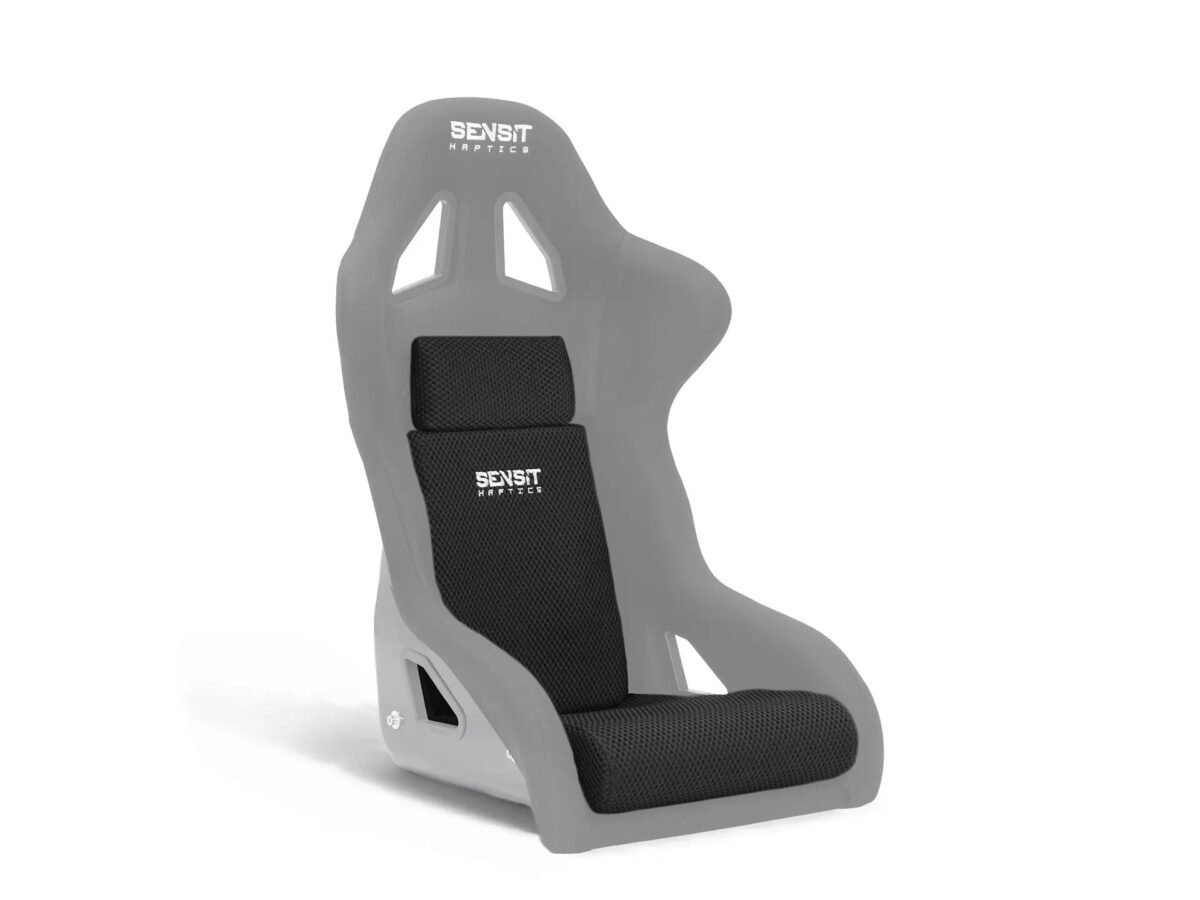
Haptics in sim racing have mostly come from below the knees. SimHub transducers, pedal rumble motors, and bass shakers deliver feedback underfoot, and they work well. However, a company called SensitHaptics is making the case that the most important feedback channel runs through the seat itself.
Also See
➡️ Pedal Haptics in iRacing: Are They Worth It?
➡️ Track Impulse Haptics for SimHub Gets a Major UI Overhaul
What the MTC-P Extreme 2 Is
The SensitHaptics product is the MTC-P Extreme 2. It is a seat haptics insert that fits directly inside your existing racing shell. Fourteen high-resolution actuators sit between you and the bucket seat, driven in real time by simulation data. SensitHaptics calls the underlying technology Metahaptics. The specs are ambitious: 5ms response time and 20,000Hz resolution. That latency is fast enough to beat conscious perception, which is the core idea behind the system.

The concept has a grounding in real motorsport. Drivers have described reading the car through the seat of their pants for decades. A lot of what the chassis is doing arrives at the seat before it shows up anywhere else. The rear stepping out. A kerb strike. Load transferring from entry through mid-corner. By the time that information reaches your hands or eyes, you have already spent time reacting. Seat haptics try to close that gap entirely.
Pricing and Configuration
The MTC-P Extreme 2 retails as a standalone insert for around $660. It is built to fit a range of existing racing shells. SensitHaptics also sells it pre-integrated into FIA-certified seats for drivers who want a complete solution. Their own MTC-S1 SimRacing Seat starts at around $1,100. Bundle configurations with Sparco, Sabelt, and Recaro shells run from around $1,700 to around $2,035 depending on the seat chosen. All bundle packages include side mounts. SensitHaptics is based in Germany and lists prices in EUR; figures above are approximate USD equivalents.
iRacing Compatibility
For iRacing drivers, the key question before buying is software compatibility. SensitHaptics does not publish a detailed sim support list publicly. It is worth contacting them directly to confirm which iRacing data channels the MTC-P Extreme 2 draws from, and whether integration is native or relies on middleware like SimHub. That answer should be part of any purchasing decision. If iRacing support is confirmed, the MTC-P Extreme 2 would draw from telemetry data to deliver feedback tied to surface changes, kerb impacts, and chassis load transfer events in real time — the kind of low-latency channel that separates dedicated seat haptics from broader vibration feedback.

Who This Is For
At around $660 for the insert alone, this is not a casual add-on. The MTC-P Extreme 2 sits alongside direct-drive wheelbases and high-end load cell pedal sets in terms of market positioning. Think of it as an upgrade for a rig that is already fully built out. Bass shakers and transducers mounted to the frame give you vibration. Fourteen seat actuators running at 20,000Hz with sub-5ms latency represent a meaningfully different class of feedback.
The learning curve deserves mention. Unlike passive bass shakers that activate whenever the sim sends a signal, the MTC-P Extreme 2 requires configuration to match your rig, your seat shell, and your preferred data channels. SensitHaptics provides documentation and support to guide first-time setup, but it is not plug-and-play out of the box. If tuning time is limited, factor the initial configuration period into your buying decision before committing.
Standard warranty coverage is two years. SensitHaptics also offers extended manufacturer-backed plans to three or five years total, available directly through their site at sensithaptics.com.