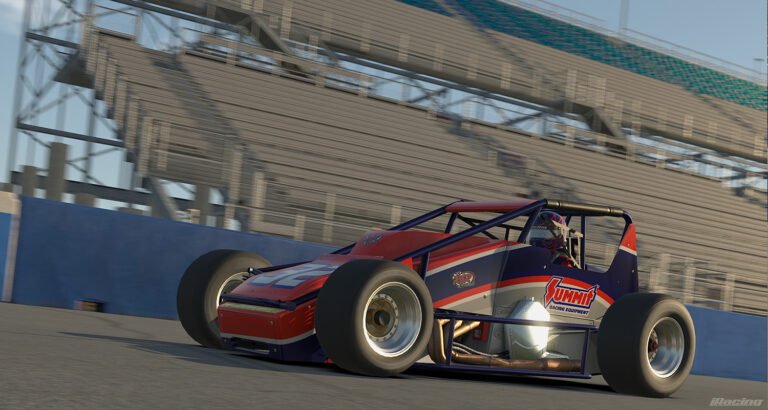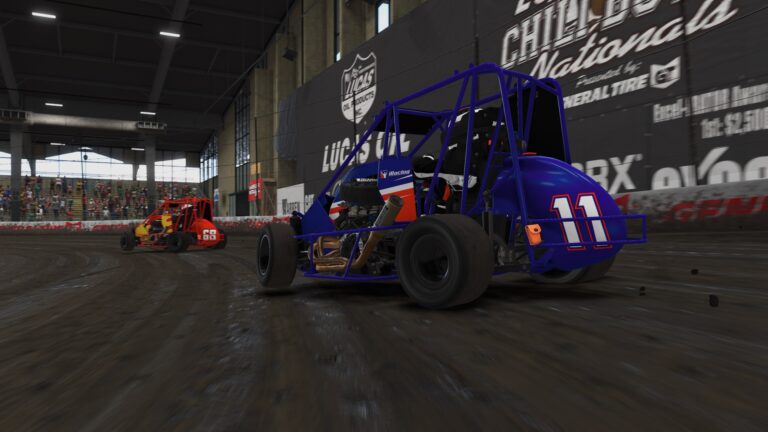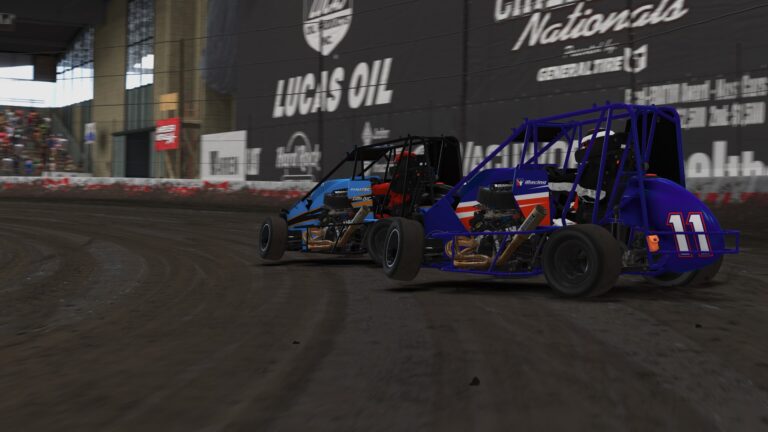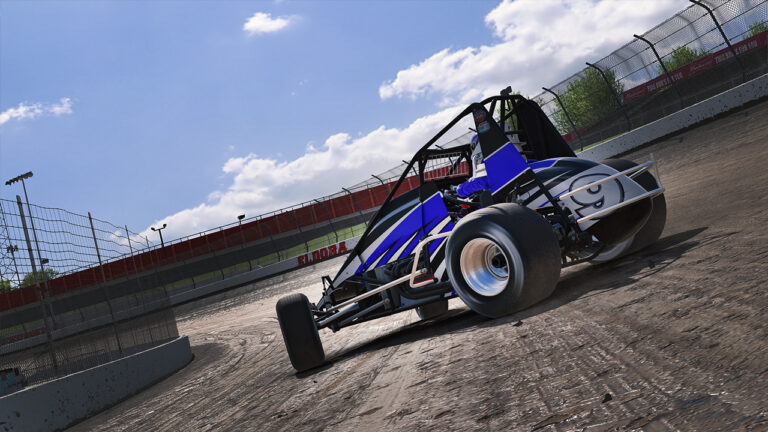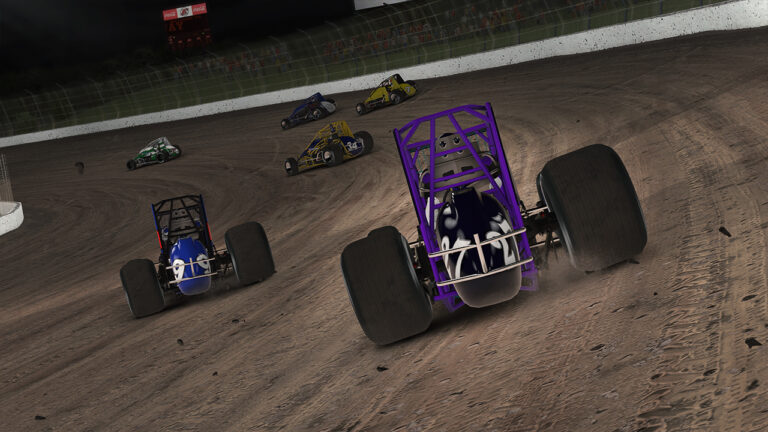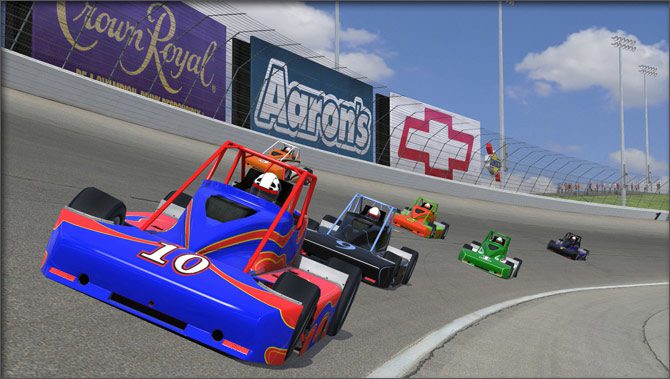
In the world of Silver Crown iRacing competition, a common question arises for open-wheel enthusiasts: how does the front-engine “Big Car” compare to the nimble, aggressive pavement Sprint Car? Both vehicles utilize a 410 cubic-inch V8 engine and represent the pinnacle of asphalt oval racing, but they are engineered for entirely different purposes. Choosing between the 819-horsepower Silver Crown and the 800-horsepower Sprint Car depends on whether you prefer high-speed endurance strategy or short-track tactical aggression.
Weight and Wheelbase: The Physics of Stability
The most immediate difference when comparing the Silver Crown iRacing model to a Sprint Car is the scale of the chassis. A Silver Crown car is a heavyweight in the open-wheel world, tipping the scales at 1,650 pounds with a much longer wheelbase. This added length and weight make the car more stable at high speeds, which is essential for the 180 MPH pack racing seen on superspeedways. The Sprint Car, by contrast, is a 1,400-pound “roller skate” with a short wheelbase, making it incredibly twitchy and prone to rapid rotation.
Because of this weight difference, the handling philosophies diverge. The Silver Crown feels like a “Champ Car” from a bygone era: it has more “lazy” weight transfer, allowing the driver to feel the car’s limit over a longer period. The Sprint Car is a violent, reactive machine that demands lightning-fast reflexes. While both require elite car control, the Silver Crown iRacing experience is about managing momentum and fuel loads over 100 miles, whereas the Sprint Car is about surviving a 30-lap high-intensity sprint.
Drivetrain and Mechanical Complexity
The Silver Crown iRacing machine features a two-speed transmission and a cockpit-adjustable weight jacker, offering a layer of technical strategy that the Sprint Car lacks. In a Sprint Car, you utilize a direct-drive system: once the engine fires, you are locked in. There are no gears to shift and few adjustments to make from the seat. The Silver Crown requires the driver to be an engineer as well as a racer, constantly tweaking the weight jacker to account for the massive 75-gallon fuel cell as it empties throughout a long run.
The braking systems also highlight the different roles of these cars. Sprint Cars rely on a delicate touch to avoid upsetting the short chassis, often using the throttle as the primary steering tool. The Silver Crown iRacing model, specifically the New Generation pavement chassis, has robust brakes designed for slowing down from nearly 190 MPH. However, because neither car has aerodynamic downforce, both vehicles will “slide” if you are too aggressive with the pedal, making trail-braking a vital skill in both disciplines.
Choosing Your Path on the Oval Ladder
If you enjoy the “gladiator” style of racing where every lap is a battle for inches on a quarter-mile bullring, the Sprint Car is likely your best fit. It is a raw, unadulterated test of reflex and throttle management. However, if you are drawn to the prestige of “The Big Cars” and the tactical depth of 100-mile endurance races on tracks like Gateway, Iowa, or Homestead-Miami, the Silver Crown iRacing series is the ultimate destination.
- Silver Crown: Best for high-speed drafting, technical setup adjustments, and long-run strategy.
- Sprint Car: Best for short-track aggression, rapid-fire reflexes, and “on-the-edge” car control.
Summary: The 410 Legacy
Whether you choose the Silver Crown iRacing beast or the pavement Sprint Car, you are participating in a legendary lineage of American open-wheel racing. Both cars demand respect and will punish any driver who treats the throttle with anything less than total focus. The Silver Crown offers a unique bridge between short-track roots and superspeedway glory, making it a “must-drive” for any sim racer looking to prove their versatility. The 410 power is waiting; it is up to you to decide which chassis can handle your ambition.