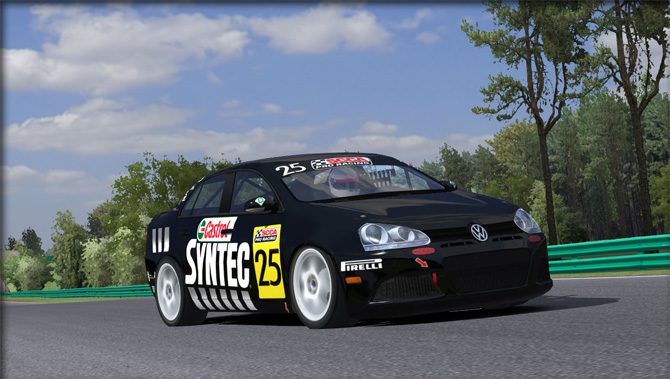
Mastering the Volkswagen Jetta TDI iRacing is a lesson in patience and “short-shifting.” Because the Jetta is a front-wheel-drive, turbocharged diesel machine, it does not behave like the high-revving sports cars most drivers are used to. To find the podium in a Jetta TDI Cup event, you must learn to manage the massive low-end torque, master the unique power band of the TDI engine, and develop a clinical understanding of how to use FWD weight transfer to rotate the car without destroying your front tires.
Short-Shifting for Speed
The greatest challenge to mastering the Volkswagen Jetta TDI iRacing is the RPM range. The 2.0L diesel engine runs out of breath very quickly at high RPMs. To go fast, you must “short-shift”—changing gears much earlier than you would in a gasoline-powered car. Your goal is to keep the engine in the “meat” of the torque curve, typically between 3,000 and 4,500 RPM. If you hit the rev-limiter, you’ve already lost significant time. Learning to shift by the “feel” of the pull rather than the sound of the engine is the key to unlocking the Jetta’s true pace.
The Art of FWD Momentum
The Volkswagen Jetta TDI iRacing rewards a driver who understands momentum. Because the car has limited horsepower, any mistake in a corner is amplified down the following straight. You must focus on a “late apex” style, getting the car rotated early so you can get back on the throttle as soon as possible. Use the weight of the heavy diesel engine to your advantage; “trail braking” into the corner will keep the nose pinned, helping you avoid the understeer that is common in front-wheel-drive cars. It is a technical, rewarding style of racing that emphasizes efficiency over brute force.
- Throttle Management: Don’t floor it mid-corner; ease into the torque to prevent front-wheel spin.
- Braking Points: The Jetta is heavier than it looks. Brake early and focus on a clean, stable entry.
- Drafting: In a spec-series, the draft is everything. Stay tucked in to maximize your top speed on long straights.