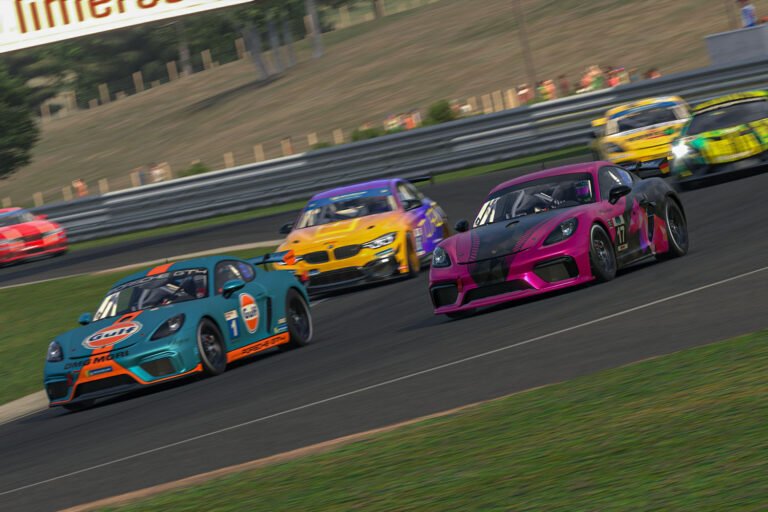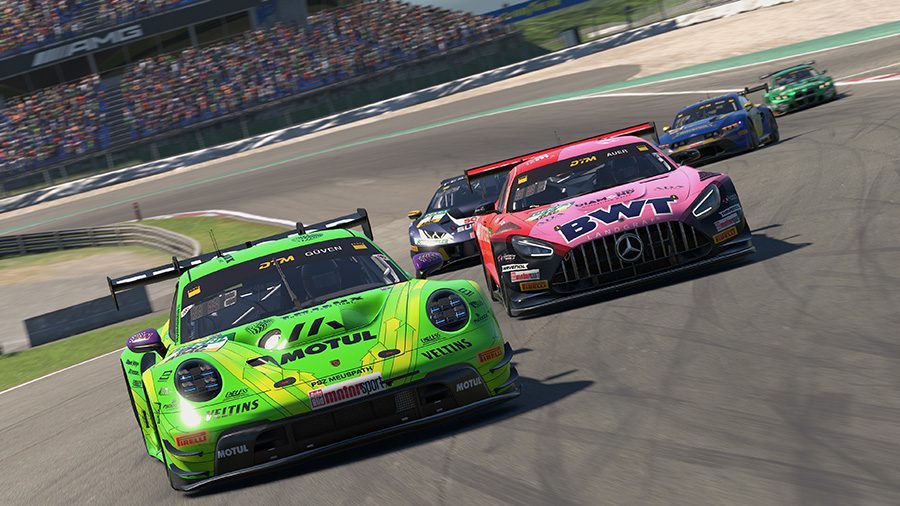
GT3 at Spa iRacing follows the same script every time the week arrives on the schedule. The green flag drops, the field funnels into Eau Rouge, and within three corners, half the grid is already in the wall. New iRacers buy the circuit specifically for this week, charge into their first race excited, and end up sitting in a wreck on lap one wondering what they signed up for.
It is one of the most well-known frustrations in the sim, and it happens every single time GT3 lines up at Spa-Francorchamps. Here is why GT3 at Spa iRacing produces chaos, and what you can do to give yourself a fighting chance.
Also See
➡️ Speed and Strategy Guides on iRacerHub
🎮 iRacing.com
Why GT3 Draws the Biggest Fields
No other car class in iRacing packs as many drivers into a session as GT3. The combination of road-legal machinery, real-world racing prestige, and accessible speed makes it the most popular series on the service by a wide margin. When a high-signup week like Spa rolls around, hundreds of drivers queue into races across every split.
That matters because split distribution is not always kind. The top splits fill with experienced, fast drivers. The lower splits mix iRacers of wildly different skill levels. Some have been racing road courses for years. Others bought the car two days ago. When everyone is chasing the same Eau Rouge entry at the same time, the skill gap becomes very visible very fast.
Why GT3 at Spa iRacing Makes It Worse
Eau Rouge and Raidillon are among the most demanding corners in any form of motorsport. At GT3 speeds, the entry is flat for most drivers, but only because every variable has to be perfect. Get the line slightly wrong, arrive with too much speed, or find yourself in close traffic through the dip, and the car snaps wide with very little warning.
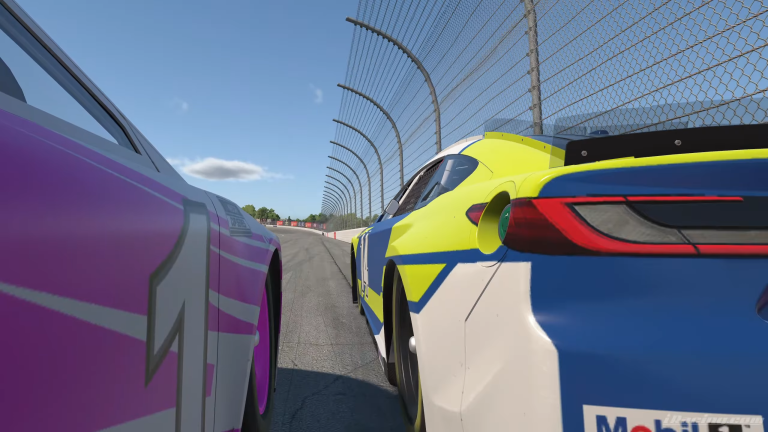
Because the corner is blind from behind, drivers cannot easily see trouble developing ahead. Someone loses control on the way up the hill, the car three lengths back has no time to react, and a chain reaction takes out several others before anyone even reaches Les Combes. This is not a coincidence. It is physics and track geometry combining with a large, mixed-skill field.
Les Combes at the top of the hill is the second flashpoint. Drivers who made it through Eau Rouge clean often arrive at the chicane at different speeds with adrenaline still running high, and the braking zone becomes another lottery.
What You Can Actually Do
Give yourself a gap before the green flag. If you know that Eau Rouge is going to be dangerous on lap one, your job is to create space around you so you have room to react if someone locks up ahead. Drop back a car length or two in the final sector of the formation lap.
Go conservative through Eau Rouge specifically on lap one. Save the flat entry for when the field has separated. Lifting slightly does not cost you nearly as much time as it saves you in avoided damage. Most of the drivers wrecking are those who refuse to lift at all in a field that has not yet sorted itself out.
Watch your mirrors into Les Combes. After Raidillon, cars close very fast and sight lines are not always clean. Leave room on your inside if someone is clearly running out of braking space, and set yourself up for a clean entry rather than a block that ends both races.
From lap two onward, race your own pace. Once the carnage settles, GT3 at Spa becomes a genuinely great race. The circuit rewards smooth inputs and consistent rhythm. Chasing positions in the first few laps is how you end up joining the people already in the wall.
It Will Happen Again
GT3 at Spa iRacing will always produce a chaotic opening lap. The combination of a demanding circuit, a massive field, and a wide skill range guarantees it. That is not a criticism of the week. It is just how it works.
The iRacers who make it through lap one clean are not always the fastest. They are the ones who treat the opening laps as information-gathering rather than position-gaining. Doing the same will not guarantee a clean race, but it shifts the odds meaningfully in your favor.