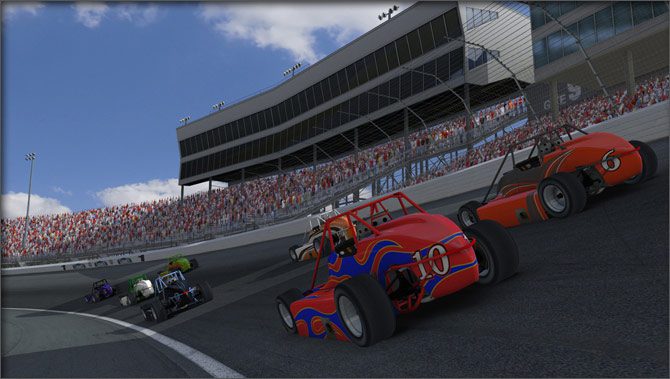
The Silver Crown iRacing garage is a place where old-school mechanical engineering meets high-speed oval strategy. Unlike modern formula cars that rely on complex aerodynamics, the Silver Crown is a “mechanical grip” machine. To go fast, you must understand how to balance 819 horsepower on a beam-axle chassis using two primary tools: tire stagger and the cockpit-adjustable weight jacker. This setup school will teach you how to fine-tune the “Big Car” for both short-track agility and superspeedway stability.
Mastering the Cockpit Weight Jacker
The most unique feature of the Silver Crown iRacing setup is the weight jacker. This is a hydraulic or mechanical device that allows the driver to change the “cross weight” or “wedge” of the car while driving. By increasing the weight jacker value, you are essentially putting more pressure on the right-front and left-rear tires. This “tightens” the car, making it more stable and helping to cure a loose handling condition. Conversely, decreasing the weight jacker “frees up” the car, helping it rotate better in the center of the corner.
Mastering this tool is essential because a Silver Crown iRacing event is usually an endurance test. As you burn through your 75-gallon fuel cell, the rear of the car becomes lighter and the handling balance shifts toward “loose” (oversteer). You should start the race with a neutral weight jacker setting and gradually increase it as the fuel load drops. If you find yourself fighting the back end of the car with 20 laps to go, a few clicks on the weight jacker can be the difference between a podium finish and a spin.
Tire Stagger: The Key to Cornering
Because the Silver Crown iRacing model utilizes a solid rear axle with no differential, the car naturally wants to drive in a straight line. To force the car to turn left, we use tire stagger—making the right-rear tire larger in circumference than the left-rear tire. This creates a “conical” effect that helps the car pivot. The amount of stagger you need depends entirely on the radius of the corners you are racing.
- Short Tracks: On tight bullrings like Iowa or Lucas Oil Indianapolis Raceway Park, you need high stagger (often 1.5 to 2.5 inches) to help the heavy front-engine chassis rotate through the tight radius.
- Superspeedways: On massive tracks like Chicagoland or Homestead, you need much less stagger (often 0.5 to 1.0 inch). Too much stagger at 180 MPH will make the car “darty” and unstable on the straightaways, making it difficult to hold a line in the draft.
Torsion Bars and Beam Axle Geometry
The Silver Crown iRacing suspension relies on torsion bars rather than traditional coil springs. These bars act as the “springs” of the car. Stiffening the right-rear torsion bar will help the car drive off the corner with more authority, but it can also make the car snap loose if the track is bumpy. Because of the beam-axle design, the left and right sides of the suspension are connected. This means an adjustment on the left side of the car will inevitably affect the right side.
When tuning your Silver Crown iRacing setup, always look at your “ride heights” and “rake.” A car that sits lower in the front (positive rake) will generally turn better on entry but may be unstable under heavy braking. A more level car provides better high-speed stability for pack racing. Balance your torsion bar rates to ensure the car stays level through the corner, preventing the frame rails from “bottoming out” and upsetting the mechanical grip of the tires.
Summary: A Dynamic Setup Challenge
Taming the Silver Crown iRacing machine requires a setup that evolves with the race. You are not just building a fast car for one lap; you are building a tool that can survive 100 miles of high-speed combat. Start by finding a comfortable stagger for the corner radius, use torsion bars to stabilize the chassis, and then rely on your cockpit weight jacker to manage the shifting fuel load. If you can stay ahead of the car’s changing balance, you will find that the 819-horsepower beast is surprisingly rewarding to drive.