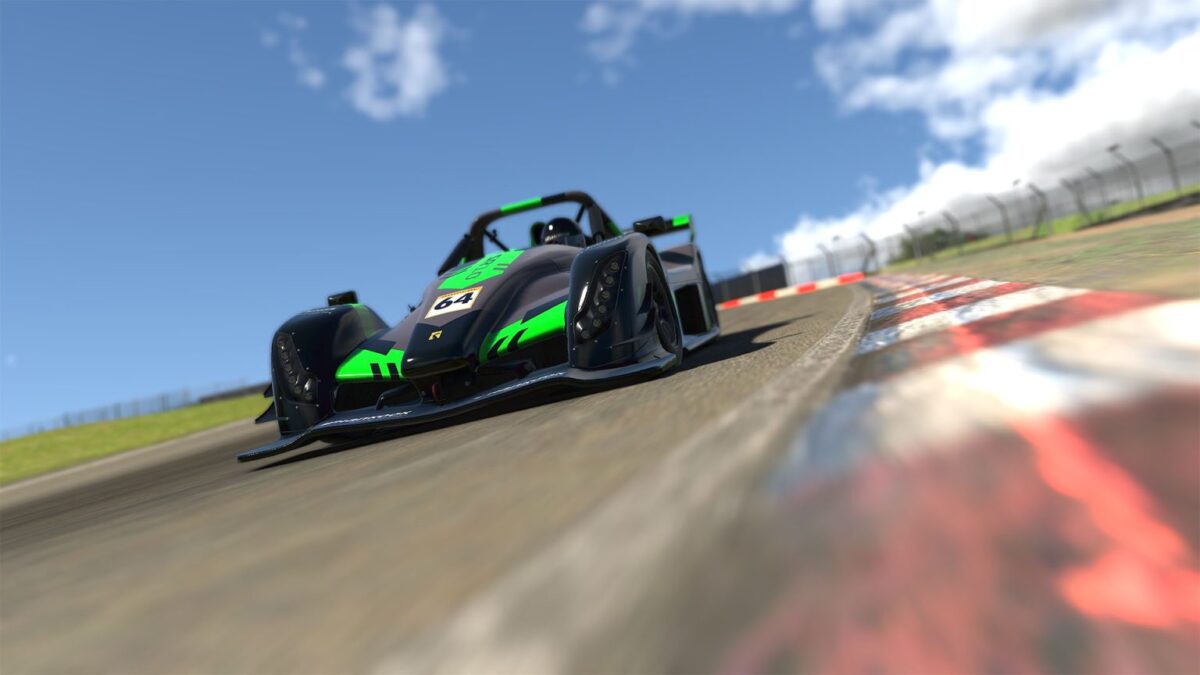
The Radical SR10 iRacing guide is a masterclass in managing the transition from raw mechanical grip to high-speed aerodynamic stability. Unlike its high-revving predecessor, the SR10 is a turbocharged beast that rewards patience, smooth inputs, and a deep understanding of its unique tire physics. To consistently find the podium in the Radical Cup, you must move beyond the “point-and-shoot” style and master the art of turbo torque management and long-stint tire conservation.
Mastering the EcoBoost Power Delivery
The core of the Radical SR10 iRacing driving experience is its 2.3L Ford EcoBoost engine. While it provides a massive 425 horsepower, the way that power arrives is critical. You will face a significant “wall of torque” in the mid-range. The fastest drivers often hold a higher gear (such as taking a corner in 3rd where you might be tempted to drop to 2nd) to keep the car more stable and prevent the turbo from upsetting the rear end. Gradually “rolling” onto the throttle is essential; sudden stabs at the gas will induce wheelspin and rapidly overheat your rear tires, leading to a “greasy” feel for the remainder of the lap.
The Brake-and-Release Technique
Braking in the Radical SR10 iRacing car requires a delicate touch. Because the car is heavier than the SR8 but still relies on high downforce, your braking markers will be earlier than you expect. The car is notorious for front-tire lockups, which are difficult to recover from in the sim. The ideal technique involves a heavy initial “hit” on the brakes followed by a rapid but smooth “bleed-off” as you approach the apex. This “trail-braking” is vital to get the car to rotate, as the SR10 has a natural tendency toward mid-corner understeer. By keeping a tiny amount of brake pressure as you turn in, you keep the nose pinned and the front tires loaded.
Managing the “Stone Cold” Tires
One of the most important tips in this Radical SR10 iRacing guide concerns your tires. When you leave the pits, your tires are “stone cold” and offer significantly less grip than they will after a few laps. It typically takes 3 to 4 laps for the SR10 tires to reach their optimal working temperature. Pushing too hard during these opening minutes won’t just cause a spin; it can “glaze” the tires, permanently reducing your grip levels for the rest of the race. Be patient, build your speed gradually, and focus on clean lines until the tire pressure and temperature indicators on your digital dash turn green.
- Short-Shifting: Don’t be afraid to shift slightly before the redline. The SR10’s torque curve is very flat, and short-shifting can often help keep the rear end more stable during acceleration.
- Curb Management: The SR10’s low ride height makes it sensitive to aggressive curbing. While you can “clip” some curbs to straighten a chicane, hitting a large “sausage” curb will easily unsettle the car and can lead to a snap-spin.
- Smooth Steering: High-downforce cars like the SR10 reward “fluid” steering. Rapid, jerky movements disrupt the airflow over the wings and bodywork, causing a sudden loss of grip. Focus on making one smooth steering input per corner.
Strategic Patience Over Raw Speed
To conclude this Radical SR10 iRacing guide, remember that this car is an endurance machine at heart. While raw speed is important, the drivers who win in the Radical Cup are the ones who can maintain a consistent pace without melting their rear tires by lap 10. By managing your turbo boost, being clinical with your braking, and respecting the tire warm-up cycle, you will find that the SR10 becomes one of the most rewarding and predictable prototypes on the service. Precision is your greatest weapon—master the machine, and the lap times will follow.