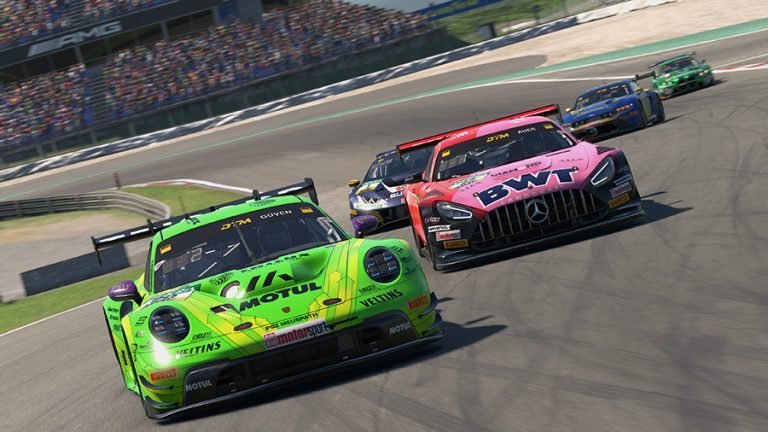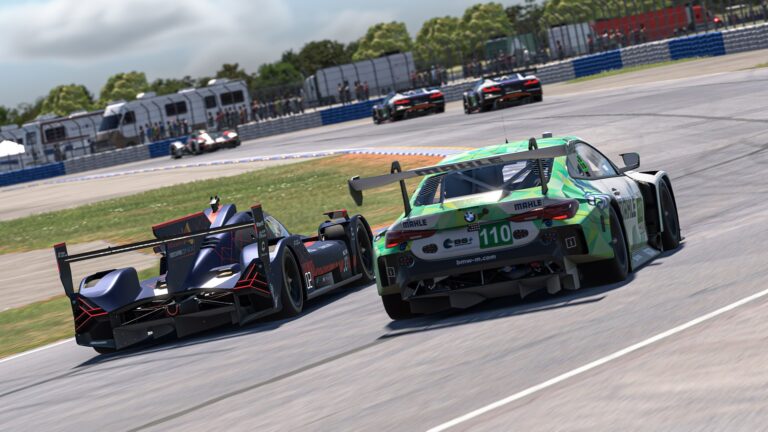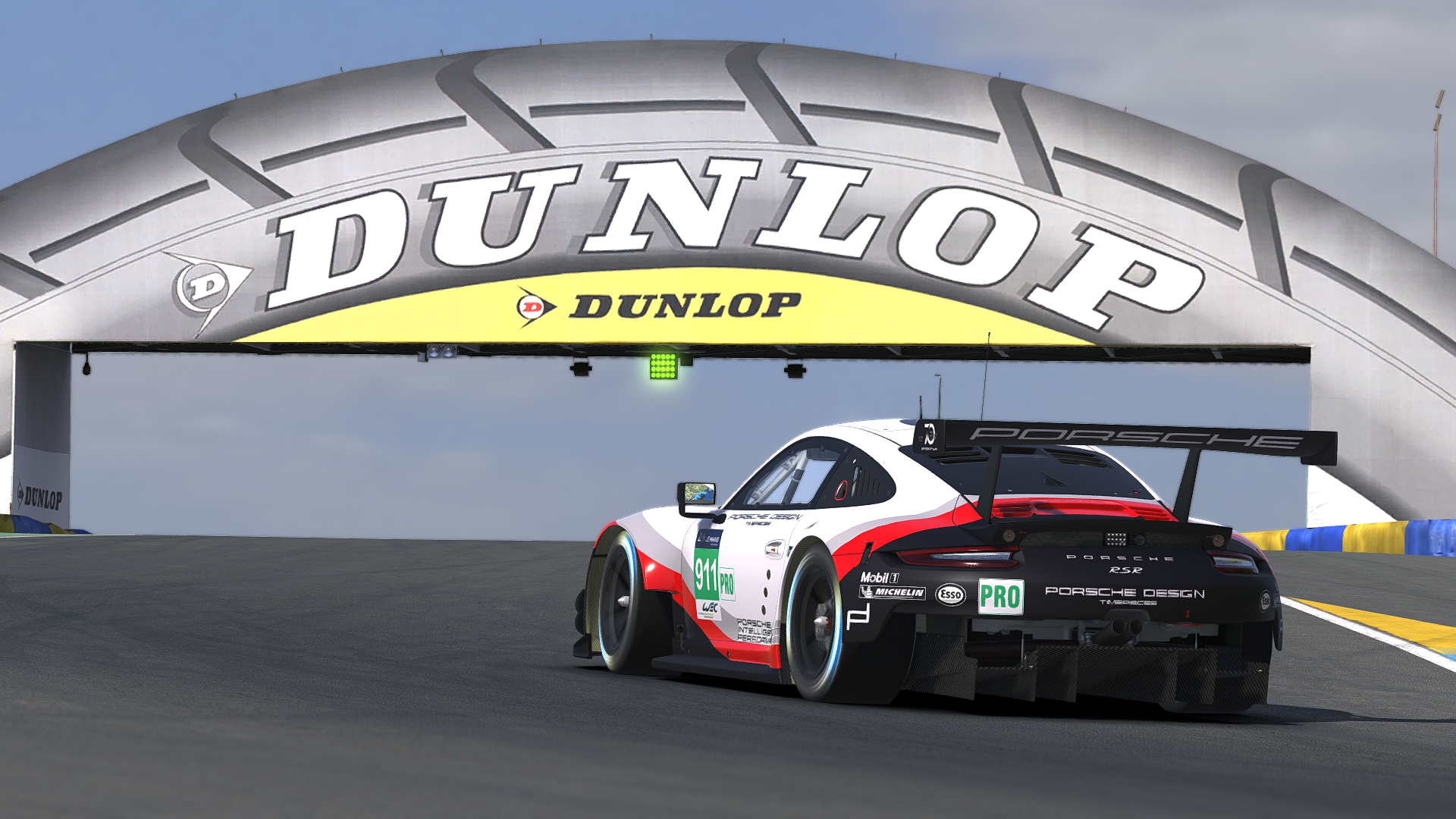
Mastering the Porsche 911 RSR iRacing is a lesson in utilizing mid-engine physics to achieve surgical precision. Unlike the front-engine BMW M8, the RSR rotates from its center point, meaning it is much more sensitive to throttle and brake inputs. To find the podium in the competitive GTE fields, you must learn to trust the aero grip, manage the weight transfer during no-ABS braking, and develop a clinical understanding of how the car’s balance shifts throughout a long-run endurance stint.
Trust the Rotation
The greatest strength of the Porsche 911 RSR iRacing is its mid-corner agility. Because the engine is mounted in front of the rear axle, the car wants to turn. The key is to trust the rotation. In high-speed corners like the Porsche Curves at Le Mans, you can carry significantly more speed than you think by utilizing a small amount of “maintenance throttle.” This keeps the rear end loaded and prevents the car from becoming “light.” However, this requires smooth steering; if you jerk the wheel, you can cause the car to “snap,” a trait that remains a hallmark of the 911 lineage.
No-ABS Braking: The Professional Standard
Driving the Porsche 911 RSR iRacing requires a masterclass in brake modulation. Since GTE rules forbid ABS, you must be your own computer. You should do 90% of your braking in a straight line, but the RSR rewards deep trail braking into the apex. By keeping a tiny bit of brake pressure (around 5%) as you turn in, you keep the nose pinned and help the car find its “point.” If you release the brakes too quickly, the front aero unseals, and the car will push wide. It is a delicate dance of weight transfer that separates the aliens from the field.
- Trail Braking: Keep the weight on the front axle during turn-in to maximize front-end bite.
- Throttle Precision: Use the linear power of the flat-six to roll onto the throttle smoothly, avoiding rear-end snaps.
- Aero Management: Trust the rear wing in high-speed sweeps; the car becomes more stable as the downforce builds.