The debate over iRacing prototype progression comes up any time a GT3 driver looks at their GTP content and wonders whether they should work through LMP3 and LMP2 first. The short answer is no, you do not have to. The longer answer is that the prototype ladder exists for real reasons, and skipping it entirely creates specific problems that are easy to avoid.
What the Prototype Ladder Looks Like

iRacing’s endurance prototype classes run GT3, LMP3, LMP2, and GTP. Each step adds more power, more aerodynamic downforce, and less mechanical forgiveness. GT3 cars are designed to be raced by a wide range of skill levels. GTP cars are not.
LMP3 sits at the bottom of the prototype ladder. It is lighter than GT3, runs less downforce, and introduces a different tire feel. The car is not particularly fast compared to what sits above it, but it is the first class that teaches proper prototype inputs: higher corner commitment, sharper braking, and less room for hesitation mid-corner.
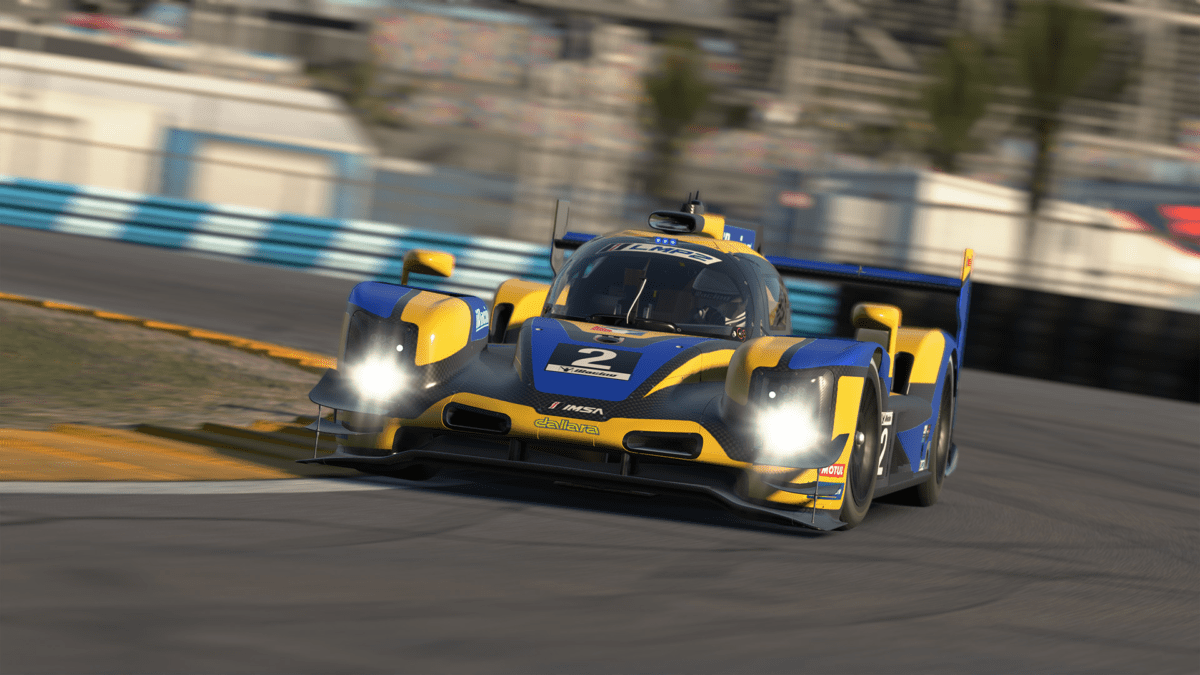
LMP2 is where the step becomes significant. These cars carry more downforce than LMP3, which changes how you approach high-speed corners. GT3 drivers who move straight to LMP2 often describe the first sessions as unsettling because the car demands commitment before you feel ready. That is not a flaw. It is what LMP2 teaches.
GTP sits at the top. Beyond what LMP2 already demands, GTP adds hybrid power deployment. The hybrid system behaves differently depending on circuit and lap phase, and managing it in traffic is a separate skill added on top of everything else the car requires.
What You Learn at Each Level
GT3 teaches consistent race pace. The car is forgiving enough to allow learning through mistakes, which is how most drivers build their sense of tire management, traffic judgment, and stint pacing. Races are long, and the margin for error is relatively generous.
LMP3 teaches prototype inputs. The transition from GT3 is about recalibrating when to apply throttle and how committed your turn-in needs to be. The car is more responsive than GT3 in ways that feel significant in the first few sessions, and that recalibration takes some focused laps to complete.
LMP2 teaches trust at speed. High-downforce corners feel different from anything in the GT3 class. The car grips if you give it what it wants, but unlocking that grip requires a level of commitment that most GT3 drivers have never needed. Drivers who carry GT3 hesitation into LMP2 are consistently slow through the fastest corners, because hesitation is exactly what high-downforce cars punish.
GTP adds hybrid management on top of everything else. If the prototype feel from LMP2 is already sorted, the hybrid system becomes one new thing to learn. If prototype feel is also new, the hybrid is another layer of adjustment on top of an already large transition.

Jumping Straight to GTP
Nothing in iRacing prevents a GT3 driver from jumping directly into GTP. Some drivers make it work. The question is whether skipping the ladder creates gaps that slow development in ways that are easy to avoid.
The main problem with going from GT3 directly to GTP is not the speed. It is the combination of unfamiliar prototype inputs and unfamiliar hybrid management happening at the same time. Each requires attention, and sorting both simultaneously in competitive sessions is significantly harder than learning them separately.
The specific skills gap tends to show up in two places. High-speed corner commitment is the first: GT3 drivers who have not experienced LMP2-level downforce often lift where they should be holding, and on a GTP that hesitation does not just cost time. The car is actively built around committed inputs to work properly. Second is braking technique. Prototype braking points are different from GT3, and the reference from the slower car does not transfer cleanly. Drivers who have spent sessions in LMP2 arrive at GTP with these inputs already recalibrated. Drivers who have not spend their early GTP sessions fighting the car’s natural behavior rather than learning to use it.
Drivers who have run LMP2 before GTP arrive with the prototype feel already calibrated. The hybrid system is new, but the fundamental behavior of the car is familiar. That focuses the adjustment on one area rather than spreading it across several at once, which is a meaningful difference in how quickly a driver becomes competitive in GTP.
The Practical Approach
You do not need a full LMP3 or LMP2 season before racing GTP. A handful of test sessions in each class is enough to build the input calibration that matters. Even five to ten laps in LMP2 gives you a clear reference for what prototype corner commitment feels like, so the first GTP sessions are not also the first time you have experienced that feeling.
What you are investing in by running LMP2 before GTP is not just familiarity with a faster car. It is building the mental model for how prototype aerodynamics create grip and what that grip requires from the driver. A GT3 driver who has never experienced high-speed corner commitment in a prototype carries an incorrect mental model into GTP, and correcting that model while also managing the hybrid system and racing in traffic creates a much steeper learning curve than necessary. The time investment in LMP2 is measured in hours, not weeks. That context pays forward into every GTP session that follows.
The iRacing prototype progression exists because each class teaches something the next class demands. You can compress the timeline, but removing the experience entirely is where drivers develop persistent problems that feel like the car’s fault but are actually a gap from skipping foundational context. A few sessions in LMP2 before your first GTP race is the practical minimum. It is not a large time commitment, and the difference in your first GTP race is significant.