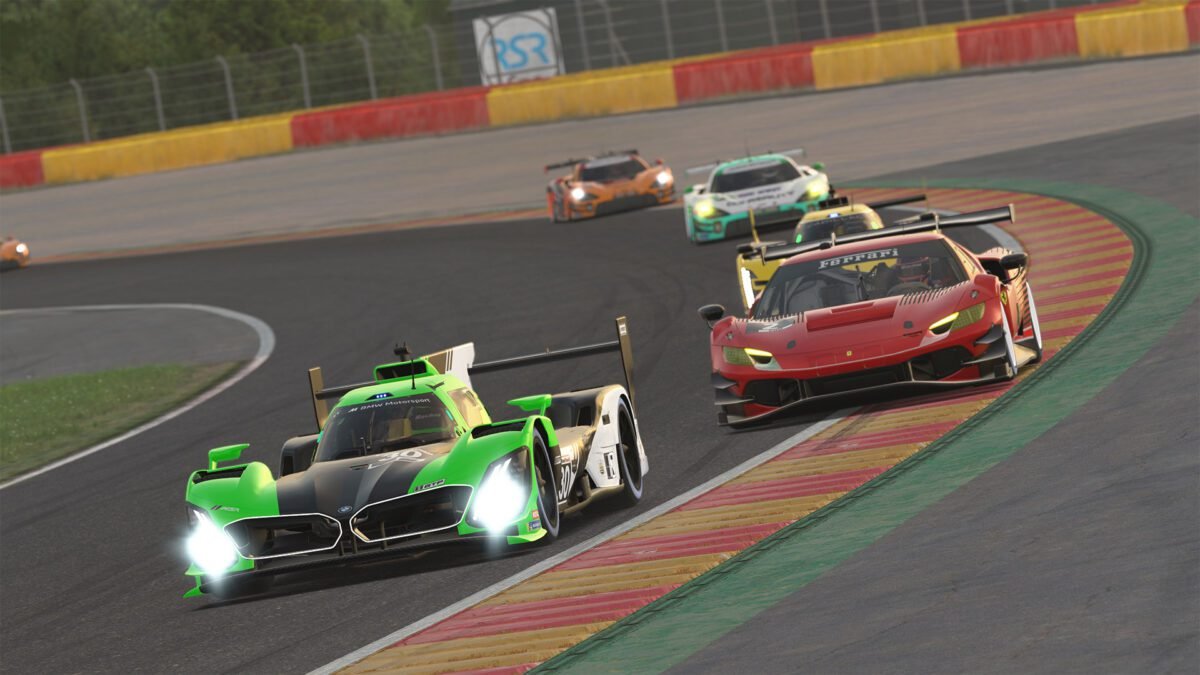
The iTested Series that launched with Season 3 Patch 3 on July 14 is not just another badge-earning opportunity. It is iRacing’s live test of a complex Race Control feature: the iRacing multi-class pace car start system. If you run multi-class events regularly, pay attention. Whether GTP alongside GT3 or LMP2 with GT4, iRacing is changing how your race starts work. This article breaks down what iTested is, why it exists, and how the per-class pace car system actually works.
Also See
➡️ iRacing Season 3 Patch 3 Release Notes
🏁 Official S3P3 Release Notes on iRacing Support
What Is the iTested Series?
iTested is an official, time-limited iRacing series that debuted with Season 3 Patch 3. It runs structured multi-class races under live conditions with one primary goal: real-world data. iRacing needs driver feedback before committing the per-class pace car system to its full multi-class catalog.
Drivers who participate earn a permanent account Award badge. For many iRacers, that is a compelling reason on its own to join. However, the badge is secondary to what the sessions actually produce. Every race generates telemetry and event data. iRacing engineers analyze it to validate the Race Control systems powering the feature.
Internal testing is rigorous, but it has limits. A live session with hundreds of real drivers produces edge cases that no internal environment can fully replicate. Running iTested as an official series exposes those edge cases in the most efficient way possible. Additionally, the badge creates accountability. Because participants earn a reward, the series attracts motivated drivers and produces cleaner data.
The iRacing Multi-Class Pace Car Problem
iRacing has supported multi-class racing for years. However, for all of that time, every class in a multi-class event has followed a single shared pace car. That setup works acceptably in single-class events. In multi-class racing, it creates a visible problem at exactly the moment where the format matters most: the race start.
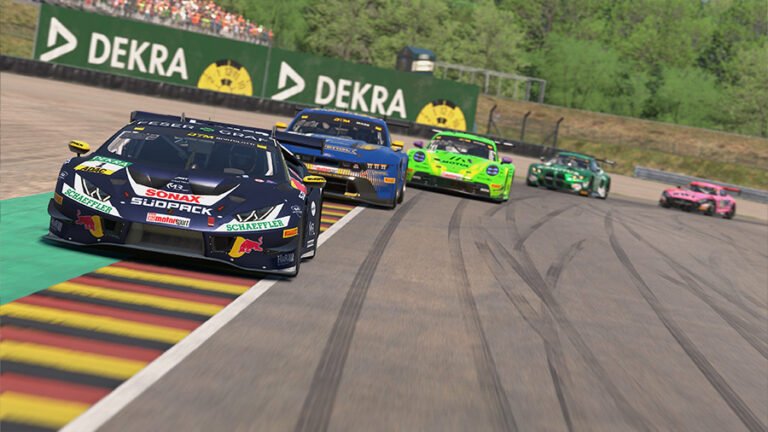
When the same pace car leads both a GTP prototype and a GT3 car at the same speed, those two classes do not naturally belong together. GTP cars race at significantly higher average speeds than GT3 cars. Forcing both to follow a single pace car means one class ends up bunched too tightly while the other is stretched out. Neither field lines up the way it would in a real multi-class event.
The problem also affects caution laps. In real endurance racing, each class maintains its own relative spacing while neutralized behind a pace car. A single-pace-car system cannot replicate that behavior. Because of this, multi-class starts in iRacing have always felt like a compromise. The iRacing multi-class pace car project is the change that addresses this from the ground up.
How the iRacing Multi-Class Pace Car System Works in Practice
The new system assigns a separate pace car to each class in a multi-class event. That sounds like a simple change, but implementing it required rearchitecting how Race Control manages the pace field, class timing, and green flag sequencing across a live race session.
Under the new setup, classes go green in waves with controlled delays between them. The slowest class is typically released first, and faster classes follow in sequence. Each class receives its own independent green flag call, timed to its pace rather than to a single combined moment. GTP cars get a green flag suited to their speed. GT3 cars get a green flag suited to theirs. The two groups no longer have to compromise by rolling together at an awkward shared pace.
In practice, this mirrors how major endurance races actually run. In the IMSA WeatherTech SportsCar Championship, for instance, class separation at the start is standard procedure. Mixing GTP and GT3 at full-pace acceleration creates real safety risk at the first corner. The per-class pace car system brings that same logic into the sim for the first time.
The caution period improvement is similarly significant. With its own pace car reference, each class maintains proper relative spacing when Race Control neutralizes the field. The bunching that commonly happened in single-pace-car caution laps should be substantially reduced. For multi-class endurance racers, that is a meaningful improvement on top of the start procedure change.

What Running an iTested Session Actually Looks Like
An iTested session puts you in a structured multi-class field where the iRacing multi-class pace car system runs live. iRacing designed the series to exercise the feature across realistic race conditions rather than a controlled single-scenario test. That means varied fields, varied tracks, and varied caution situations that stress the system in ways that planned internal tests might not anticipate.
Session availability is intentionally limited. iRacing controls participation so engineers can review data from each event without the volume overwhelming the analysis. When iTested sessions appear on the official schedule, checking the series listing is the most direct way to confirm times and class combinations for each run.
iRacing labels the participation badge “iTested” and it stays on your awards profile after the series closes. It marks drivers who raced in this specific development phase. In the iRacing community, that kind of badge carries real weight. You cannot go back and earn it later, which makes finding a session worth the effort.
What Comes Next for Race Control in iRacing
iRacing’s development team has described the iRacing multi-class pace car work as part of a broader “Race Control” architecture. That system governs every racing rule and procedure in the sim, from the pace lap to pit timing to safety car calls. The multi-class pace car project is one component of what Greg Hill called a “significant new feature.” Hill leads iRacing’s quarterly development updates and says it opens the door to further racing procedure improvements across the platform.
In the May 2026 development blog, Hill explained the team’s cautious preview before the Season 3 build released in June. The underlying Race Control systems needed extensive testing before going into production. He also noted that this architecture enables additional procedure improvements. iRacing has long planned these changes but could not implement them until this foundation was in place. iRacing has not announced those future changes yet, though regular multi-class racers can likely guess at some of them.
Once iTested wraps its data collection phase, iRacing plans to expand the iRacing multi-class pace car system to other official multi-class series. Specific series and timing have not been announced. The pattern is clear. iTested is the gate this feature passes through before it becomes standard in multi-class racing on the service.
Whether you run GT3 versus GTP, LMP2 against GT4, or any other multi-class combination, find an iTested session this season. You are not just earning a badge. You are part of the reason this feature reaches your regular rotation sooner rather than later.