Le Mans is the longest circuit in iRacing, and the Le Mans mistakes that catch drivers out tend to repeat across skill levels. The Circuit de la Sarthe runs 8.5 miles through the French countryside and packs in every type of corner you’ll find in sim racing: long fast sweepers, slow hairpins, tight chicanes, and a dead-straight three-mile run to Mulsanne. Nail the track and it’s one of the most satisfying laps in the sim. Flub any one of five key sections and you’re in the barriers, or scattered across the road in front of a closing LMP2 before you can react.
Also See
➡️ iRacing IMSA Endurance Fuel and Tire Rules in Season 3
🏁 Circuit de la Sarthe: Official Track Guide
The good news: most of these Le Mans mistakes are fixable with a clear picture of where they happen and why. Here’s where iRacers consistently go wrong at Le Mans, section by section.
Le Mans Mistakes at the Ford Chicanes
Most drivers know the Ford Chicanes are important. Most drivers still blow them. The first chicane catches people who brake too late and arrive with too much front weight, forcing them to either tag the kerb at the wrong angle or swing wide and drag the car through the second element sideways. The fix: brake a car length earlier than feels right, let the front load properly, and be settled before you reach the first apex.
The kerbs at both Ford chicanes are drivable, but they punish angle. Come in square, ride the inside kerb flat, and get a clean exit onto the straight. Come in at the wrong angle and the kerb will snap the rear. In multiclass racing there’s a second layer of difficulty: incoming prototype traffic closing hard at the end of the Mulsanne Straight. Commit to your own line first. Let the faster car choose where it goes.
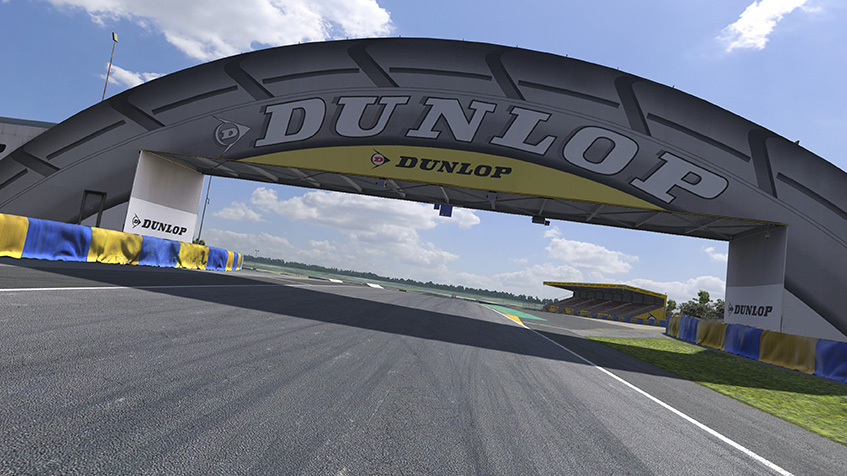
Dunlop Curve and the Esses
Dunlop looks harmless. That’s the problem. Most drivers lift earlier than they need to and carry less speed than the track allows, which sounds minor but stacks up over a four-hour stint. The Esses that follow reward smooth, connected inputs. Drivers who saw at the wheel through the direction changes send small oscillations through the chassis that bleed cornering speed at the exact point where the track wants you flowing.
Take one direction change at a time, with the smallest steering input that completes the arc, and trust that the car will follow. Because the Circuit de la Sarthe is so long, time lost through the Esses tends to get overlooked on replays. The sector delta tells a different story.
Indianapolis Corner
Indianapolis is the most misread corner at Le Mans for iRacers who haven’t logged many laps on the circuit. It looks like a wide, generous, open right-hander and it is, but the instinct to swing wide on entry and open the steering early produces understeer at the apex and a scrubbing mid-corner exit that kills momentum all the way to Arnage.
A slightly delayed turn-in with a tighter entry lets the car rotate naturally. The exit speed you recover more than compensates for the extra distance on the entry. It feels wrong for the first twenty laps. After that it clicks, and your Arnage split times will confirm it.
The Porsche Curves and the Le Mans Mistakes That End Races
The Porsche Curves are where Le Mans gets personal. It’s a long, progressively faster sequence that demands commitment because a lift mid-corner makes things worse, not better. Two errors end laps here: lifting when the car starts to move around, and running a line that was learned in a different car class.
At the speeds the Porsche Curves require, chassis movement is expected. The car is working. A lift creates a load transfer that upsets the balance worse than holding the throttle and riding it through. This is also where multiclass incidents cluster when a faster car closes faster than the driver ahead expects.
On line choice: GTP and LMP drivers use a different apex and exit path than GT3 and GT4 drivers. If you switched classes recently, don’t assume your reference points transfer. They don’t, and the Porsche Curves will tell you within half a lap.
Arnage
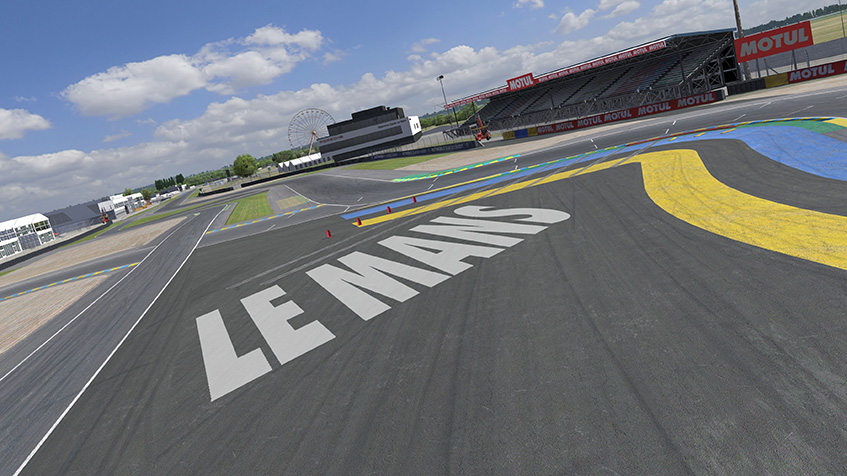
Arnage is a slow, tight hairpin that feeds onto one of the longest straights. Everything about it signals that exit speed is critical. Yet the most common Arnage error is poor braking execution: drivers stab the brakes, feel the car getting light, release, stab again, and arrive at the apex with no clean reference and uncertain speed. The result is either understeer that widens the exit or an overcorrection that kills the inside rear tire.
One clean, progressive brake application, trailed gently into the apex. Keep the throttle off until the nose is pointed at the straight. The long run after Arnage punishes a poor exit for five full seconds. A clean exit gives all of that time back.
Traffic and Multiclass Racing
No section of Le Mans causes more retirements in iRacing than traffic mismanagement. The circuit is long enough that gaps open and close in ways that catch drivers who aren’t actively working their mirrors. The incidents that end Le Mans races here typically happen at Dunlop, at the Porsche Curves exit, and at the Ford Chicanes, nearly always because one driver assumed the other had seen them.
In GT class cars: establish your mirror discipline before Mulsanne Corner, hold it through the Porsche Curves, and never make an unpredictable move at Dunlop. The closing speeds of LMP cars make them look stationary until they’re suddenly alongside you. In LMP class cars: GT drivers are fighting their own battle. Don’t expect a textbook yield. Call your move early and build in a margin.
Avoiding Le Mans Mistakes in Tire Management
Le Mans is long. However long you think your stints should be, the tires have an opinion on that too. Most iRacers who are new to the circuit push through Dunlop and the Porsche Curves at a pace that bleeds rear tire life faster than the stint plan accounts for. If your rear tires are going off at three-quarter stint distance and you were on pace for the first half, the Porsche Curves exits and the Ford Chicanes are where you’re spending them.
Smooth rotation, clean exits, and minimal corrective steering. That’s tire management at Le Mans. The fast drivers aren’t always the ones who post the quick early-stint splits. They’re the ones still on pace an hour in, with tires that feel the same as they did at the start of the stint.