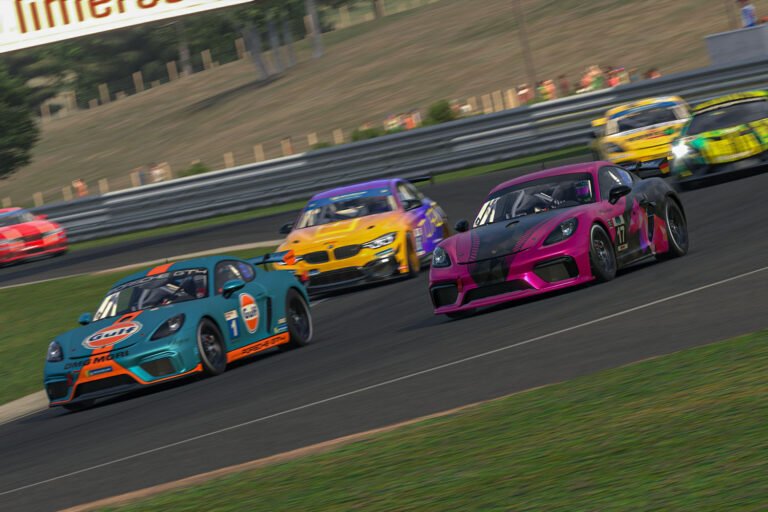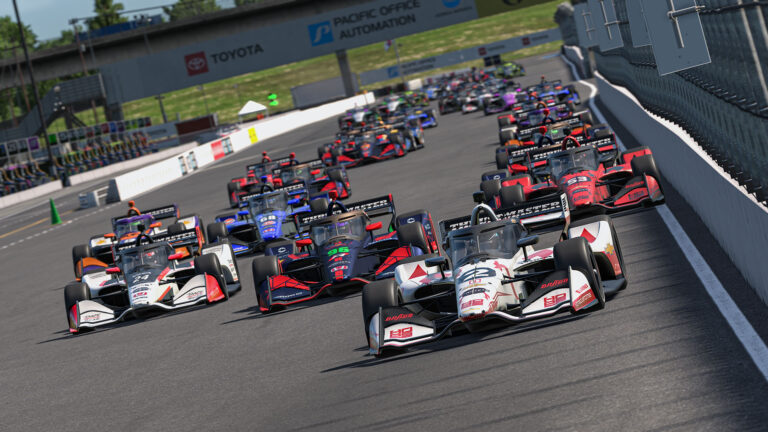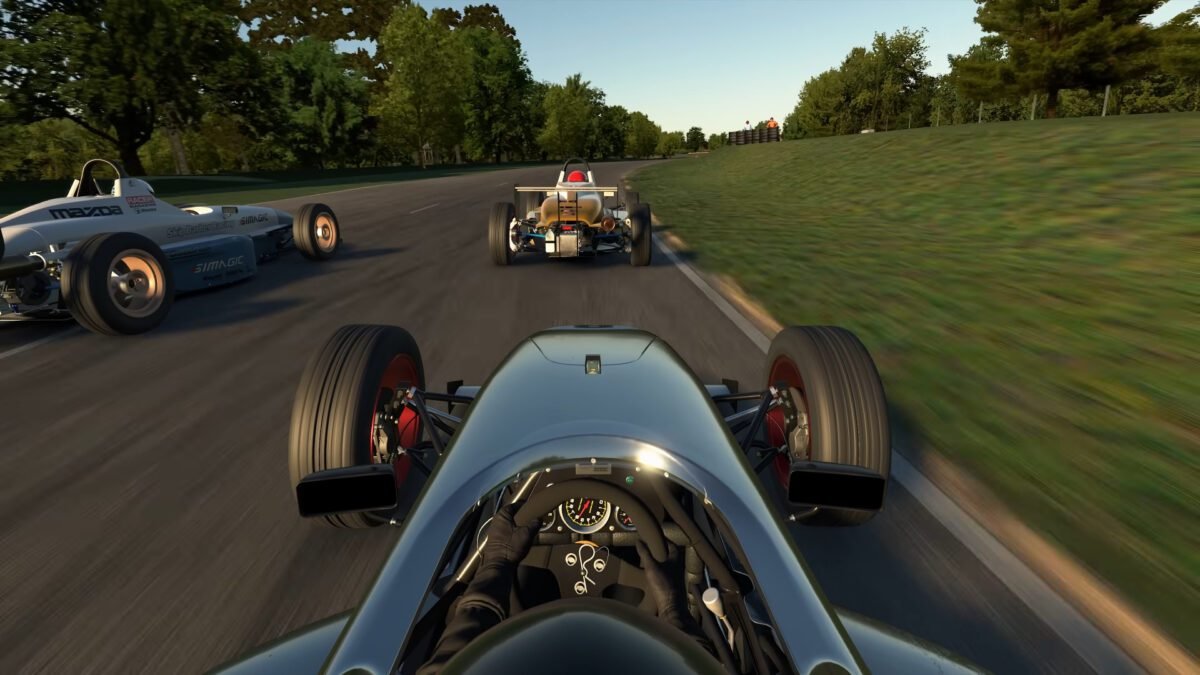
Defending in iRacing gets drivers into more trouble than overtaking does. Most incidents under defense are not caused by aggression. Instead, they happen because of indecision. A driver picks a vague line, moves late, or reacts without a plan. The car behind has no idea where you are going, so contact follows. This guide breaks down what predictable defense looks like. You will hold positions cleanly without ending up in the protest queue.
Also See
➡️ Overtaking in iRacing: How to Pass Cleanly and Stick It
🎮 Virtual Racing School: Racecraft Modules
When to Defend and When to Protect the Exit
Many drivers confuse two things: defending and protecting the exit. Both approaches work well when defending in iRacing, but only when used separately. However, mixing them up in the same corner is where trouble starts.
Defending means picking a side before the braking zone. You move to cover a line before the attacker commits to it. After that move, the line is yours for the rest of the corner. Protecting the exit, on the other hand, means using the inside to carry a stronger drive onto the next straight. Because you run wide on entry to tighten the exit, you force the car behind into a longer, slower route.
Both approaches work in different situations. The problem comes when drivers try to use both at once. You cannot cover the inside, leave a gap mid-corner, and then squeeze it shut at the exit. That sequence causes contact every time. Furthermore, it earns a penalty even when it does not result in a full incident.
The simple rule: pick one. Cover the inside if that is your approach, and hold it through the exit. Alternatively, protect the exit by taking the inside naturally on entry and staying there. Once committed, do not adjust the line.
When Defending in iRacing, Decide Before the 200-Meter Board
The most common defensive error is waiting too long to move. By the time you react to a car pulling alongside you, both of you are committing to lines at the same time. That overlap is exactly where contact happens.
Instead, the decision needs to come earlier. When a car pulls out of your slipstream and begins to close the gap, start reading the situation. Is the gap closing fast? Is the car moving to one side? Act while you still have clear separation between the two cars.
One clean move before the braking zone is fair and unambiguous. After that move, hold the line completely. The car behind sees exactly where you are going and can plan accordingly. Changing lines a second time in the braking zone is blocking in the iRacing sporting code, regardless of intent.
A useful mental cue: decide before you reach the 200-meter board. By the 100-meter mark, both cars should already be committed to their lines. Anything that happens after that is the result of the positioning you set up before. If you want to go deeper on reference points and braking-zone spacing, the Virtual Racing School racecraft modules cover the concepts in real detail.
Leave Usable Racing Room
The phrase “leave a car’s width” shows up in every sporting code, and iRacing is no different. However, the more useful framing is this: leave usable room, not just theoretical room.
Squeezing a car to the edge of the track technically leaves room. But if the inside line requires the attacking driver to ride the rumble strip and exit at an angle that guarantees a spin, that is not usable. A driver’s job when defending in iRacing is to hold a line, not to channel the other car off the circuit.
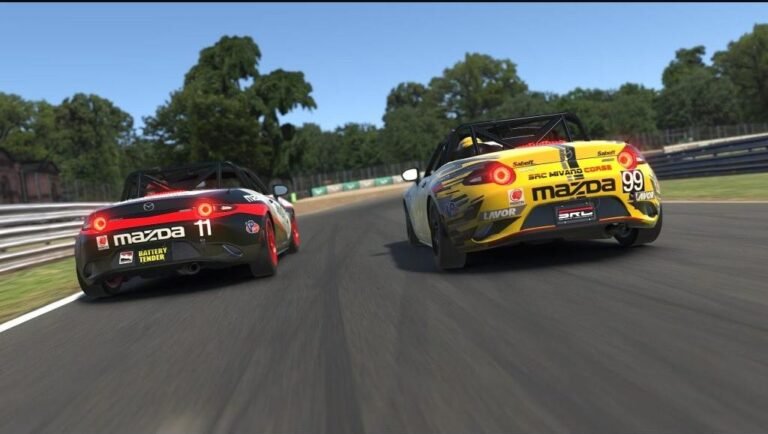
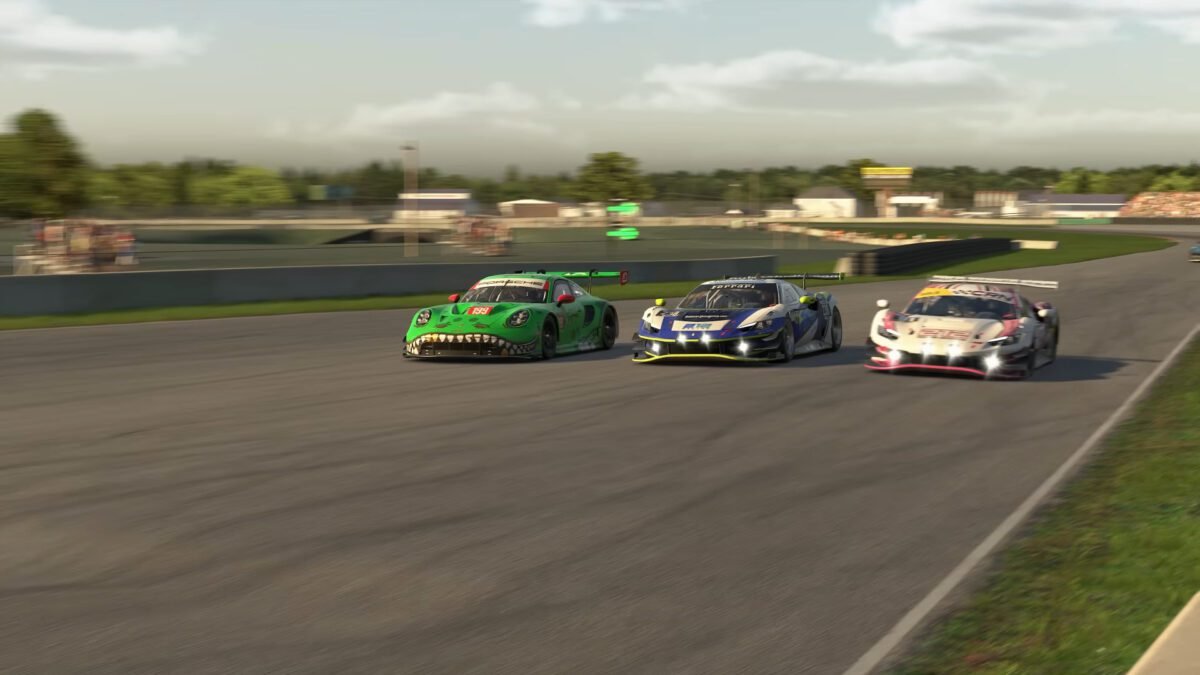
Also, when a nose is already overlapping your rear quarter before the apex, that car has earned the inside. They are alongside you, which means they have a legitimate claim to the corner. At that point, the corner is shared. Leave them room to track out cleanly, and then fight again on the next straight.
Squeezing out an overlapping car rarely holds position anyway. What it usually does is cause contact, damage your own car, and hand them the position through a penalty stop. The math never works in your favor, so leave the room and stay clean.
Multi-Corner Defending in iRacing
After holding position cleanly through one corner, many drivers immediately start defending the next one. That back-to-back approach is one of the most common patterns that ends in protests and SR loss.
The attacker accepted a result in the first corner. They backed out or took the outside line. In the next corner, they are no longer actively attacking. So defending again straight away looks like blocking rather than racing, even if you have the position.
After a clean hold, give it two corners. If the attacking car comes alongside again into the next braking zone, then defend. But if they are simply following at a reasonable distance, leave the line open and focus on maintaining your own pace.
On tracks with long straights into multiple corners, one defensive move at the start of the straight is usually enough. That single choice tells the driver behind which line you are protecting and gives them time to accept the situation before the braking zone arrives.
When Multiple Cars Are Attacking
When two or more cars come at you at the same time, the standard defensive playbook stops working cleanly. You cannot cut off two cars going for opposite sides of the track simultaneously.
In this situation, the better approach is often to take the outside line and let the group work it out behind you. Two drivers chasing each other into the same corner will frequently cause their own incident. Meanwhile, you go through cleanly and often come out still in contention.
Holding position against impossible odds by weaving or braking unpredictably almost never works. Instead, it leads to a multi-car incident where you take the most damage and drop the most positions. Pick your battles and stay clean.
When Defending in iRacing Crosses the Line
There is a clear difference between defending and blocking, and the iRacing sporting code draws that line explicitly. Blocking means making more than one directional move on the same straight in response to an attacker’s movement. Defending is one clear lane choice, made before the attacker fully commits to their line.
Similarly, any move targeting a car that already has its nose alongside you crosses into dangerous driving. An overlapping car has rights to the corner. Forcing them out of that space causes incidents regardless of who moved first.
Late braking designed to close off a tow also falls outside the rules. This is retaliation, not defense. Protests from this type of move almost always result in penalties because the video evidence is difficult to argue with.
A useful test: watch the replay from a neutral overhead angle. If an observer watching for the first time would call the move unfair without any context, it probably was. Predictability is the standard for fair racing in iRacing. If the car behind could have reasonably read your line, the defense was clean.
The Practice Drill
Defending in iRacing improves faster with deliberate practice than with random online laps. Set up an AI race at a road course, get into a position where a car is pressing you into a braking zone, and commit to a defensive line before they reach your rear bumper. Oval tracks work too, but road courses give you more defensive scenarios per lap.
After your move, do not change the line regardless of what the attacker does. If they get through, let them through. Then check the replay: was your move early enough to be clear? Did you leave usable room? Was the line predictable from outside the car? Practicing this commitment away from real-race pressure trains the decision-making loop far faster than competitive laps alone. By the time you face the situation in a real race, defending fairly in iRacing becomes the automatic response rather than a frantic reaction. For context on what the attacker is thinking, the Overtaking in iRacing guide covers that side of the battle. Also check Your First iRacing Race if you are still building the fundamentals.