iRacing Physics Islands is the name for a major architectural change to how iRacing’s physics engine processes a race. The core physics update loop is now refactored to divide and parallelize its workload across multiple CPU threads. In full-field races, iRacing says this reduces CPU physics overhead by more than 50 percent.
It is the biggest change to iRacing’s simulation core in years, and most drivers will never see it working. They will only feel it: smoother frame rates in packed fields, fewer stutters when twenty cars pile into turn one, and AI grids that no longer melt mid-pack CPUs.
Also See
➡️ iRacing Season 4 Track Rebuilds: Road America, Mid-Ohio and Milwaukee Mile
🎮 Official iRacing August 2026 Development Update
What iRacing Physics Islands Actually Does
iRacing’s physics simulation has historically run on a single thread for its core update loop. Every car, every contact, every tire calculation moved through that single-threaded pipeline in sequence. As field sizes grew and multiclass events added more active physics objects to track simultaneously, the CPU cost scaled accordingly. Single-core speed gains slowed down years ago, and at some point the thread could not keep up.
The Physics Islands refactor slices the physics workload into parallel jobs that run across multiple CPU threads at the same time.
The name “Physics Islands” describes the conceptual model. A car by itself on track is its own island. Two cars dicing for position form an island together, because their physics interact. But two separate battles happening at opposite ends of the circuit do not affect each other, so there is no reason to simulate them one after the other. The engine figures out which objects interact, groups them into islands, and hands each island to a different CPU thread. When the tick ends, everything syncs back up. iRacing is applying the same approach modern game engines use for physics at scale to its own custom physics core, which is a much harder job because sim racing physics demands far more precision than a typical game.
iRacing Physics Islands: The 50% CPU Overhead Reduction
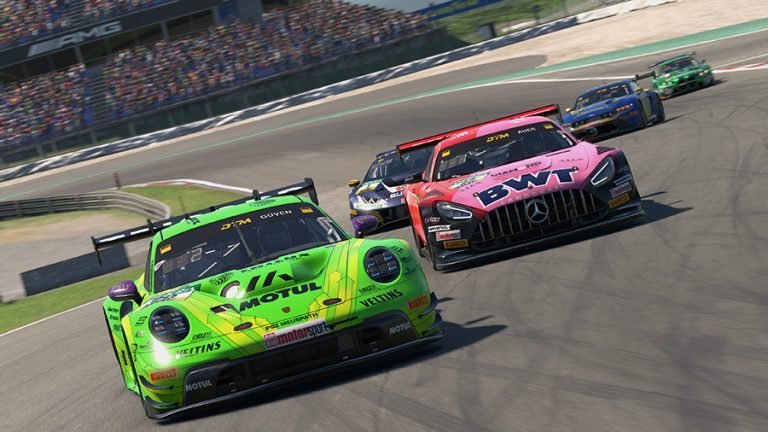
iRacing claims a 50-plus percent reduction in CPU physics overhead in full-field races. That number applies to the physics processing specifically, not overall frame rendering time, which involves other systems. A 40-car IMSA grid or a 50-car NASCAR race puts a significant physics calculation load on the CPU. Cutting it in half frees headroom for other systems and reduces the risk of physics hitching under heavy load.
What You Actually Feel
What you will not feel: any difference in a solo test session. One car was never the bottleneck, and iRacing is clear that single-car crispness is unchanged. The car does not drive differently. Your setups still work. This is purely about the engine keeping up when the track gets crowded.
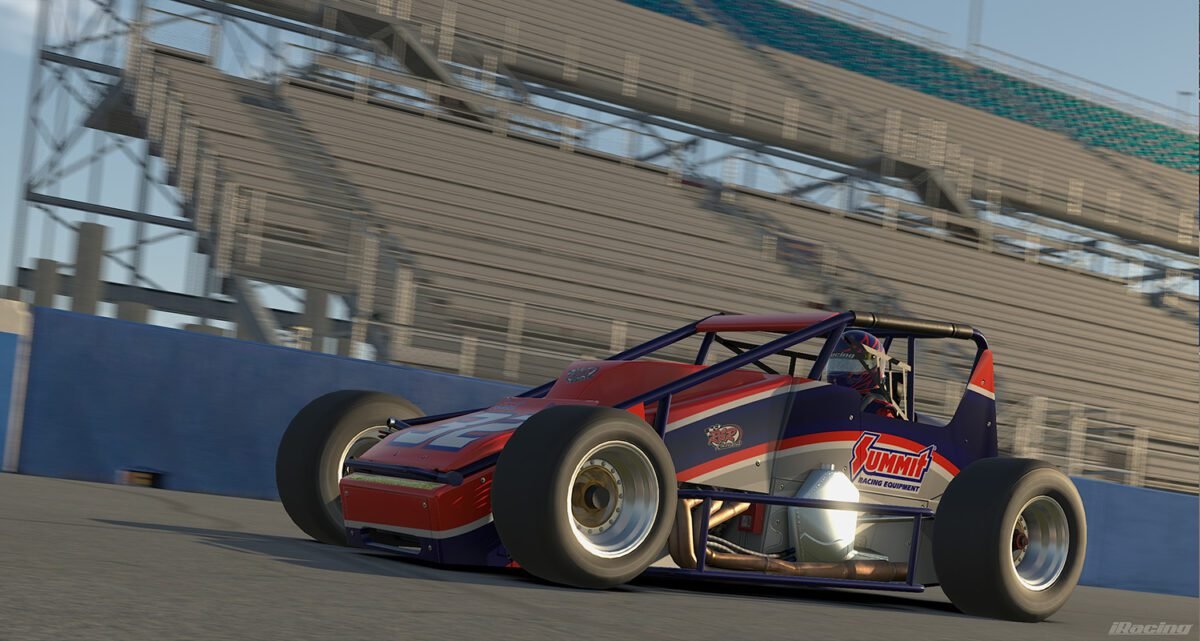
The practical wins are real though. Big AI grids become genuinely usable on mid-range hardware. Multiclass endurance races hold frame rate through the night stints when traffic is worst. And if you race on a CPU that was borderline before, you just got headroom you did not pay for. Short ovals with bumper-to-bumper racing and events with frequent contact, where collision resolution adds to the load, should feel the difference most.
What iRacing Physics Islands Enables in the Future
iRacing describes Physics Islands as the foundation for the next phases of the physics roadmap: higher physics tick rates, tighter input sampling, and faster force feedback update loops. These are not announced Season 4 features. They require this architectural foundation before they become feasible at scale.
A higher physics tick rate means the simulation calculates car state more frequently per second, which improves the accuracy of fast events like curb strikes, contact, and rapid steering inputs. Tighter input sampling would reduce the latency between your hardware input and the physics engine, which matters most for force feedback response and precision braking.
Read that carefully. The end goal is not just smoother frames in big fields. It is a physics engine that samples your inputs more often, updates force feedback faster, and simulates the car at a finer grain. Physics Islands is the structural work that makes all of that possible without melting your CPU. The frame rate gains are the immediate payoff. The tick rate gains are the real prize, and they are still coming.
FFB and Force Feedback
The iRacing development update also references faster FFB loops as a future possibility enabled by Physics Islands. FFB output quality depends on how often the physics engine generates new data for the wheel to process. A faster physics loop means the FFB signal updates more often, which reduces the degraded feeling of force feedback in complex situations. Again, this is a future direction, not a Season 4 feature.
Hardware That Benefits Most
Physics Islands has the most visible effect on CPUs previously bottlenecked by the single-threaded physics workload. Modern processors from both Intel and AMD have multiple high-performance cores that were underutilized by iRacing’s existing physics loop. With the workload distributed across cores, systems with four or more physical performance cores benefit most in large-field racing. Systems that were already CPU-limited in 40-car multiclass events should see the most meaningful frame rate improvement.
For higher-end systems that were not CPU-limited, the effect is available headroom rather than an immediate improvement. That headroom enables the future roadmap items: higher tick rates and tighter input sampling require more total CPU budget, and Physics Islands creates that budget by making the existing workload more efficient.
Why This Took Time
Parallelizing a physics simulation is not a simple refactor. Physics objects can interact with each other, and interactions between two objects need to be computed in a way that both objects see correctly. A naive parallelization can produce race conditions where two threads compute the same interaction from inconsistent states. Physics Islands handles this by identifying which cars are not interacting and simulating those in parallel, while interacting cars still move through a consistent sequence. Getting this logic right without introducing artifacts in contact resolution or tire physics is the difficult part.
The fact that iRacing describes the physics results as deterministic and consistent with the previous implementation is a meaningful statement. The physics model has not changed, only its execution model. A lap time on the updated system should match what the same lap produced on the old system. This matters for competitive fairness: a change in physics execution that altered physics results would affect setup validity and car behavior across the entire car catalog.
Two Smaller Physics Changes in the Same Build
Season 4 shipped two more physics tweaks worth knowing. Fuel mass now affects the car’s center of gravity more accurately, which matters most in long stints as the tank empties and the balance shifts. And tire preparation now happens on every reset during lone qualifying sessions on road courses, instead of only the first time you join the world. Small stuff, but the kind of correctness that adds up over a season.
What Changes on Day One of Season 4
When Season 4 launches, Physics Islands ships as the new physics architecture. The user-facing change is reduced CPU load in full grids. You do not need to configure or enable anything. The simulation runs the same physics model you know, now processed across multiple threads. iRacing’s cars, tire models, and driving behavior are unchanged.
For systems that were previously CPU-bound in large races, this is a meaningful update. For high-end systems that were not CPU-limited, the effect is headroom for future improvements. Physics Islands is the kind of low-level change that makes everything built on top of it better over time.