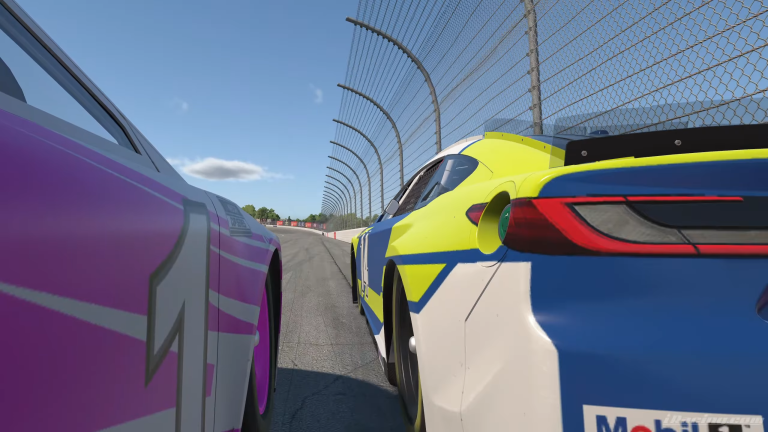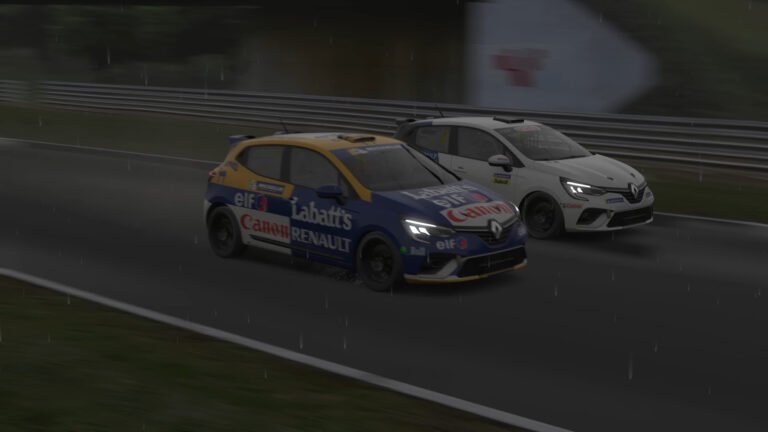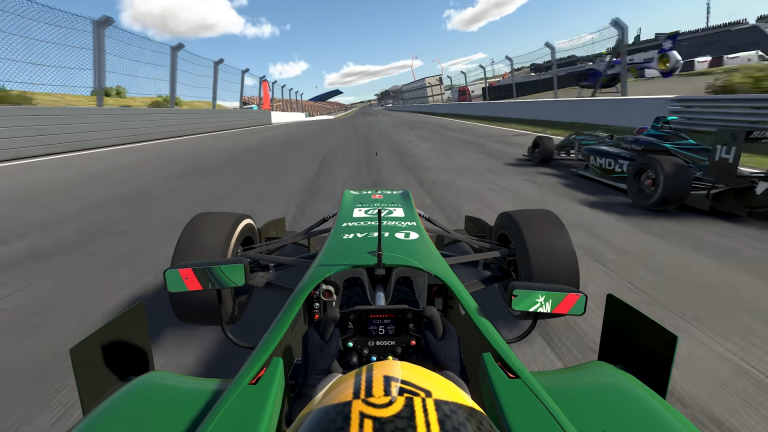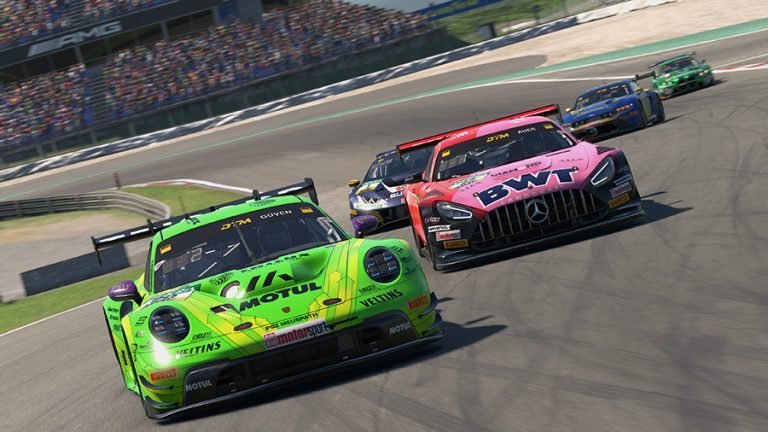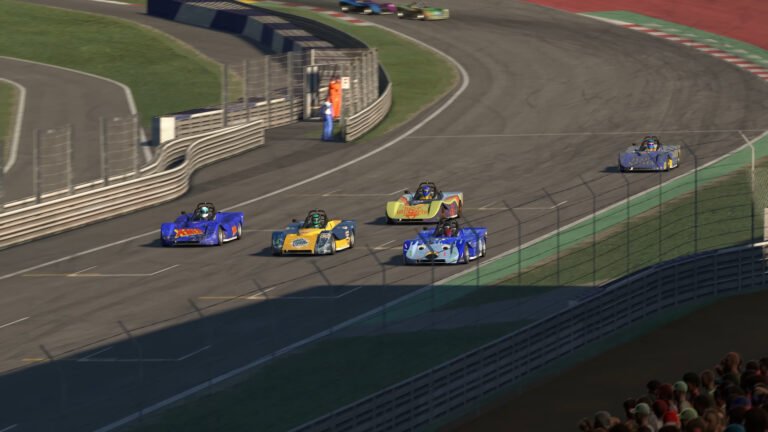
Every iRacer starts the same way: survive the race. Stay on track, avoid contact, and don’t be the one spinning out of turn two on lap one. For a long time, iRacing consistency is how you grow. Your Safety Rating climbs, your iRating ticks upward, and progress feels real. Then you hit a wall. The races get tougher, the splits get faster. Clean laps that once put you in the top half now barely keep you out of last. At that point, something has to change.
Also See
➡️ What a 6000-iRating Sportscar Coach Learned About Going Fast in iRacing
What iRacing Consistency Actually Earns You
iRacing consistency does real work, especially in the early stages. Safety Rating is the gatekeeper for license advancement, and you cannot move from Rookie to D class, or from D to C, without keeping it positive. Clean races, not necessarily fast ones, build that foundation.
More than that, consistency controls attrition. Most races, particularly at lower license levels, are decided as much by who survives as by who is actually fastest. In a 20-car field, five cars might make contact on lap one. Another three might spin through pit cycles. Two more will push too hard late and put themselves in the wall. The driver who simply does their job and stays in their lane often finishes where they need to finish, without being the quickest car on track.
That is a real skill. Staying calm in chaotic traffic, knowing when not to defend a position, recognizing when a pass isn’t worth the risk. These habits pay off consistently across an entire season. iRacing consistency at the entry level is what separates the Rookie driver from the D-class racer who actually knows how to manage a race.
So it’s not a phase to hurry through. However, it is a phase that ends. And most iRacers don’t notice when they’ve moved past it.
When iRacing Consistency Stops Being Enough
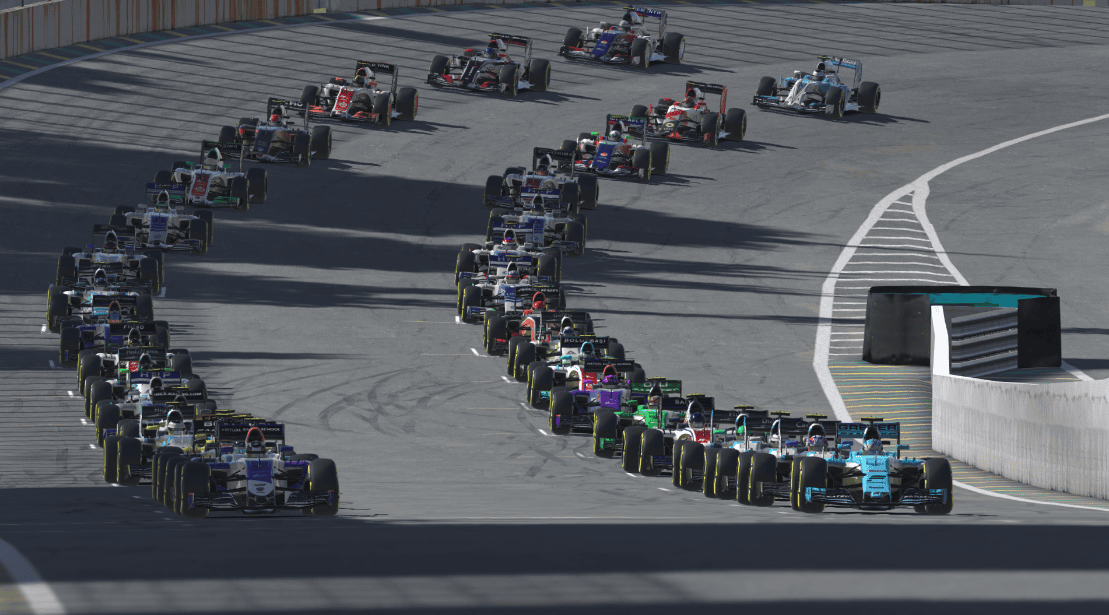
The problem is that most iRacers improve their race craft before they improve their raw pace. Eventually you push into C class, or further into B, and the attrition effect shrinks. The other drivers are also clean. They also know not to crash on lap one. Now the field is competitive even after the opening chaos settles, and the gap you used to close with patience is a pure pace gap.
Fixed setup series make this especially obvious. When everyone in the session runs the exact same car, the same tires, and the same setup, there is nowhere to hide. The driver who finishes tenth is tenth because they are slower. Consistency gets you to the finish. It does not get you on the podium.
You also notice it in qualifying. At entry levels, many iRacers skip qualifying or don’t take it seriously, because grid position matters less when the field sorts itself out on lap one anyway. In C and B class, qualifying starts to matter. A clean side of the grid, a front-row starting position, or even a single row of clear air can flip a result. That requires outright pace, not just race management.
The ceiling also shows up in endurance events. A driver who is consistently three-tenths off the pace will lose more than two minutes over 100 laps. No amount of clean, incident-free driving recovers that deficit when the leading cars are also running cleanly. So the math doesn’t lie: patience has a ceiling, and pace does not.
Finding Where Your Pace Ceiling Actually Is
Most iRacers don’t know exactly how slow they are. They have a general sense of where they stand, “usually midfield,” but haven’t checked their lap times against a concrete target. That is the first thing to fix.
Pull your lap times from your last five races at the same track. Then look at the winner’s lap times in those same sessions. The gap between your average lap and theirs is your actual pace problem, and it is likely bigger than you expected. A two-second deficit on a 90-second lap is roughly 2.2%. Over 40 laps, that’s more than a minute and a half in raw pace deficit before anything else goes wrong.
From there, the work shifts. Solo practice at a single track, with a specific lap time target, is more useful at this stage than entering more races. Study the data. iRacing’s built-in telemetry shows your speed traces, braking points, and throttle application. Tools like Virtual Racing School let you compare your inputs against a benchmark driver on the same track, which is one of the fastest ways to find where time is hiding.
The adjustments are almost never dramatic. Usually it comes down to one corner where you’re too cautious on the exit, one braking point that’s half a car length too early, or one section where you lift when you don’t have to. Because pace rarely lives in one dramatic change. It lives in a handful of small ones.
Balancing Pace Work Without Losing Race Craft
Chasing pace creates its own trap. iRacers who decide to go faster often do it by braking later and carrying more speed into corners. That is exactly how you build understeer, lose the car, and wreck. Incident points go up. Safety Rating drops. And the reason you were chasing pace in the first place was to improve results, not to put yourself back into a lower class.
The better approach is to work on pace in offline practice, not in races. Race pace and qualifying pace are different things. You’re not trying to set a one-lap hero time under race conditions. You’re trying to close the gap between your sustainable race pace and the field’s sustainable race pace. That closing has to happen gradually and off the race grid first.
When your solo practice times are consistently within a second of the session leaders per lap, bring that back into races carefully. One better corner per lap produces a measurably better result over 30 laps. Because now you’re doing what you always did, racing cleanly and managing the race, except your baseline is faster. The two things reinforce each other when you build them in the right order.
iRacing consistency got you this far. It keeps your Safety Rating intact and helps you survive the races that clean out everyone else. But if you’ve been consistently midfield for months and the same drivers keep pulling away, more clean laps aren’t the answer. Finding the pace to make those clean laps count is.