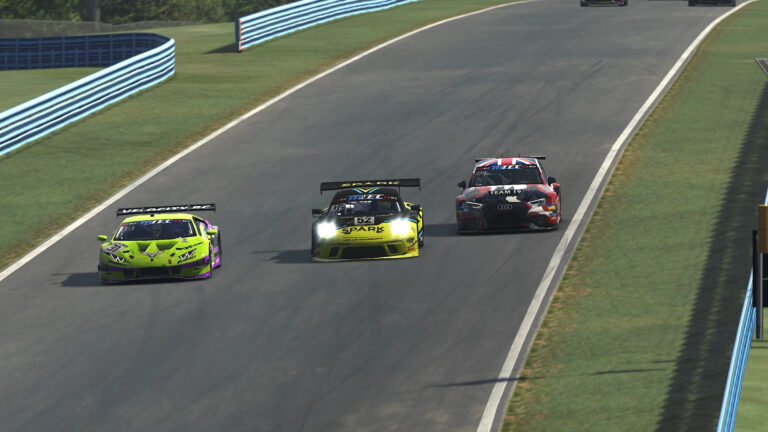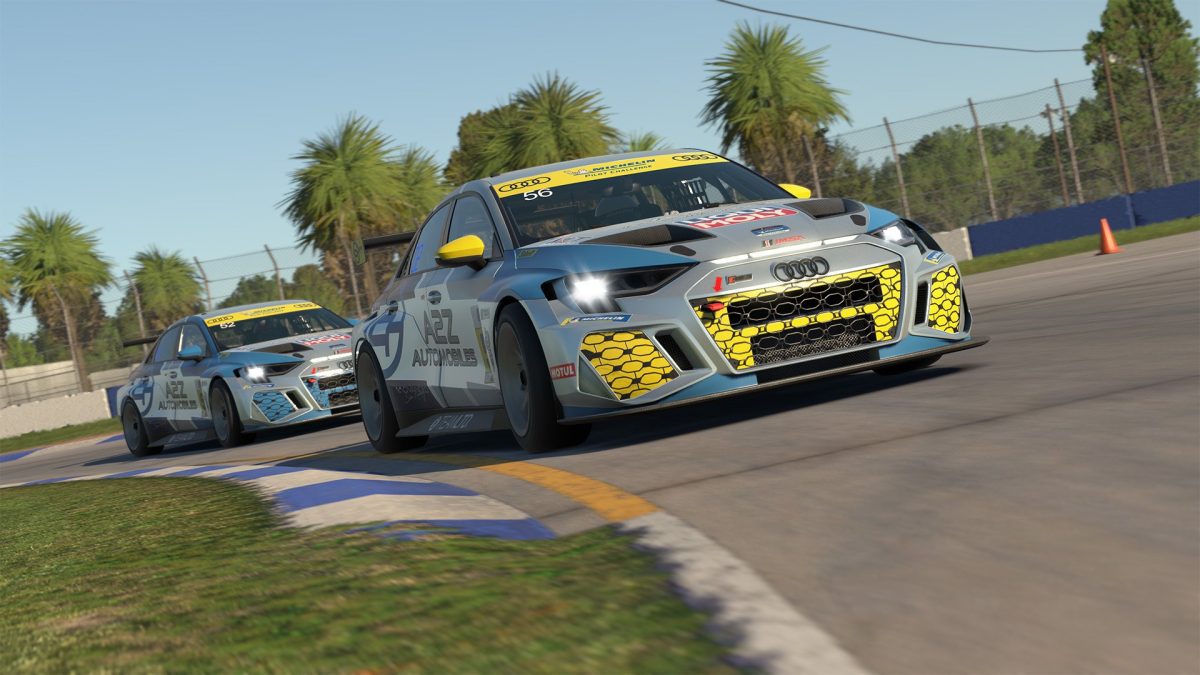
The Audi RS3 LMS Gen2 TCR is one of the most satisfying cars to learn in iRacing, but it demands a different approach from most machinery on the service. Front-wheel drive changes everything, from how you brake to how you apply throttle to how you manage tire life across a stint. This guide is for iRacers picking up the RS3 Gen2 for the first time and wanting a head start on driving technique and basic setup.
Understanding FWD Racing in iRacing
Most iRacing cars are rear-wheel drive. The GT3 cars, the formulas, the prototype classes: you manage oversteer, keep the rear stable, and use the throttle to rotate the car on exit. With the Audi RS3 LMS Gen2, the rear is passive. The front wheels steer, accelerate, and carry most of the braking load. That changes the entire balance of the car and the mental model you need to drive it well.
The most common mistake newcomers make in FWD cars is trying to drive them like RWD machines. Too much entry speed causes understeer rather than rotation. Getting on the throttle too early causes the front tires to scrub instead of pull. In a RWD car, balancing the rear is the primary challenge. In an FWD car, managing front-tire saturation is the main job. The quicker you internalize that difference, the quicker you’ll find pace.
Starting With the Default Setup
The RS3 LMS Gen2 ships with a solid default setup. For your first sessions, resist the urge to tweak it. Drive it stock and focus on understanding how the car responds to your inputs.
Pay attention to front tire temperatures at the end of a stint. If the outer edge is consistently much hotter than the center, your camber settings may need attention. If the inner edge is overheating, you might be carrying too much steering lock through corners, which is a technique issue before it’s a setup issue.
Additionally, brake bias is worth understanding early. The default setting works for most drivers, but if the car feels nose-heavy under hard stops, a small shift toward the rear helps. Equally, if the rear is stepping out under braking, shift bias forward slightly.
Tire pressures are best checked at the end of a session rather than the beginning. TCR tires build pressure as they heat, so cold numbers are misleading. Target the recommended hot pressures and work backward from there. Once you’ve run 10 or more consistent laps on the default, you’ll have a clearer picture of what the car actually needs. That’s when adjustments become useful rather than guesswork.
Braking Technique
Trail braking is the most important technique to develop in the Audi RS3 LMS Gen2. Trail braking means maintaining some brake pressure as you begin to turn in, rather than fully releasing the brake at the braking marker and coasting to the apex.
Here is why: at corner entry, the front wheels are heavily loaded. They’re steering and carrying braking force at the same time. Trail braking keeps weight on the front axle as you turn in, which helps the nose grip and begin rotating the car. The moment you lift off the brake completely before turn-in, the front lightens and understeer increases.
The method: brake at firm initial pressure. As you begin to turn the wheel, gradually reduce brake pressure rather than releasing it all at once. Be fully off the brake by the apex. However, the timing takes real practice. Too late releasing and you’ll overstep the limit mid-corner. Too early and you’re back to the nose-heavy push. Focus specifically on braking technique before chasing lap times.
Managing Understeer
Understeer in the RS3 Gen2 shows up at three distinct points in a corner, and each has a different cause and fix.
At corner entry: understeer is caused by too much entry speed or turning in too early. The front tires cannot change the car’s direction fast enough. The fix is to reduce entry speed or wait slightly longer before committing to the turn.
Mid-corner: understeer is typically caused by too much steering lock. The front tires are saturated. Increasing lock will not help and will make the situation worse. The fix is to reduce steering input, let the car settle, and then gradually unwind the lock as you exit.
At corner exit: understeer is caused by getting on the throttle while still turning. The fix is to wait until the wheel is unwinding before applying power, then feed in the throttle progressively as you straighten up. Patience here is consistently where the biggest time gains are. As a result, most of the gap between fast and slow TCR drivers opens up at the exit, not the entry.
Tire Management Over a Stint
TCR tires are relatively durable, but the front tires on an FWD machine take significantly more abuse than the rears. Over a long stint, you’ll feel the front end becoming progressively less responsive on turn-in and less willing to rotate.
Smooth steering inputs help preserve the fronts. Every sharp, jerky correction costs grip in the short term and surface life in the long term. Smooth and deliberate is always faster over a full race distance than aggressive and reactive.
Also, be careful with kerb use on corner entry. Front tires absorb the impact harder than rears on FWD cars, and repeated aggressive kerb contact accelerates wear. In practice, if your inner front temperatures are running high through a stint, reduce kerb usage first before adjusting camber.

Best Circuits to Start On
Some circuits suit the RS3 Gen2 better for learning. Technical layouts with slower corners and plenty of direction changes reward the car’s strengths: clean rotation through trail braking, precise entry control, and strong exit traction when you’re patient with the throttle.
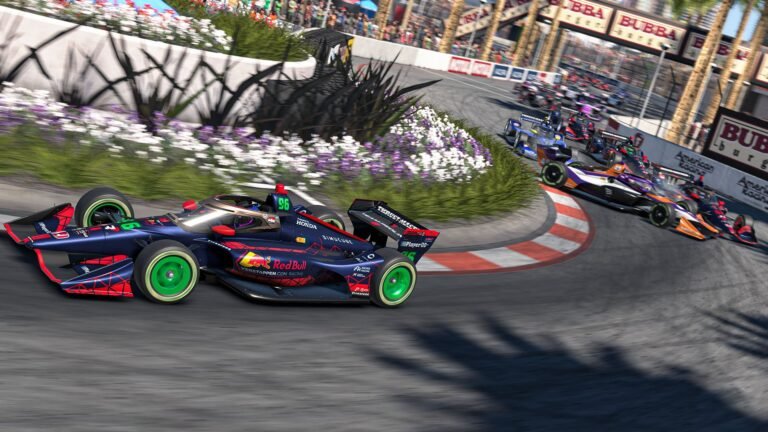
Good starting circuits are Long Beach, Lime Rock Park, and Brands Hatch Indy. These have varied corner types and are forgiving enough to build confidence without punishing every small mistake. In particular, Long Beach has the added benefit of being a TCR Virtual Challenge venue, so you’re learning the car on a race circuit you’ll actually use.
High-speed circuits with long, sustained fast corners are harder to learn on. Those layouts push FWD cars into more chronic understeer that is harder to manage than the snappier, more correctable moments at slower speeds. Build the technique first on technical circuits and the fast ones become much more manageable later.
Final Thoughts
The Audi RS3 LMS Gen2 is worth the time it takes to figure out. The FWD dynamics are genuinely different from most of iRacing, and that difference is what makes it interesting and rewarding to learn. Getting fast in this car will make you more complete across the board.
Start on the default setup, concentrate on trail braking and throttle patience, and give yourself the laps to adjust your instincts. The pace comes faster than you’d expect once the FWD logic clicks.
The RS3 LMS Gen2 is available now in the iRacing store.