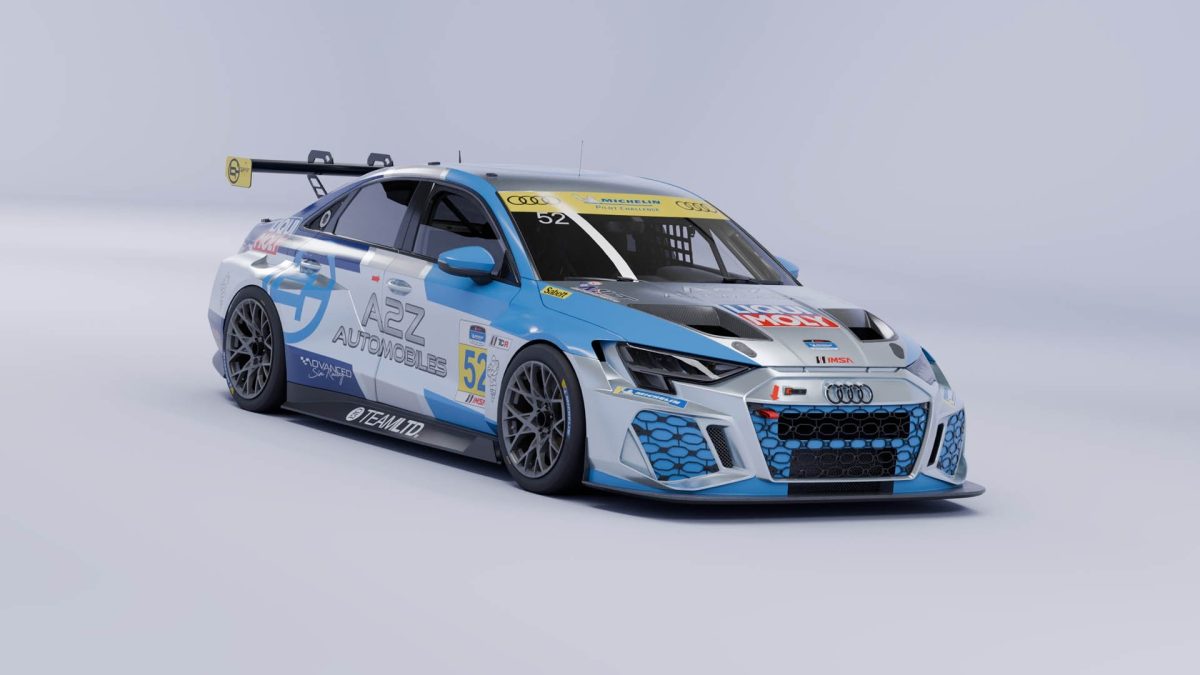
The Audi RS3 LMS Gen2 TCR landed in iRacing with the 2026 Season 2 build. It’s the second generation of Audi’s touring car platform, and for iRacers who have been running the original RS3 LMS, the jump is more than cosmetic. New physics, a revised exterior, and a TCR-class overhaul make this one of the more significant car additions of the season. If you’re new to TCR or just picking up the Gen2, this guide covers what you need to know before taking it out.
What Is the Audi RS3 LMS Gen2 TCR?
The Audi RS3 LMS Gen2 is a professional touring car built to compete in TCR-class championships worldwide. TCR is a spec-based racing category that prioritizes close competition and manufacturer variety. The RS3 LMS Gen2 debuted in real-world competition in 2021 and went on to win TCR Model of the Year three years in a row. That kind of track record shows the platform is genuinely competitive, not just a marketing exercise.
The Gen2 is based on the current Audi RS3 road car. Compared to the original RS3 LMS, it brings a sharper exterior design, a revised cockpit layout, and updated safety systems. In particular, the engine stays mostly production-derived, a turbocharged four-cylinder producing around 350 horsepower. That’s part of what makes TCR interesting as a class: raw power isn’t the differentiator. Setup, tire management, and precision are what separate the front runners from the midfield.
In iRacing, the Gen2 replaces the original RS3 LMS for all official TCR events starting with Season 2 2026. The gen1 stays available for private and hosted use but no longer runs in official series.
Key Specs
Engine: turbocharged four-cylinder, 350 horsepower. Weight: 1,215 kilograms. Fuel capacity: 100 liters. Top speed: approximately 153 mph. Acceleration: 0 to 60 mph in around 4.5 seconds. Gearbox: sequential.
The car is front-wheel drive. In the TCR class, FWD is the norm, but it’s still a significant adjustment for iRacers whose main cars are rear-wheel drive. Everything about how the RS3 Gen2 behaves, from throttle response to brake feel to steering, is shaped by the front tires doing both steering and traction duty at the same time.
The RS3 Gen2 also ships AI-ready from day one. In practice, that means you can run full-length AI sessions to learn the car without needing to jump into competitive racing first.

How It Drives in iRacing
The Audi RS3 LMS Gen2 rewards smooth inputs over aggressive ones. The FWD layout means understeer is always the background risk. Push too hard on entry and you’ll run wide. Snap the throttle too early and you’ll lose time waiting for the front tires to hook back up.
Throttle application out of slow corners is where most lap time is gained or lost. Because the front tires handle both steering and power delivery, rolling into the throttle progressively keeps the car neutral. Applying throttle while still at full steering lock scrubs the front end and kills exit speed. Patience at the apex is the single most important habit to build.
Braking technique also differs from rear-wheel drive cars. Trail braking into corners works well with the RS3 Gen2. Keeping some brake pressure as you begin to turn in helps rotate the car and prevents the nose-heavy push on entry that’s otherwise hard to avoid. The Season 2 physics update refined this behavior, making the relationship between brake input and car rotation cleaner and more consistent.
Overall, the Gen2 communicates clearly once you’ve adjusted your driving style to FWD logic. The limit is firm but readable. When the front tires start losing grip, you’ll feel it building rather than hitting it suddenly.
TCR Physics Update: What Changed in Season 2
The Season 2 2026 build brought a TCR-wide physics refresh that touches every car in the class, including the RS3 Gen2. The headline changes are a revised braking model with a rear proportioning valve tuned to real-world specs, updated weight transfer dynamics, and improved tire behavior under sustained cornering loads.
If you drove any TCR car in Season 1, the difference shows up in the first few laps. The brakes feel more progressive, weight transfer into corners is more predictable, and the front tires build grip more realistically as temperatures rise. As a result, the car is more rewarding to drive at the limit rather than becoming unpredictable when you push past it.
For league racers, the physics update also changed Balance of Performance across the class. If you’re carrying over Season 1 setups, expect them to need adjustment.

What Series Does It Run In?
The Audi RS3 LMS Gen2 competes in the TCR Virtual Challenge, one of the most consistently active touring car series in iRacing. It also runs in any TCR-class hosted session and is eligible for AI racing from day one.
The TCR class tends to attract strong participation in league racing. The close, spec-based competition produces dense, exciting grids, and the RS3 Gen2 is fast on technical circuits with direction changes. For league racers, learning the car thoroughly is worthwhile.
Additionally, the series runs on a varied schedule of circuits. Long Beach, Laguna Seca, and brands like Brands Hatch feature regularly, all of which suit the RS3 Gen2’s strengths on medium-speed technical layouts.
Gen2 vs the Original RS3 LMS
The gen1 RS3 LMS remains in the iRacing car list, but it no longer runs in official events from Season 2 onward. Purchasing the Gen2 separately is required to compete in official TCR racing.
In terms of feel, the Gen2 is noticeably more refined. The original RS3 LMS had a capable handling model but was less resolved at the limit, particularly under high-speed trail braking. The Gen2, combined with the Season 2 physics refresh, addresses those rough edges and makes the car feel more connected to what’s happening at the contact patch.
Visually, the differences are immediate. The body panels are sharper, the livery template is updated, and the cockpit reflects the current-generation RS3 road car rather than the older platform. For anyone sitting on the fence about upgrading: official participation will move to the Gen2 quickly, and the driving experience is better. The upgrade is worth it.