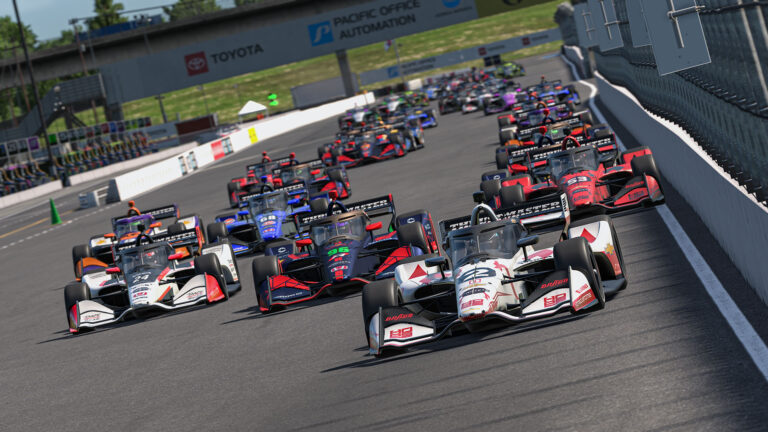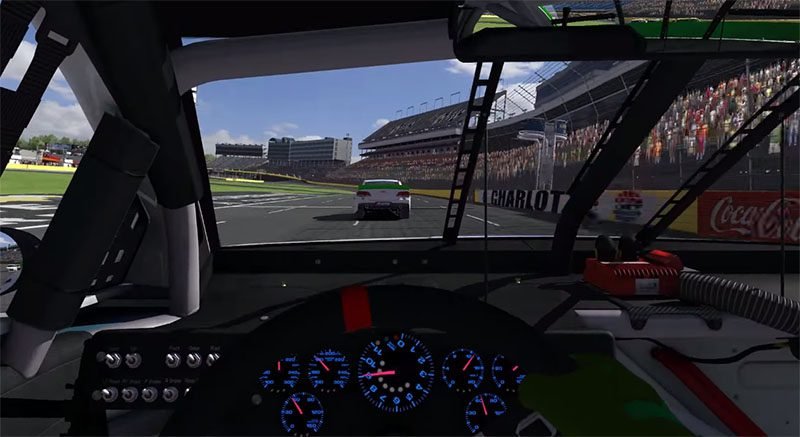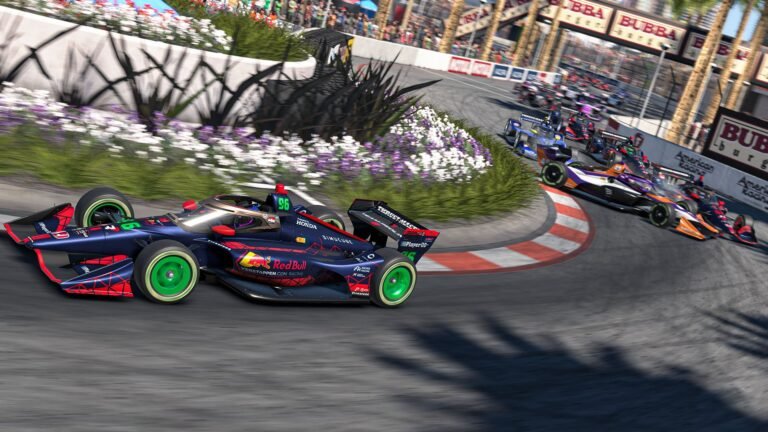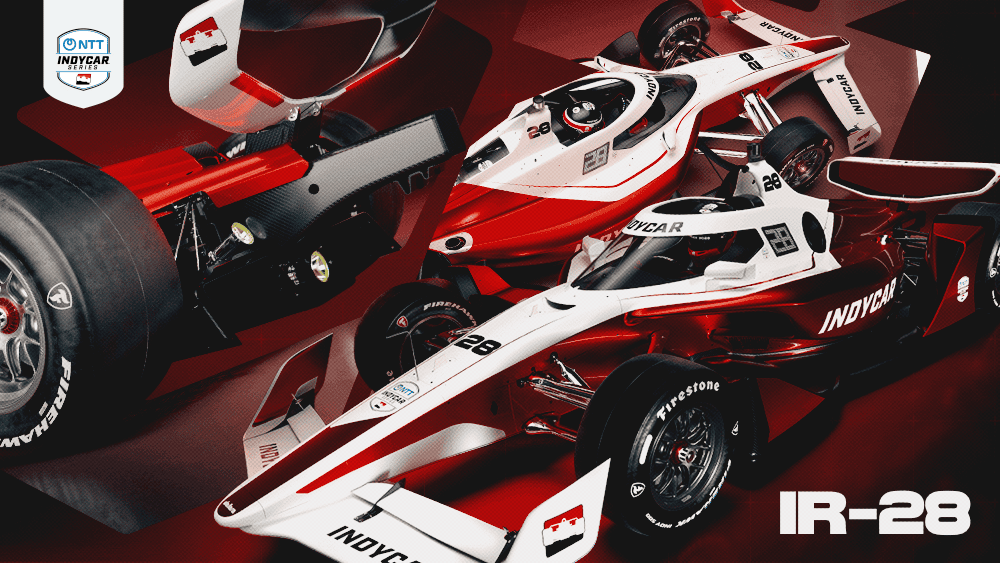
The IndyCar IR-28 was officially revealed on July 28, introducing the chassis and powertrain formula set to replace the Dallara IR-18 when the 2028 NTT INDYCAR SERIES season begins. For iRacers who run the official IndyCar series weekly, that’s the car you’re competing with right now, and it has a successor arriving in roughly two years. Here’s what the specs tell us, and what they might mean for the sim.
Also See
➡️ IndyCar Video Games: 30 Years From Papyrus to iRacing
🏉 IndyCar IR-28 Official Announcement
The headline numbers are worth knowing. The IndyCar IR-28 will weigh roughly 100 pounds less than the IR-18, and the IR-18 is already a light single-seater by open-wheel standards. The engine is a 2.4-liter twin-turbocharged V6 making up to 760 horsepower from either Chevrolet or Honda. A hybrid system developed by Helix, using BOLD Technology’s battery pack, adds an energy recovery element with storage capacity IndyCar says is roughly 14 times greater than the current setup. Xtrac handles the transmission and trims another 25 pounds in the process.
The chassis is Dallara again, because IndyCar has no reason to change that relationship. What is changing is almost everything attached to it. The front and rear wings have been redesigned with an emphasis on reducing the aerodynamic wake behind the car, which should help with close racing at circuits where following a leading car has historically been difficult. The aeroscreen gets a lighter, sleeker profile with a fighter-jet silhouette, reducing the weight penalty that has been a persistent criticism of the current safety device without eliminating it. Testing started almost immediately at Indianapolis Motor Speedway’s road course and oval, with Sebring International Raceway also on the initial schedule.
Inside the cockpit, the dimensions are wider to accommodate a broader range of driver heights and builds. Driver-adjustable anti-roll bars are now electronically controlled, adding a setup variable that the IR-18 doesn’t have. IndyCar has also incorporated a new AXIS Inertance Control Suspension system with a wider tuning range, improved internal cooling, and a digital position display that replaces physical elements on the current car. Early driver reaction has been positive across the board. Alex Palou called it “a proper next step for the series.” Alexander Rossi said it “looks futuristic and fast.” Felix Rosenqvist pointed to the “wow factor” while saying it clearly retains IndyCar DNA.
For iRacers, the central question is when the IndyCar IR-28 lands in the sim. iRacing has held the official IndyCar license since the IR-18 arrived in real-world competition, and the Dallara IR-18 came to iRacing in the same year it debuted on track. That relationship also extends to the standalone IndyCar game iRacing Studios announced for 2026, a product that wouldn’t exist without the depth of that partnership. Nothing about the current arrangement suggests iRacing would sit out a car transition of this scale.
There’s no official confirmation from iRacing that the IndyCar IR-28 is in development for the sim, and that kind of announcement typically doesn’t come two years before a car’s real-world debut. However, the IR-18 precedent is clear. When IndyCar introduced its previous-generation car, iRacing followed in the same year. The relationship between iRacing and IndyCar has only deepened since then, which makes it hard to read the IR-28 as anything other than eventual iRacing content.
In the shorter term, the reveal gives sim racers useful context. If you’re running IndyCar content in iRacing right now, you’re driving a car with significantly more weight, a different aerodynamic philosophy, and less peak power than the IndyCar IR-28 will eventually deliver. The IR-18 will remain the series car in iRacing for some time, but understanding what IndyCar decided to replace and why makes the current platform more readable as a product of its era.
One open question is how the standalone IndyCar game factors in. If that product launches with IR-18 content and the real-world IR-28 arrives in competition by 2028, iRacing will need to decide how both products handle the transition. No answers yet, but it’s a question worth watching as the new car moves through testing and the 2028 season draws closer.