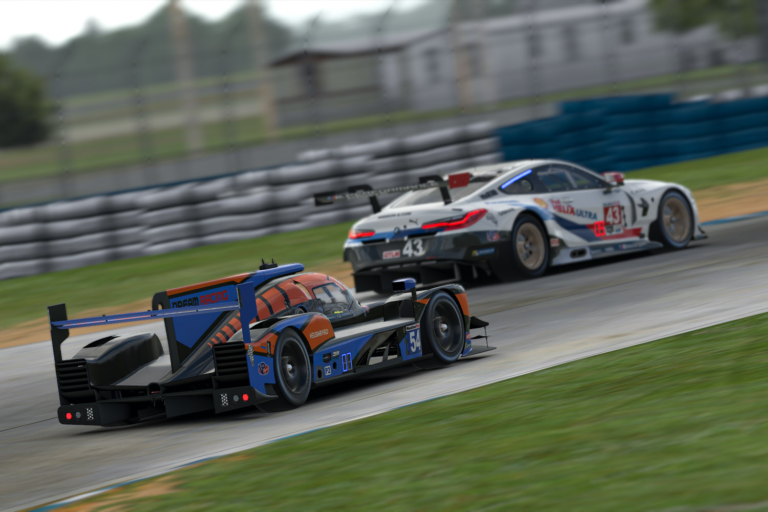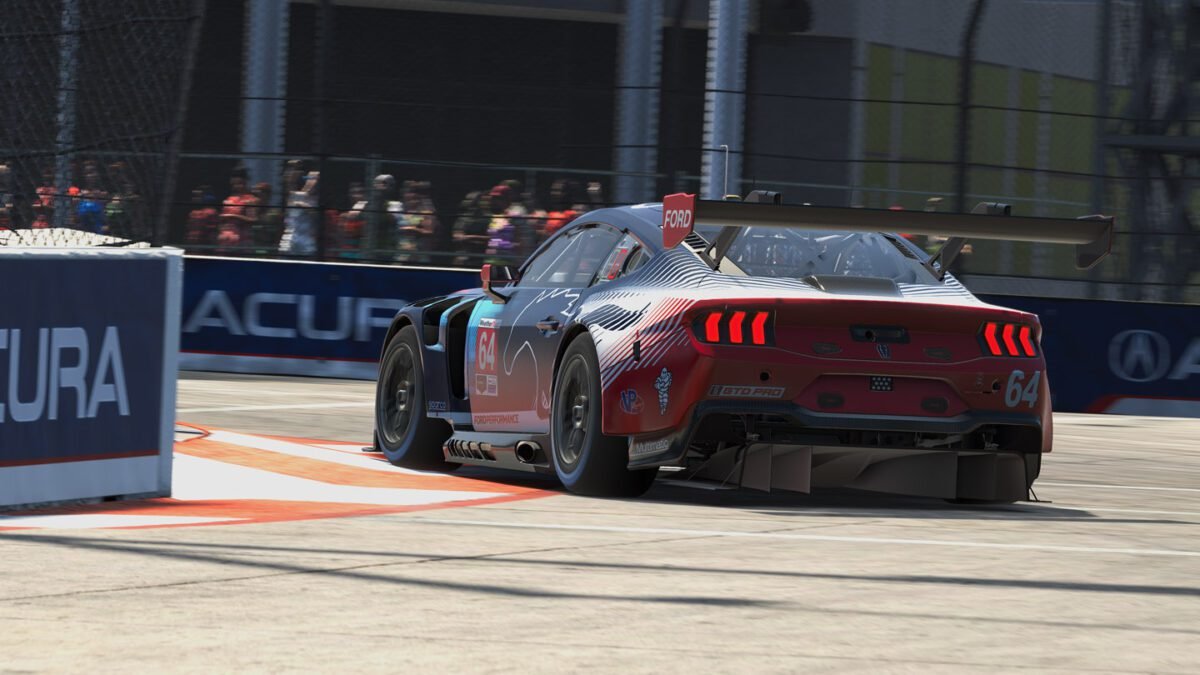
The iRacing GT3 fixed-setup series has a Mustang problem right now. Community drivers widely report that the Ford Mustang GT3 carries a measurable lap time advantage in fixed-setup races. That gap sits somewhere in the 0.4-to-0.8-second range per lap. Do you race the fastest iRacing GT3 available, or the one you actually want to drive?
Also See
➡️ What Changed for GT3 in iRacing Season 3: The BoP Overhaul Explained
🏁 iRacing 2026 Season 3 Release Notes
The Fixed-Setup Problem
Fixed setups remove your ability to tune the car. Because of this, any performance gap between cars stays locked in for the entire race. In open-setup GT3 racing, a skilled setup builder can close the gap between cars. In fixed racing, though, you drive what iRacing gives you. The Mustang GT3 carries a clear edge in current fixed-series specs. Other cars cannot close that gap without setup work the format does not allow.
The Case for Running the Fastest Car
Some iRacers see this as a clear answer: if the Mustang is fastest, drive the Mustang. There is a reasonable argument for that. If finishing at the front is your goal, running the most competitive package is standard practice. After all, in real-world racing, teams pick the car that wins. Driver preference comes second.
The Case for Racing What You Love
But iRacing is not a job for most people reading this. Nobody is paying you to finish on the podium. Instead, you are spending your own time and money for the experience of racing. Half a second per lap means more in a car you love. Running faster in a car you do not care about is less satisfying than it sounds. Plenty of iRacers will spend their career in the Ferrari 296 GT3 or the BMW M4 GT3. Others choose the Porsche 992 GT3 R and never look back. The fixed-setup numbers do not change that.
At C and D License, Driver Beats Car
At C and D license, the gap between drivers matters far more than the gap between cars. At D license, a consistent Aston Martin Vantage GT3 driver will beat an inconsistent Mustang driver most of the time. The iRacing GT3 lap-time advantage starts to matter more at B and A license. That is where the field is cleaner and lap times are more consistent. Below that level, driver variance dwarfs car variance by a wide margin.
There is also a longer-term argument for racing the car you enjoy: you will actually drive it. Put 200 practice laps into a car because you love it. You will outperform the driver who ground through 50 laps in the Mustang because they read it was faster. Improvement in iRacing is almost entirely seat time. As a result, a quicker car does nothing for you if you are not excited to drive it.
The Mustang GT3 fixed-setup advantage is real. iRacers are right to call for a rebalance. However, whether you should chase that advantage is a different question. For most license levels, race the car that brings you back for the next session. Pick the iRacing GT3 you are actually looking forward to driving. That is the meta that improves your racing in the long run.