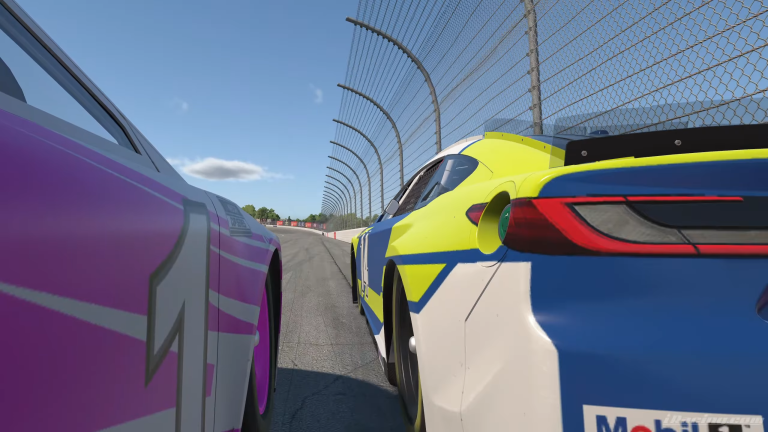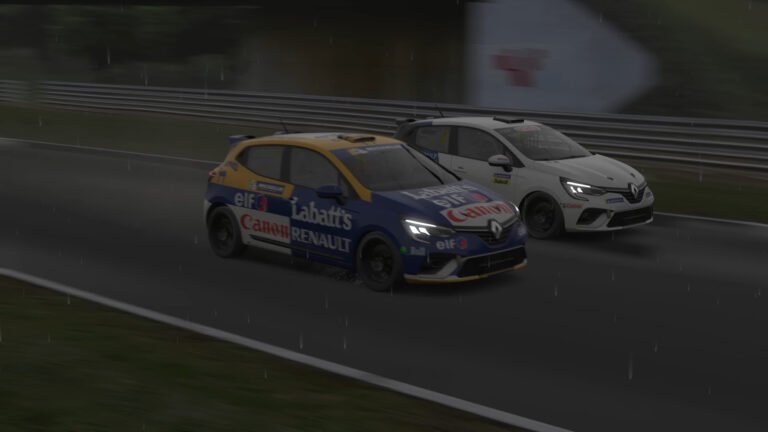
The first time you sign up for an iRacing IMSA GT3 fixed race, you might wonder whether the format is much different from a standard open session. It is. IMSA GT3 fixed tires change how you approach a stint, a pit stop, and your driving line. If you go in expecting it to feel the same as open, you’ll likely struggle through the first few laps wondering what went wrong.
Also See
➡️ iRacing IMSA Endurance Fuel and Tire Rules
🎮 IMSA WeatherTech Sportscar Championship
What “Fixed” Means in iRacing
In iRacing, a fixed race locks both your setup and your tire selection before you leave the pit lane. You cannot change the tire compound, adjust tire pressures, or modify any other setup parameter. Every driver on the grid runs the same compound, at the same pressures, in the same configuration. The format strips away the setup game entirely and puts the emphasis on the driver.
In an open race, tire compound selection and pressure settings are part of your preparation. You might run a softer compound for peak pace and manage degradation through a stint, or dial in cold pressures to hit your operating window faster after the pit exit. In fixed format, all of that is removed. You run what the series provides.
For the IMSA GT3 class specifically, this matters because GT3 cars are already close in performance by design. Add a locked setup and you have a format where racecraft differences compound over a full stint. Drivers who build gaps do it through consistency and tire care, not through aero or differential settings.
How IMSA GT3 Fixed Tires Change Your Approach
Because you cannot adjust your setup, you also cannot dial out the baseline handling characteristics of the car. If the fixed configuration carries understeer into slow corners, you work around it with your line, not with a setup change. That adjustment takes practice. Many drivers try to fight the car rather than adapt to it, and they burn through tires in the process.
The first thing to accept is that the car will behave exactly as iRacing tuned it for this format. Reach the tire’s peak grip zone through smooth inputs rather than forcing it there. Aggressive turn-in and early throttle application might feel faster for a lap or two. However, they generate heat and degradation that costs you in the second half of a stint.
Tire wear also becomes more visible in fixed format because everyone starts from the same baseline. If your lap times stay consistent while others around you fall off, your tire management is working. If you drop faster than the field, your inputs or your lines are probably the cause, and there’s nothing on the setup screen to fix that.
Pit Stop Strategy with IMSA GT3 Fixed Tires
In fixed IMSA GT3 races, pit stop decisions follow a different calculation than in open format. Since you cannot change tire compounds, every stop is either fresh tires or no tires. The decision comes down to stint length, current tire state, and how much time a tire change costs you versus staying out on worn rubber.
Fresh tires improve lap times, but the stop itself costs around 30 to 40 seconds depending on fuel and whether you take all four wheels. If the field around you is pitting, staying out gives you track position that can be worth more than the pace advantage of fresh rubber. In clean air with no immediate pressure, taking tires and chasing pace often makes more sense.
For endurance races, minimum fuel requirements and pit window timing interact with the fixed tire choice in ways that can make an extra stop the right call even when the tires look healthy. Understanding those rules before a long stint race is worth your time. For a full breakdown, see the iRacerHub guide to iRacing IMSA endurance fuel and tire rules.
Racing Tips for IMSA GT3 Fixed Tires
Smooth inputs win races in fixed format. Every aggressive steering or throttle move generates tire heat, and heat shortens the tire’s operating window. A lap that feels a half-second faster because you attacked a corner hard might cost you two seconds of pace by lap fifteen.
Pay close attention to your line through slow corners. The fixed setup likely carries some understeer in tight hairpins. Rather than trying to rotate the car with trail braking and catch an oversteer exit, take a slightly later apex and apply power cleanly. You lose a little time in the corner itself, but you keep the rear tires cooler and your exit speed stays consistent lap after lap.
Traffic management is another area where fixed IMSA GT3 rewards patience. In multiclass IMSA events, GTP cars share the circuit at full pace. Knowing where GTP traffic typically appears relative to your stint timing helps you avoid losing momentum at the wrong moment. Give GTP cars room early instead of getting caught in a battle you won’t win. Use the clear air that follows to rebuild your rhythm.
The real-world GT3 championship runs the same principle at its core: close cars, locked regulations, and the best driver on the day. Watching how professional GT3 drivers manage tires and traffic in the actual IMSA WeatherTech Sportscar Championship is a genuine reference point for pace management in fixed format.
Setting Expectations Before Your First Fixed Race
The biggest adjustment coming from open format is mental. You will not be able to fix a bad-feeling car. If the fixed setup doesn’t suit your natural driving style, you adapt your style rather than adjusting the car. That sounds frustrating, but it’s also where most of the skill in fixed format comes from.
Run a few practice sessions on the current fixed setup before you commit to a race. Pay attention to which corners feel stable and which ones push wide. Build a plan around those tendencies. Know which sections of the track you’ll give up a little time to protect your tires, and which sections you can push without paying for it later.
After a few races in fixed format, many drivers find they prefer it. The racing is close, the results are honest, and there’s nowhere to hide behind a setup advantage. If you can pace yourself, manage your IMSA GT3 fixed tires, and put together a clean stint, you’ll finish where your driving deserves.