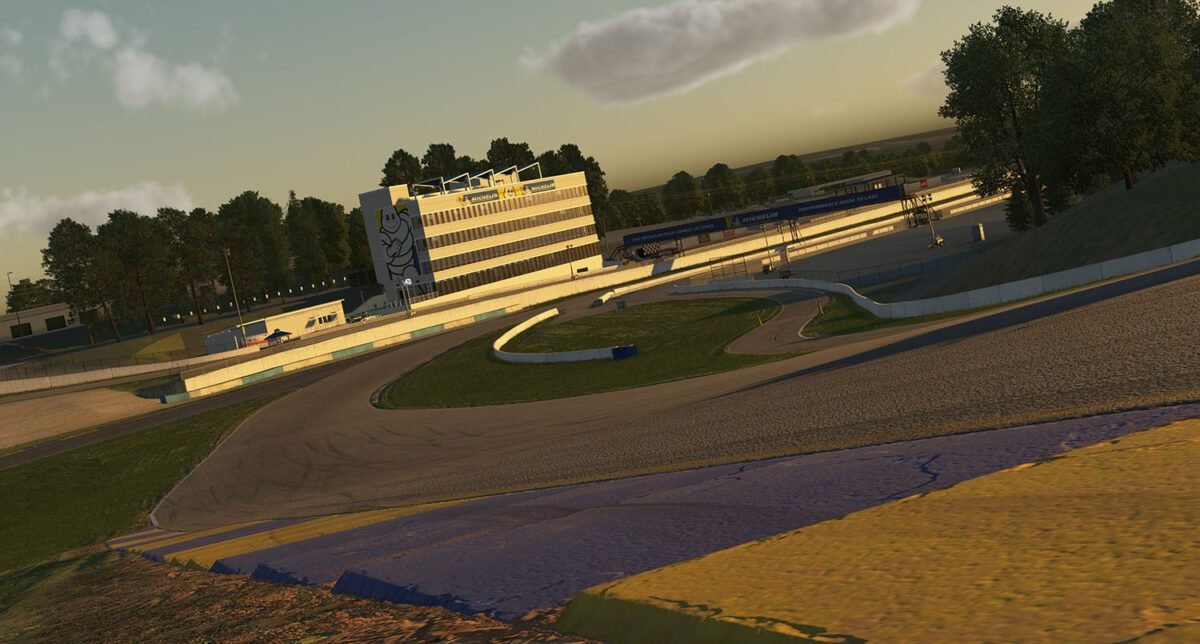
iRacing night racing is coming, and it is arriving as part of a completely new graphics engine rather than an update to the existing system. The development team built a new tooling pipeline for physically-based lighting from scratch, and it enables something that has never been possible in iRacing history: a full field of cars racing on a truly lit circuit after dark.
Also See
➡️ iRacing Season 4 2026: Career Mode, Bahrain, and More Confirmed
🏁 24 Hours of Le Mans — Official Site
The new system supports emissive materials across track objects. That means light sources on a circuit now cast real illumination on their surroundings instead of appearing as glowing textures with no environmental effect. iRacing confirmed specific examples: string lights at the Nordschleife, glowing palm trees at Sebring, the standings tower at Daytona, and radiating garages at Le Mans. None of those previously contributed real light to the scene around them.
The official description confirms the scope: “For the first time in iRacing history, a full field of cars can race around a truly physically lit track.” That is the headline capability, but the new engine also improves the sim well beyond night sessions.
What iRacing Night Racing Will Actually Look Like
With physically-based lighting, different circuits will look and feel distinct after dark based on how much infrastructure lighting they have. A track like Le Mans, with its illuminated pit facilities, grandstands, and garages, will be noticeably brighter in certain sections than a circuit with minimal artificial light. That variation matters for racing because visibility conditions around the circuit will change meaningfully by location.
For members running the Nordschleife at night, for example, sections lit by track-side infrastructure will look and feel different from sections in near-total darkness. Meanwhile, at circuits like Daytona, the new standings tower lighting will illuminate the surrounding pit area in a way that was not achievable before. These are not cosmetic details. They represent how the lighting model now interacts with the physical environment.
In addition to night conditions, the update reworks solar track irradiance physics for daytime sessions. The improved solar model makes track surface temperatures and their development across a session more physically accurate. As a side effect, the reworked irradiance calculations also reduce network traffic, which should benefit online racing performance independently of the lighting changes.
What Else the New Graphics Engine Brings
Beyond lighting, the update introduces a full texture-streaming system to iRacing for the first time. Texture streaming manages how graphical assets load and unload from memory, which allows the engine to run on a wider range of hardware without forcing members with less VRAM into low-detail settings. This is an infrastructure-level change that affects performance across all sessions, not just at night.
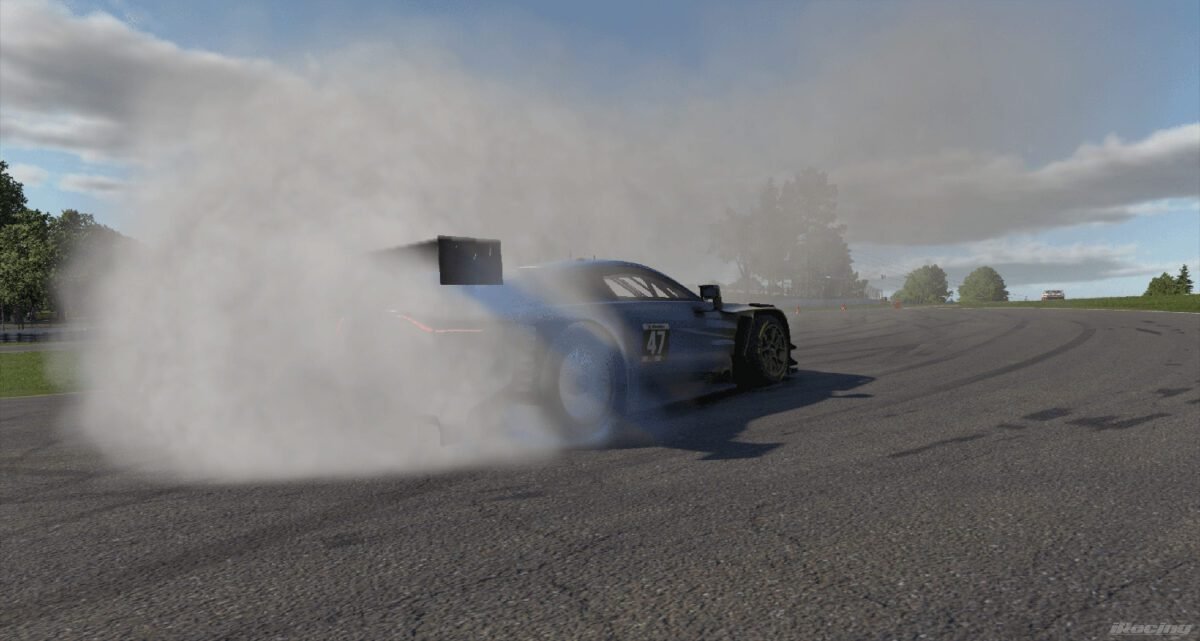
The smoke VFX system also receives a significant update as part of the new engine. Smoke now responds to dynamic lighting from track-side sources and moves with physical wind interaction rather than playing back as a static particle effect. Because of this, smoke from tire lock-ups or contact will catch the light from garages and stands in a way that was not possible under the previous system.
iRacing describes the project as nearing completion and positions it as something that will “redefine iRacing and sim racing as a whole for years to come.” That is a high bar, but the changes described are fundamental rather than cosmetic. A new lighting model, a texture-streaming architecture, and reworked irradiance physics represent changes to the core of how the sim renders its world.
For endurance racing members, the timing is meaningful. Night racing at circuits like Le Mans and Daytona has been one of the most consistently requested features in iRacing for years. The 24 Hours of Le Mans crosses into full darkness during the early-morning hours, and the 24 Hours of Daytona does the same. Running those events without a real day-night cycle has always been the most visible gap between the sim and the real events.
When the new engine launches, members running full-length endurance events will experience the actual conditions of a 24-hour race. That includes the early-hours window when track temperatures drop, tire behavior shifts, and visibility changes beyond what any daytime session presents. No specific season release date has been confirmed. The August 2026 development update describes the project as nearing completion, so the release is not far off.