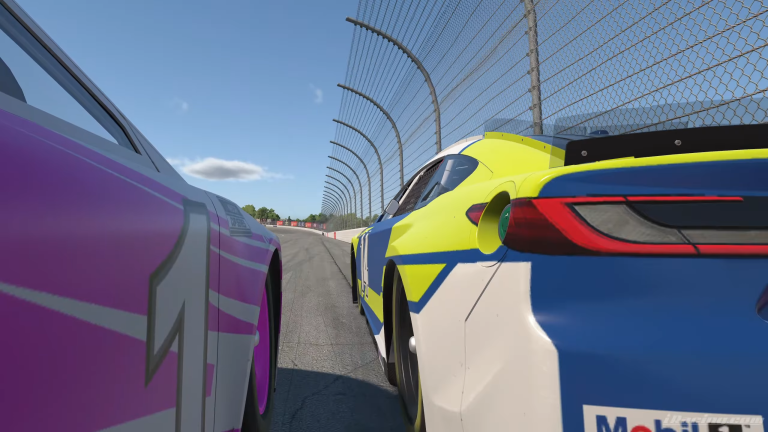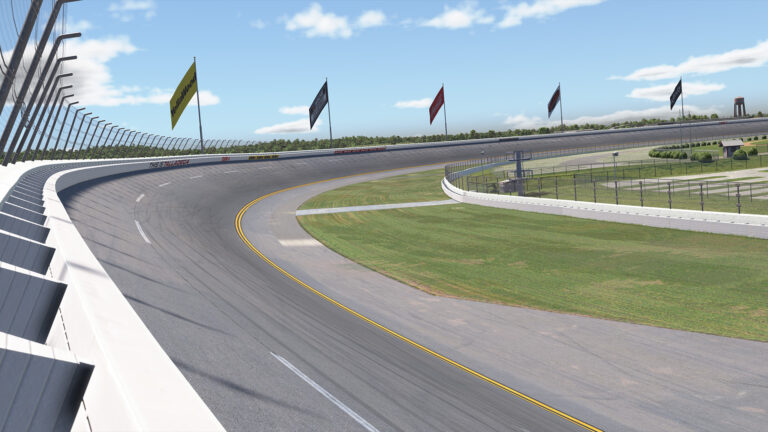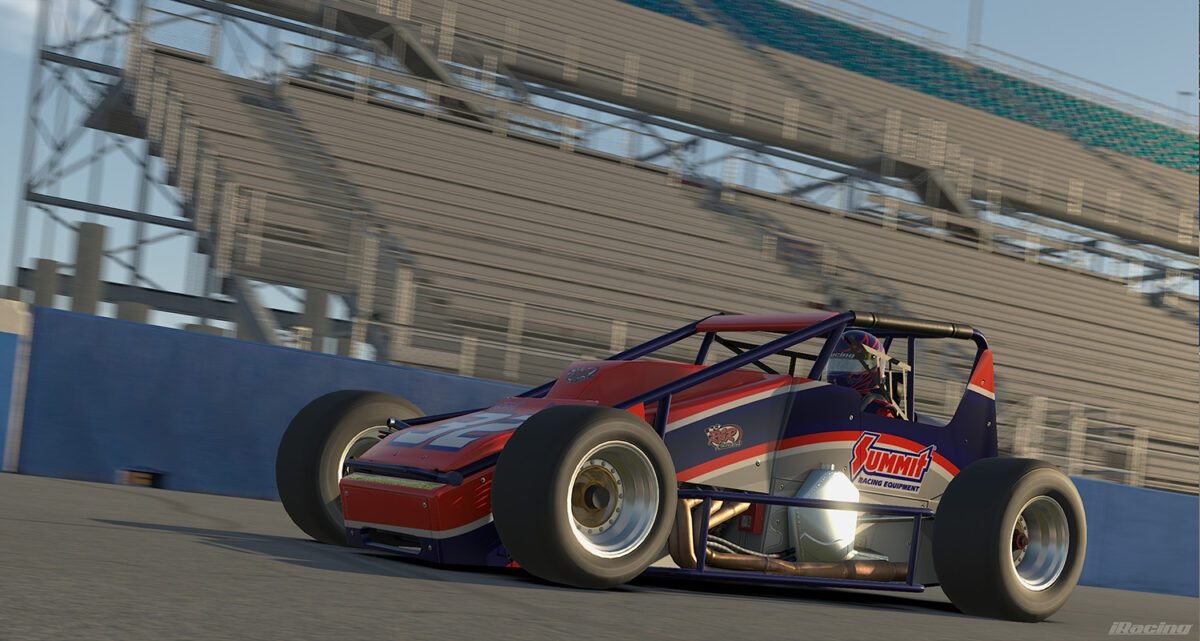
The iRacing Pavement Sprint Car gets a complete ground-up rebuild for Season 4. iRacing did not patch the existing model or swap in a single update. Instead, the team redeveloped the car from scratch. Power output, torque delivery, engine braking, suspension geometry, and the tire model all changed. For iRacers who run the class, setup references from the old version no longer carry over.
Also See
➡️ iRacing Rebuilds the Mazda MX-5 for Season 4
🎮 Official iRacing August 2026 Development Update
What Changed on the iRacing Pavement Sprint Car
Power has increased for Season 4, backed by a broader torque curve through the low RPM range. Reduced engine braking is the other significant driver-feel change. Previously, the car relied partly on engine braking as a deceleration aid into corners. Because the rebuild reduces it, corner entry now requires more deliberate pedal work. The braking reference points from the old version are no longer reliable.
The tire model is completely new. iRacing updated it to match current construction specifications and 2026 rulebook dimensions. The tire model shapes how the car loads through a corner and how it responds to steering input. It also governs how grip builds under acceleration. Additionally, the suspension geometry received a full overhaul. Therefore, any setup work built around the old car needs a fresh start. The tire and suspension changes compound each other throughout the handling envelope.
Rulebook Compliance and Garage Adjustments
iRacing updated the car’s weight to hit 2026 Sprint Car rulebook targets. In addition, garage adjustments now run at 1:1 limits. A setting in the garage corresponds directly to a real-world adjustment value. For iRacers who reference actual sprint car setup data, this alignment is useful. For those who do not, the values still behave predictably. Mental conversion from an internal slider scale is no longer necessary.
iRacing worked with real-world pavement sprint car drivers and sim community contributors throughout this rebuild. As a result, the car reflects the current character of the class. It is no longer a version that had drifted from the 2026 spec. Real driver feedback ensured the rebuilt model matched the actual feel of the car on pavement, not just the numbers. The car arrives in Season 4 as a representative of the class as it exists today, not a historical approximation.
Getting Ready Before Season 4 Opens
Even experienced iRacing pavement sprint car drivers will need practice time before Season 4 competition begins. Because the changes are comprehensive rather than incremental, old knowledge of the car does not transfer cleanly. Corner entry behavior, braking points, and tire management technique all shift with this rebuild. Specifically, the reduced engine braking means the deceleration phase requires rethinking. Drivers who built their corner approach around the old car’s deceleration will find that approach underworks the brakes into corners.
Season 4 launches in September, so time to build references is available now. Getting seat time in the new car before the first official week is the most straightforward way to start the season on the right foot. iRacers planning to compete in official pavement sprint car series should build a fresh setup baseline before racing opens. Carrying over an old baseline and adjusting from there will cost laps. Meanwhile, iRacers new to the class have an interesting starting position. The class reset means experienced drivers do not hold the usual setup advantage. When everyone is learning the same rebuilt car, the gap narrows. That applies to setup development as much as driving technique. Drivers who put in laps before official races open will have a measurable advantage over those who show up with an untested baseline.